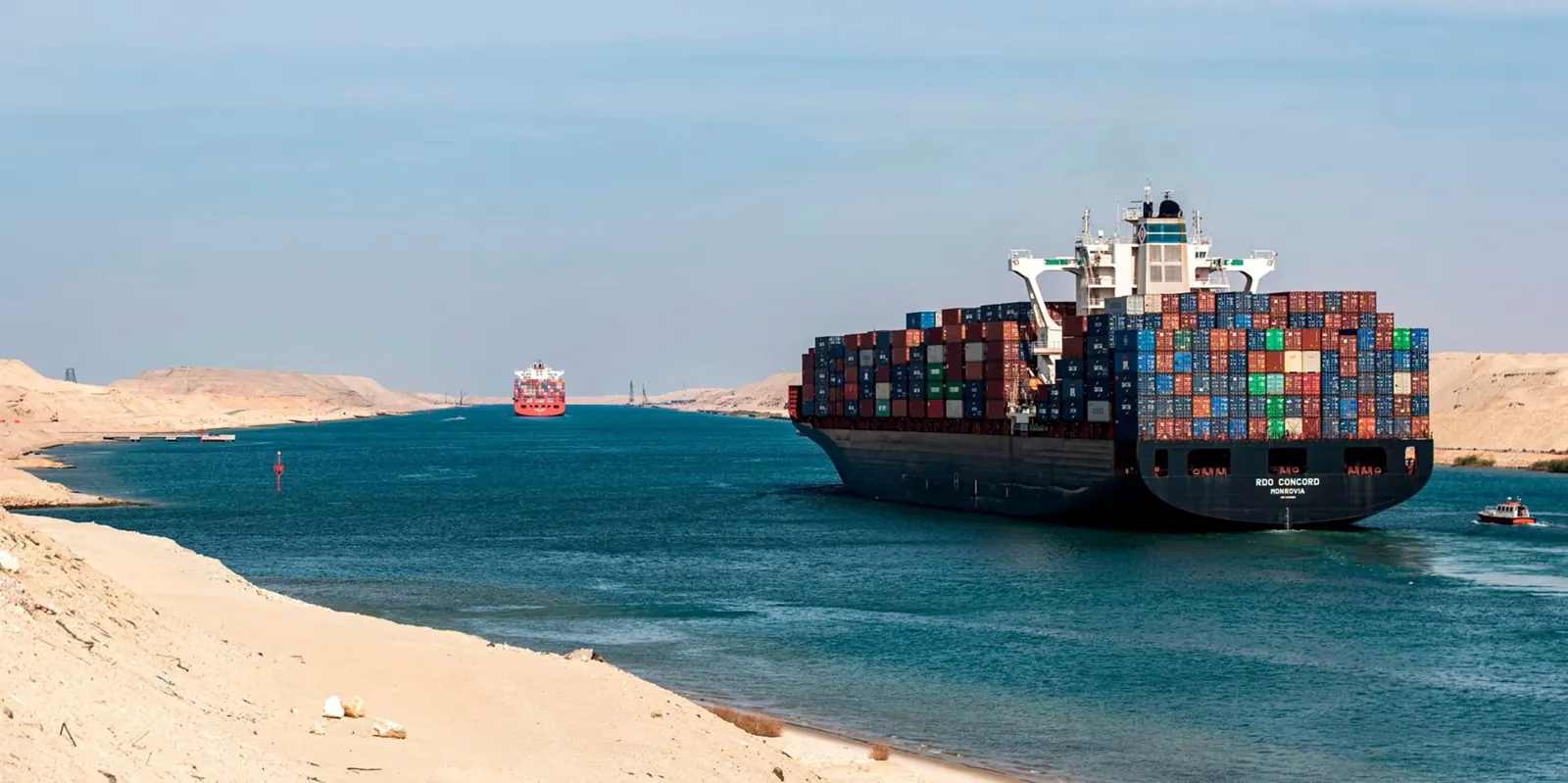
The Suez Canal, a vital artery of global maritime trade, is showing signs of recovery, with vessel traffic and revenues on the rise. In August, 1,358 vessels transited the canal, a 27% increase from the same period last year. This uptick is a welcome respite for Egypt's economy, which relies heavily on the canal as a source of foreign currency. The Suez Canal Authority reported that net tonnage rose by over 50% to 68.3 million tonnes, while monthly revenues reached $567.1 million, up from $326 million in the previous year.
The recovery of the Suez Canal has significant implications for Egypt's economy. With more traffic comes more revenue, which can help boost the country's foreign exchange reserves. Additionally, a stable and reliable shipping route can help reduce transportation costs, which can have a positive impact on domestic prices. A substantial number of products sold in Egypt, including finished consumer goods and raw materials, depend on international trade. As such, any disruption to global trade can have far-reaching consequences for Egyptian businesses and consumers.
The Suez Canal's importance became particularly evident during the disruptions to commercial vessels in the Red Sea. Attacks on ships led to a sharp decline in traffic, with major shipping companies like Maersk rerouting vessels around southern Africa. This resulted in a longer and more expensive journey between Asian and European markets, highlighting the critical role the Suez Canal plays in global trade. In 2024, Egypt's revenue from the Suez Canal dropped sharply by nearly two-thirds, falling to $3.991 billion from a record high of $10.25 billion in 2023.
The decline in Suez Canal revenues had a significant impact on Egypt's economy. According to the finance minister, the country lost around EGP 145 billion, equivalent to about $3 billion, in Suez Canal revenues during the 2024/25 financial year. This loss was attributed to regional tensions and conflicts, particularly threats from Yemen's Houthi rebels, who targeted maritime trade in protest of Israel's actions in Gaza. The disruptions to the Suez Canal had a ripple effect on Egypt's economy, highlighting the need for a stable and secure shipping route.
The security situation around the Red Sea remains a concern, with the renewed expansion of the Houthi movement along Yemen's Red Sea coast and its growing ability to threaten the Bab el-Mandeb Strait. This development has significant implications for global trade, as the Bab el-Mandeb Strait is one of the world's major maritime chokepoints. The situation is further complicated by the wider U.S.-Iran conflict and disruption around the Strait of Hormuz, creating the possibility that two critical routes for global energy and trade could face simultaneous pressure.
The Houthi rebels' close alignment with Iran and their receipt of Iranian backing, including military and technological support, amplify the significance of the security situation around the Red Sea. Disruption to oil and refined-product shipping can increase transportation costs and risk premiums at a time when global energy markets are already under pressure from the conflict involving Iran. As such, the recovery of the Suez Canal and the stability of the region are crucial for global trade and economic stability.
In conclusion, the Suez Canal's recovery is vital for Egypt's economy, and its continued stability is crucial for global trade. With vessel traffic and revenues on the rise, there are positive signs that the canal is emerging from a difficult period. However, the security situation around the Red Sea remains a concern, and ongoing efforts are needed to ensure the stability of this critical shipping route.
Key points
- The Suez Canal's recovery is crucial for Egypt's economy, with vessel traffic and revenues increasing.
- The security situation around the Red Sea remains a concern, with the renewed expansion of the Houthi movement.
- Egypt's revenue from the Suez Canal dropped sharply by nearly two-thirds in 2024 due to regional tensions and conflicts.