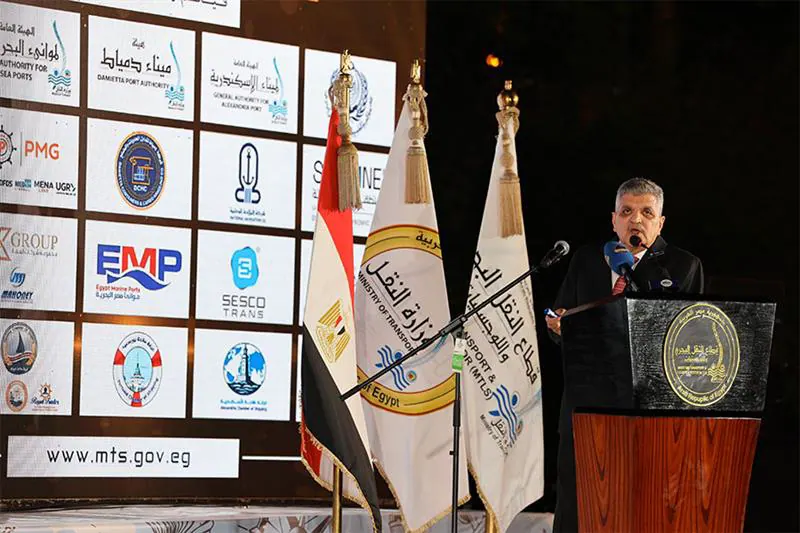
Suez Canal Authority (SCA) Chairman Osama Rabie has called for unconventional solutions to the challenges facing international shipping. Speaking at a World Maritime Day celebration in Alexandria, Rabie emphasized the need to improve maritime institutions' operational efficiency and strengthen their ability to withstand unprecedented pressures. He noted that recent geopolitical shifts have directly affected global trade and supply chains, with repercussions for navigation through the Suez Canal.
Rabie stressed the importance of bringing together the maritime transport and shipping community to exchange views on these developments and ways to address them. The authority has responded with a balanced approach combining flexible policies and an ambitious strategy to become a major economic player in maritime transport and services. This strategy focuses on developing domestic maritime manufacturing, expanding services, and diversifying income sources.
Rabie reassured shipping lines that the canal remains safe and navigation is proceeding regularly despite international and regional challenges. He stated that the canal's services are operating efficiently, with pilots maintaining the highest levels of performance and readiness. The SCA chairman argued that disruptions to international trade have demonstrated the canal's importance in sustaining global supply chains and reinforced its standing in international shipping.
According to Rabie, there is no sustainable alternative to the Suez Canal, citing its maritime safety standards and the efficiency of its supporting services. He pointed to improved traffic figures in August 2026, when 1,358 vessels transited the canal, compared with 1,070 in the same month last year, an increase of approximately 27 percent. Total net tonnage rose by 51.1 percent to 68.3 million tonnes from 45.2 million tonnes.
The authority has made steady progress in diversifying its income sources by upgrading affiliated shipyards and companies to expand domestic vessel construction. Partnerships with the private sector aim to strengthen industrial integration and open international markets for the vessels they produce. Rabie highlighted an expanded range of maritime services designed to meet the needs of shipping lines and vessels during their passage through the canal.
Beyond the canal, Rabie outlined the authority's involvement in port development and maritime training in Arab and African countries. The SCA's Maritime Training and Simulation Academy has developed a model of Saudi Arabia's Ras Al-Khair Port, and negotiations are underway to model two ports in Namibia and train groups of their marine pilots and tugboat captains at the academy.
The World Maritime Day celebration was organized by the Ministry of Transport's Maritime Transport Sector under the theme "From Policy to Practice: Advancing Maritime Excellence." Transport Minister Kamel El-Wazir attended the event alongside senior officials and representatives of the Arab and regional maritime industry.
Key points
- The Suez Canal Authority is pursuing a strategy to develop domestic maritime manufacturing, expand services, and diversify income sources.
- The canal's traffic figures showed a 27% increase in August 2026, with 1,358 vessels transiting the canal.
- The authority is involved in port development and maritime training in Arab and African countries, including the development of Libya's Sirte Port.