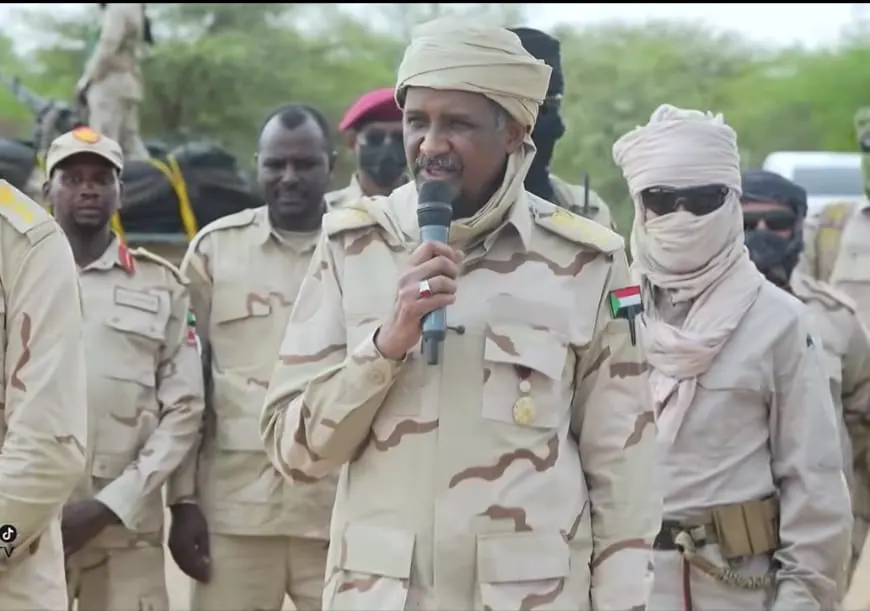
Sudan's Rapid Support Forces (RSF) leader, Mohamed Hamdan Daglo, known as "Hemedti," has addressed his troops in a televised speech following a series of defeats in the country's key regions. The speech, which was broadcast on September 23, 2026, aimed to boost the morale of his fighters. Daglo emphasized that war is not just about bravery but also about strategy and practice. He expressed confidence in the abilities of the troops, stating that the best elements had been selected for the operation.
The address comes at a challenging time for the RSF, which has faced significant setbacks in the regions of Kurdufan and Blue Nile. Despite these challenges, Daglo urged his troops to continue fighting, stressing the importance of adhering to their oath and maintaining their commitment to their duties. He also warned against taking unauthorized photographs and emphasized the need for his fighters to observe the five daily prayers and maintain personal hygiene.
In his speech, Daglo touched on the issue of prisoners, instructing his troops to treat them humanely and not to kill them. He emphasized the importance of honesty and integrity in their dealings, both in their actions and in what they carry with them. This message is seen as an attempt to counter allegations of human rights abuses by the RSF, which have been documented by various international organizations.
The RSF has been involved in a conflict that has led to widespread instability and humanitarian concerns. The group has faced accusations of committing atrocities against civilians, which have been verified by human rights groups and international reports. These allegations have further complicated the security situation in the regions where the RSF operates.
Daglo's address to his troops also highlighted the group's continued reliance on military options, despite the recent setbacks. He stated that "the talk is the talk of the gun," indicating that the RSF remains committed to pursuing its objectives through force. This stance comes as the group faces mounting pressure from both local and international actors to cease its military activities.
The RSF's struggles on the battlefield have raised questions about the group's capabilities and its leadership under Daglo. The repeated defeats have also sparked concerns about the humanitarian situation in the affected regions, with many civilians caught in the crossfire. Efforts to broker a peace agreement have been ongoing, but a lasting resolution to the conflict remains elusive.
The international community has been closely monitoring the situation in Sudan, with many countries expressing concern about the humanitarian implications of the conflict. The United States, in particular, has been vocal about its opposition to the RSF and the Sudanese army, stating that neither is fit to govern the country. As the conflict continues, the humanitarian situation is likely to deteriorate further, underscoring the need for a swift and peaceful resolution.
Key points
- The RSF has faced repeated defeats in key regions, including Kurdufan and Blue Nile.
- Hemedti emphasized the importance of treating prisoners humanely and adhering to their oath.
- The RSF's continued reliance on military options has raised concerns about the humanitarian situation in Sudan.