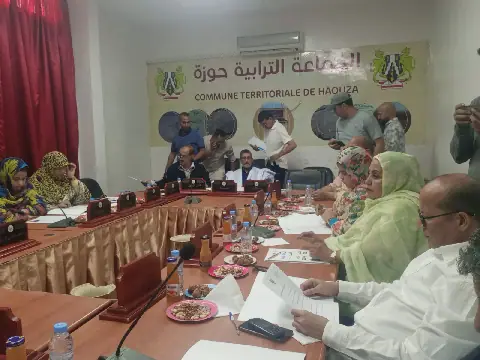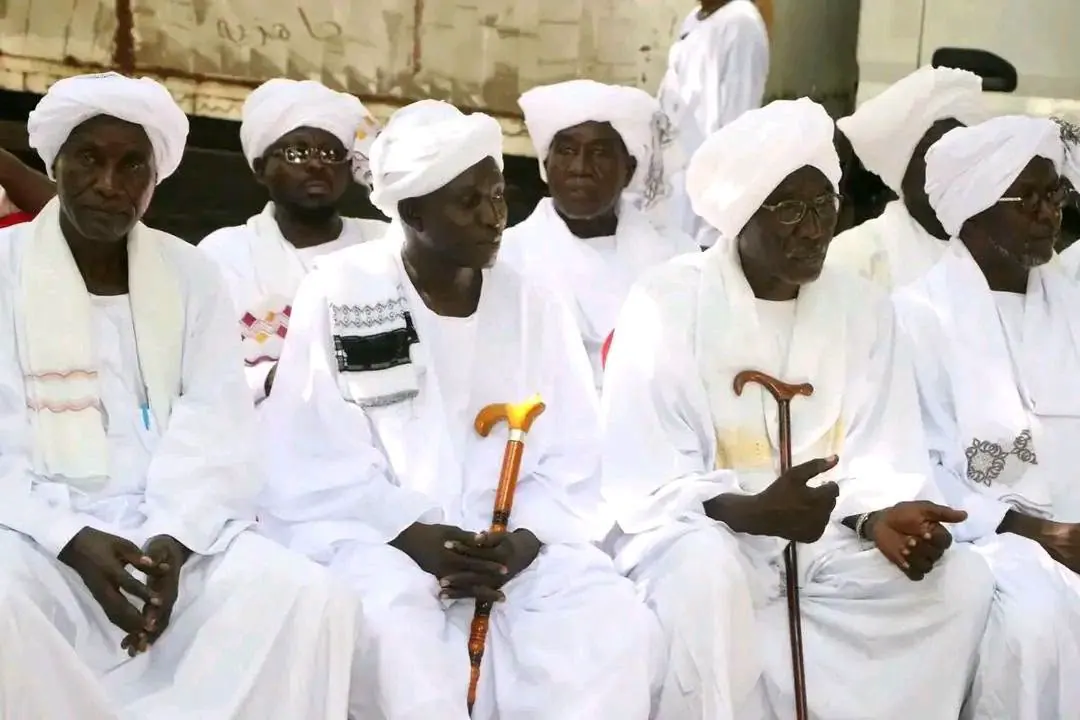
A peace conference has begun in Nyala, the capital of South Darfur, with the goal of promoting social cohesion between the Flata and Masalit tribes. The conference, which started on October 4, 2026, brings together leaders of the local administration, community mediators, and representatives of security agencies. The initiative seeks to address the recent clashes in the Qureidah locality and foster reconciliation and trust between the two communities.
The conference was attended by Mohammed Al-Fatih Ahmed Al-Samani, the Nazir of the Flata tribe, who emphasized his community's commitment to peace and coexistence. He stated that the Qureidah incidents did not represent a tribal conflict, but rather began as an individual dispute that escalated due to the weakness of security agencies. Al-Samani noted that the Flata delegation arrived in Nyala without preconditions, in response to efforts by local leaders and the peace government, to resolve the crisis and prevent its recurrence.
The Nazir of the Flata tribe called on the government to take decisive action against those responsible for the violence, while affirming his community's commitment to protecting social cohesion and avoiding involvement in attempts to ignite sectarian tensions. Meanwhile, Adel Hassan Al-Malik, the Malik of Qureidah and representative of the Masalit delegation, expressed his community's readiness to open a new page with the Flata tribe. He emphasized that historical ties between the two tribes are deeper than the recent clashes and welcomed efforts to restore brotherly relations.
Al-Malik praised the efforts of local administration and community mediators, including the Mahadi, Habania, and Rziqat tribes, as well as the Sudanese Initiative for Social Cohesion. He also commended the role of security forces in containing the violence and restoring stability. The Malik of Qureidah stressed the Masalit community's commitment to upholding agreements and covenants, and working to prevent attempts to disrupt social cohesion or spark enmity between community components.
The conference also heard from Nazir Al-Tom Hadi Isa Dabka, head of the Ajawid Committee, who noted that the gathering represents a significant step towards promoting social cohesion. Dabka pointed to the role of local administration and the Sudanese Initiative for Social Cohesion in engaging with the conflicting parties and finding a settlement that preserves historical relations between the Flata and Masalit tribes.
Dabka cited previous reconciliation experiences, such as the settlement between the Salamats and the Beni Helba, as evidence of the ability of local administration to overcome differences and restore communication between communities. He called on the government to enhance its role in resolving security issues and holding accountable those responsible for sparking tensions, to prevent recurrence of incidents that threaten community security and cohesion.
Meanwhile, Major General Hussein Khadam, head of the Services and Guidance Department and representative of the Rapid Support Forces, urged local leaders to enhance their role in raising awareness and countering attempts to sow discord. Khadam warned against exploiting security conditions to ignite internal conflicts, affirming the readiness of his forces to deal with security breaches and support stabilization efforts in accordance with the law.
Key points
- The conference aims to find practical measures to prevent renewed conflict between the Flata and Masalit communities.
- The initiative seeks to promote the role of local administration in containing disputes and supporting the rule of law.
- The peace conference brings together leaders of the local administration, community mediators, and representatives of security agencies.