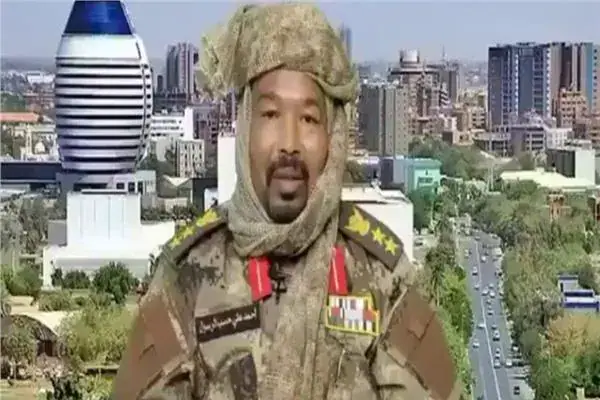
A prominent field commander in Sudan's Rapid Support Forces, Ahmed Hasab al-Rasul, announced his defection to the Sudanese army on Sunday. In a video statement, Hasab al-Rasul revealed that he was leaving the Rapid Support Forces, citing a lack of national vision and foreign control over the group. He expressed his desire to return to the "hug of the nation" and join the Sudanese army.
Hasab al-Rasul, commander of the First Omarah Group, accused the Rapid Support Forces leadership, including Mohamed Hamdan Dagalo and his brother Abdulrahim, of being mere pawns in a foreign plot to undermine Sudan, its people, and its armed forces. He also criticized the group's internal management, citing widespread injustice, nepotism, and tribalism.
The defector pointed to the devastating consequences of the conflict, including civilian casualties, looting, and destruction of infrastructure and state institutions. He urged his fellow fighters in the Rapid Support Forces to leave the group and take advantage of the general amnesty offered by the Sudanese government. Hasab al-Rasul assured them that they would be free from persecution and that reports of mistreatment were mere lies.
This defection comes amid a series of similar incidents in recent months, with several field commanders and fighters leaving the Rapid Support Forces to join the Sudanese army. The development highlights the internal divisions and weakening support for the Rapid Support Forces, which have been embroiled in a conflict with the Sudanese army.
The Sudanese army has been engaged in a power struggle with the Rapid Support Forces, led by Mohamed Hamdan Dagalo, since the ousting of President Omar al-Bashir in 2019. The conflict has resulted in thousands of deaths, displacement, and widespread destruction. The defection of Hasab al-Rasul and others may further erode the support base of the Rapid Support Forces.
The Sudanese government has offered a general amnesty to fighters willing to lay down their arms and reintegrate into society. The government hopes that this will help to stabilize the country and reduce the violence that has plagued it for years. However, the success of this initiative remains uncertain, given the complex nature of the conflict and the multiple factions involved.
The international community has expressed concern over the ongoing conflict in Sudan and its humanitarian consequences. The United Nations and other global powers have called for a peaceful resolution to the crisis, emphasizing the need for dialogue and a negotiated settlement. The defection of Hasab al-Rasul and others may provide an opportunity for renewed efforts towards peace and stability in Sudan.
Key points
- The defector accused Rapid Support Forces leaders of being controlled by foreign powers.
- The defection comes amid a series of similar incidents in recent months.
- The Sudanese government has offered a general amnesty to fighters willing to lay down their arms.