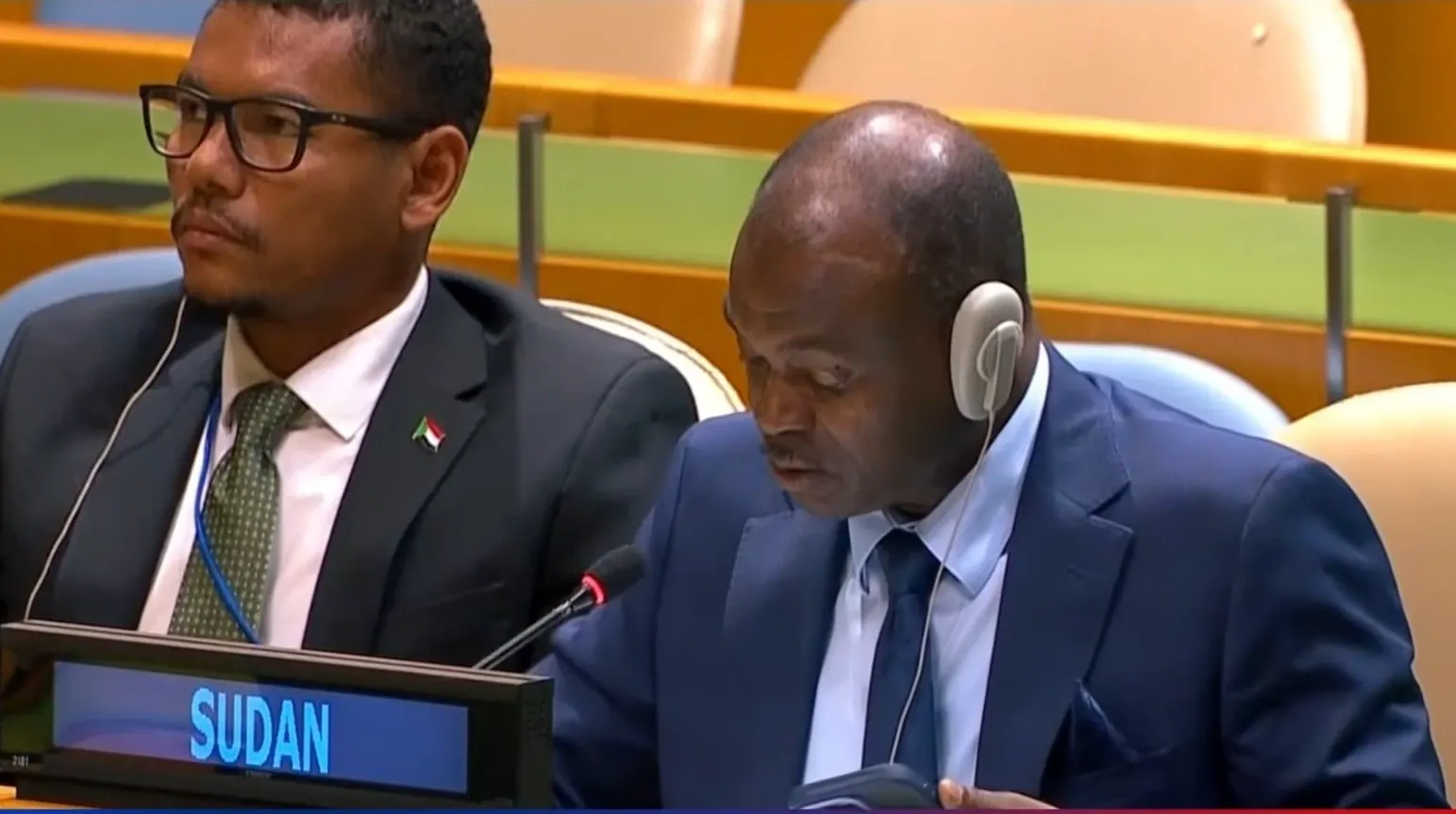
On September 29, 2026, Sudan's Permanent Representative to the United Nations, Harith Idris, delivered a strongly worded address to the UN General Assembly. During his speech, Idris criticized the United Arab Emirates for its alleged support of the Rapid Support Forces in Sudan. He emphasized Sudan's rejection of external interference in its internal affairs. Idris's comments reflect growing tensions between Sudan and the UAE over the latter's involvement in Sudanese conflicts.
Idris accused the UAE of providing military supplies, logistical services, and transportation networks to the Rapid Support Forces. He cited reports and documents submitted by Khartoum to the UN as evidence of Emirati support. According to Idris, this external backing has prolonged the conflict and exacerbated the humanitarian crisis in Sudan. The Sudanese envoy's assertions have sparked concerns about the UAE's role in the region.
The Sudanese diplomat also addressed allegations that the Sudanese military had used chemical weapons. Idris denied these claims, instead accusing the UAE of promoting such misinformation. His remarks underscore the complexities of the Sudanese conflict and the involvement of external actors. The UAE's alleged support for the Rapid Support Forces has been a point of contention between Sudan and the UAE.
Idris concluded his address with a stern rebuke, stating "اخسئوا بشسع نعل كليب" or "go away with the shoe straps of Klyb." This Arabic phrase is a strong expression of disdain and belittling. It translates to "depart in insignificance, for you are not even worthy of the straps of Klyb's shoes." This rhetorical flourish highlights the depth of Sudan's frustration with the UAE's actions.
The incident has garnered significant attention on social media platforms. A video clip of Idris's speech was shared on Twitter by Arabi21News, a news outlet that covers Middle Eastern and North African affairs. The post was accompanied by a caption describing Idris's comments as a "lacerating attack" on the UAE.
The tensions between Sudan and the UAE have implications for regional stability. Sudan has been embroiled in a conflict between the military and the Rapid Support Forces. External involvement has complicated efforts to resolve the crisis. Idris's address to the UN General Assembly reflects Sudan's concerns about foreign interference.
The situation remains fluid, with diplomatic channels strained between Sudan and the UAE. The international community is monitoring developments, as Sudan seeks to navigate its internal conflict amidst external pressures. The UN has a critical role in mediating the situation and promoting a peaceful resolution.
Key points
- Sudan's UN envoy Harith Idris accuses UAE of supporting Rapid Support Forces.
- Idris denies Sudanese military's use of chemical weapons, blaming UAE for spreading false claims.
- Tensions between Sudan and UAE escalate, with implications for regional stability.