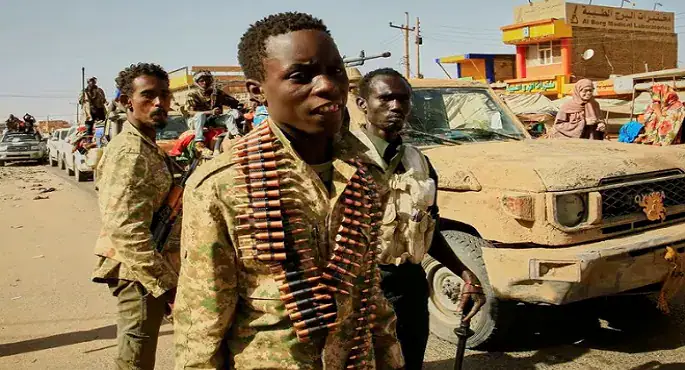
The Sudanese army has intensified its operations in the West Kordofan region, with a focus on advancing towards the city of Nuhud. According to a statement by Muhammad Diddan, spokesperson for the special operations unit in the state, the army is making progress on multiple fronts, destroying combat vehicles and capturing elements of the Rapid Support Forces. The army's advances have led to the retreat of Rapid Support Forces elements from the city towards their strongholds in western West Kordofan.
The army's gains in West Kordofan have been significant, with sources indicating that 30 combat vehicles of the Rapid Support Forces were destroyed in the vicinity of the city of Gbeish. The army's air power has also been instrumental in dealing with Rapid Support Forces military convoys. Meanwhile, the leader of the Rapid Support Forces, Mohamed Hamdan, has arrived in the Gbeish area to assess the military situation. The army's advances in West Kordofan are seen as a crucial development in the conflict.
The conflict in West Kordofan is part of a larger struggle for control between the Sudanese army and the Rapid Support Forces. The region is strategically important, as it lies on the route connecting Darfur to central Sudan. The army's advances have led to concerns about the humanitarian situation in the region, with many civilians caught in the crossfire. The Sudanese army is seeking to secure the region and open up a route to Darfur.
In a related development, the Sudanese army has deployed five combat vehicles to the 4th Infantry Division in the city of Damazin in the Blue Nile region. The deployment is part of efforts to support the armed forces in their fight against the Rapid Support Forces and the Sudan People's Liberation Movement. The move is seen as an effort to bolster the army's presence in the region and prevent Rapid Support Forces incursions.
The conflict in West Kordofan and the Blue Nile region is taking place against a backdrop of heightened tensions between the Sudanese army and the Rapid Support Forces. The two forces have been locked in a struggle for control of the country, with the Rapid Support Forces controlling large swathes of territory in Darfur and other regions. The Sudanese army is seeking to regain control of these areas and assert its authority.
The situation in West Kordofan remains fluid, with both sides suffering losses. The army's advances have led to concerns about the humanitarian situation, with many civilians displaced or caught in the crossfire. The international community has called for a ceasefire and negotiations between the two sides. However, the conflict continues, with both sides dug in and determined to achieve their objectives.
The conflict in Sudan has significant implications for regional stability and security. The country's strategic location and natural resources make it an important player in regional politics. The international community is watching the situation closely, with many countries calling for a peaceful resolution to the conflict. The Sudanese army's advances in West Kordofan are a significant development in the conflict, but the situation remains complex and uncertain.
Key points
- The Sudanese army is making significant gains against the Rapid Support Forces in West Kordofan.
- The conflict in West Kordofan is part of a larger struggle for control between the Sudanese army and the Rapid Support Forces.
- The situation in West Kordofan remains fluid, with both sides suffering losses.
Reporting sources
- الجيش السودانى يواصل التقدم بمناطق غرب كردفان · Nile News