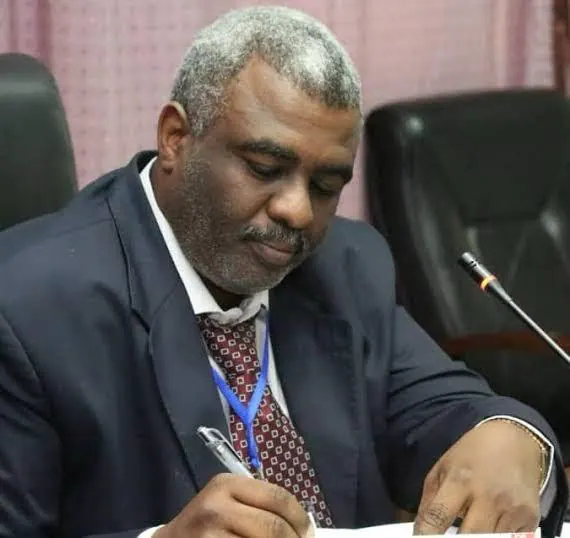
Tijaney Abdel Qader, a prominent Sudanese academic and thinker, has passed away, leaving behind a profound impact on the country's intellectual landscape. Abdel Qader was known for his independent thought and his contributions to the fields of philosophy and politics. He was a professor who engaged with students and intellectuals, encouraging critical thinking and open discussions. His approach to politics and ideology was characterized by a commitment to understanding and critique, rather than blind allegiance.
Abdel Qader's academic journey began at the University of Khartoum, where he was involved with the Islamic Institute of Knowledge. He was a key figure in shaping the intellectual discourse of his time, and his interactions with students and peers were marked by a spirit of inquiry and debate. Rather than seeking to recruit followers, Abdel Qader fostered an environment of critical thinking, allowing individuals to explore and evaluate ideas for themselves.
Throughout his career, Abdel Qader navigated the complex intersection of politics and intellectualism, maintaining a distance from partisan politics while still engaging with the issues of the day. His critiques of the National Salvation Revolution, which came to power in Sudan in the 1990s, exemplified his commitment to independent thought and his willingness to challenge prevailing narratives.
Abdel Qader's legacy extends beyond his academic contributions, as he embodied a model of intellectual engagement that prioritized critical thinking and independence. In a context where the proximity of intellectuals to those in power often defines their influence, Abdel Qader demonstrated that it is possible to have a profound impact through thought and critique, rather than through direct involvement in politics.
The circumstances of Abdel Qader's death have sparked tributes and reflections on his life and work. Many have noted that his passing represents a loss not only for the academic community but also for Sudanese politics and society more broadly. His contributions to the country's intellectual landscape will be remembered as a testament to the power of independent thought and critical engagement.
As Sudan continues to grapple with the challenges of conflict, instability, and social change, the legacy of thinkers like Abdel Qader serves as a reminder of the importance of intellectualism and critical thinking. In a context where polarization and conflict have often defined the national discourse, Abdel Qader's commitment to open discussion and critique offers a model for constructive engagement and intellectual curiosity.
The outpouring of tributes and condolences following Abdel Qader's passing underscores the impact he had on his peers and the wider intellectual community. As Sudan moves forward, it is clear that the values of independent thought and critical engagement that Abdel Qader embodied will continue to be relevant, offering a powerful reminder of the role that intellectuals can play in shaping the country's future.
Key points
- Tijaney Abdel Qader was a prominent Sudanese academic and thinker known for his independent thought and intellectual contributions.