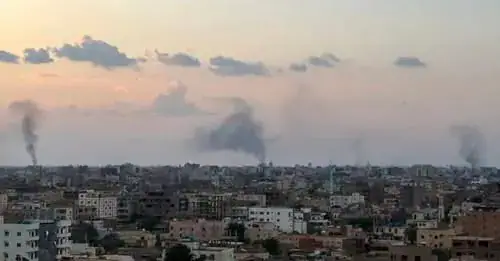
The ongoing conflict in Sudan has raised questions about Saudi Arabia's role as a mediator, with allegations that it has provided military support to the Sudanese army. The kingdom has been actively involved in diplomatic efforts to end the war, co-hosting negotiations in Jeddah aimed at securing a ceasefire and facilitating humanitarian access. However, allegations of arms transfers to the army have raised questions about the extent of Saudi Arabia's involvement and whether its relationships with the warring parties could complicate efforts to secure a lasting peace.
The conflict in Sudan began in April 2023, when fighting erupted between the Sudanese Armed Forces (SAF) and the paramilitary Rapid Support Forces (RSF). Saudi Arabia has played a prominent diplomatic role, hosting negotiations in Jeddah that led to the May 11, 2023, Declaration of Commitment to Protect the Civilians of Sudan. The declaration pledged to protect civilians and facilitate humanitarian assistance, but subsequent ceasefire efforts have failed to secure a lasting end to hostilities.
An investigation by the Global Institute for Strategic Studies (GISS) published in July 2026 alleged that military equipment had been transferred from Saudi Arabia to the Sudanese army through an air bridge linking Riyadh and Port Sudan. The alleged supplies included three batteries of M777 155mm howitzers, ammunition, and related equipment, alongside training arrangements for Sudanese personnel. However, the reported flights and logistical links do not establish what was transported, who authorised any transfers, or whether the alleged weapons deliveries occurred as described.
Sudanese army chief General Abdel Fattah al-Burhan has maintained that territory held by the RSF must be recaptured, rejecting proposals that would leave the paramilitary force in control of areas it occupies. The humanitarian stakes remain severe, with the United Nations estimating that 33.7 million people in Sudan would require humanitarian assistance in 2026. This underscores the urgency of securing sustained aid access and a political settlement.
A separate development reported by Reuters in April 2026 offered a more complicated picture of Riyadh's position. Reuters reported that Pakistan had placed a proposed $1.5 billion weapons and aircraft deal with Sudan on hold after Saudi Arabia requested that the agreement be terminated and withdrew plans to finance it. This suggests that Saudi Arabia's approach has been shaped by changing strategic calculations and external diplomatic pressure.
Saudi Arabia's position is best assessed through specific transactions and decisions, rather than assumptions that all its engagement with Sudan serves a single military objective. The debate over Saudi Arabia's role in Sudan extends into a wider regional environment where maritime security, military cooperation, and competing political interests overlap. Saudi Arabia has longstanding security and diplomatic relationships across the Red Sea and the Horn of Africa, a strategically important corridor for international shipping and trade.
In July 2026, Riyadh hosted an international meeting on its proposed Multinational Maritime Defence Alliance, an initiative intended to strengthen cooperation in protecting shipping lanes and international commerce. Fourteen countries subsequently issued a joint declaration supporting the initiative, including Saudi Arabia, Egypt, Sudan, Djibouti, and Somalia. The initiative reflects Riyadh's stated interest in strengthening collective maritime security, but security partnerships in the region also operate against a backdrop of competing alliances and strategic interests.
Key points
- Allegations of Saudi Arabia's military support to Sudanese army raise questions about its mediator role.
- Saudi Arabia's involvement in Sudan is part of a wider regional environment where maritime security, military cooperation, and competing political interests overlap.
- The humanitarian stakes in Sudan remain severe, with 33.7 million people requiring humanitarian assistance in 2026.