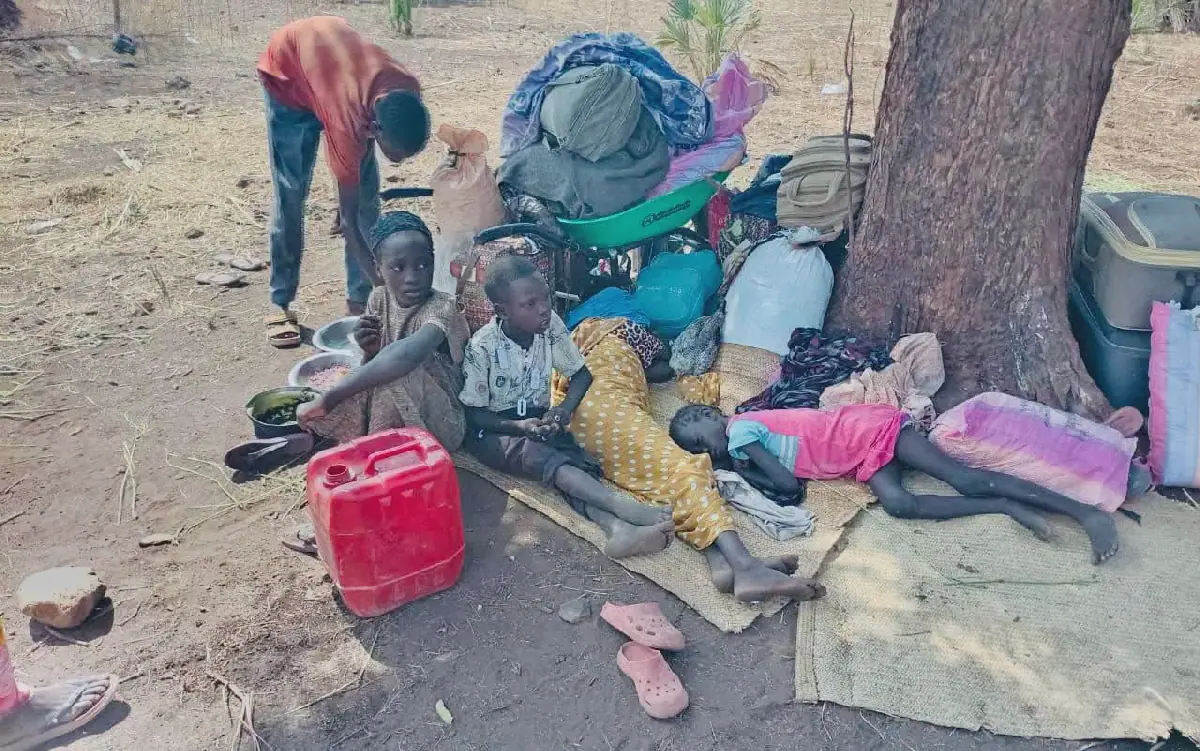
Intense fighting between the Sudanese army, Rapid Support Forces (RSF), and Sudan People's Liberation Army (SPLA) has led to a surge in displacement across Blue Nile state. The state's Humanitarian Aid Commission reports nearly 27,400 displaced families in three localities. People are fleeing within and beyond the state as the humanitarian situation worsens. Those displaced include individuals who fled Khartoum and El Gezira state during the 2023 fighting, residents from western parts of Blue Nile, and people escaping El Kurmuk, Geissan, and Wad El Mahi.
The displacement has put pressure on shelters, with Damazin locality hosting 12 camps. The largest camps include El Karama (1) with 1,840 families, El Karama (3) with 4,030 families, and El Karama (5) with 4,814 families. Other camps, such as El Salam centre and Agricultural Research Centre, accommodate 700 and 3,913 families, respectively. El Roseires locality also has several camps, including Ajeeb El Mangelik and Nusaiba, with 624 and 2,636 families.
Humanitarian Aid Commissioner Qisma Abdel Karim Deldoum stated that the total number of displaced families across the three localities is approximately 27,400. The commission registered this figure in coordination with humanitarian partners. Deldoum's statement highlights the severity of the situation, with thousands of families seeking shelter in displacement camps.
The International Organization for Migration (IOM) reported that nearly 100,000 people were displaced in Blue Nile state between January and August 2026. Children accounted for 47% of those displaced, with 99,277 people, representing 19,497 families, fleeing locations across the state. This number reflects a 66% increase compared to the previous update on May 21, 2026.
The IOM also provided a breakdown of displaced individuals by locality, with Geissan locality recording 39,570 displaced people, El Kurmuk with 32,515, and Bao with 27,192. These numbers demonstrate the widespread impact of the conflict on local communities. The IOM's report highlights the need for humanitarian assistance in the region.
Returnees from South Sudan have added to the pressure on displacement camps in Blue Nile state. The influx of people fleeing conflict and violence has strained local resources, exacerbating the humanitarian crisis. Efforts to provide aid and shelter to those displaced are ongoing, but the situation remains challenging.
The humanitarian situation in Blue Nile state continues to deteriorate, with fresh waves of displacement reported. The Sudanese army, RSF, and SPLA are engaged in intense fighting, leading to a surge in displacement. The international community is monitoring the situation, with organizations like the IOM providing critical support to those affected.
Key points
- Nearly 100,000 people displaced in Blue Nile state between January and August 2026
- 47% of displaced individuals are children under the age of 18
- 27,400 displaced families recorded in three localities of Blue Nile state