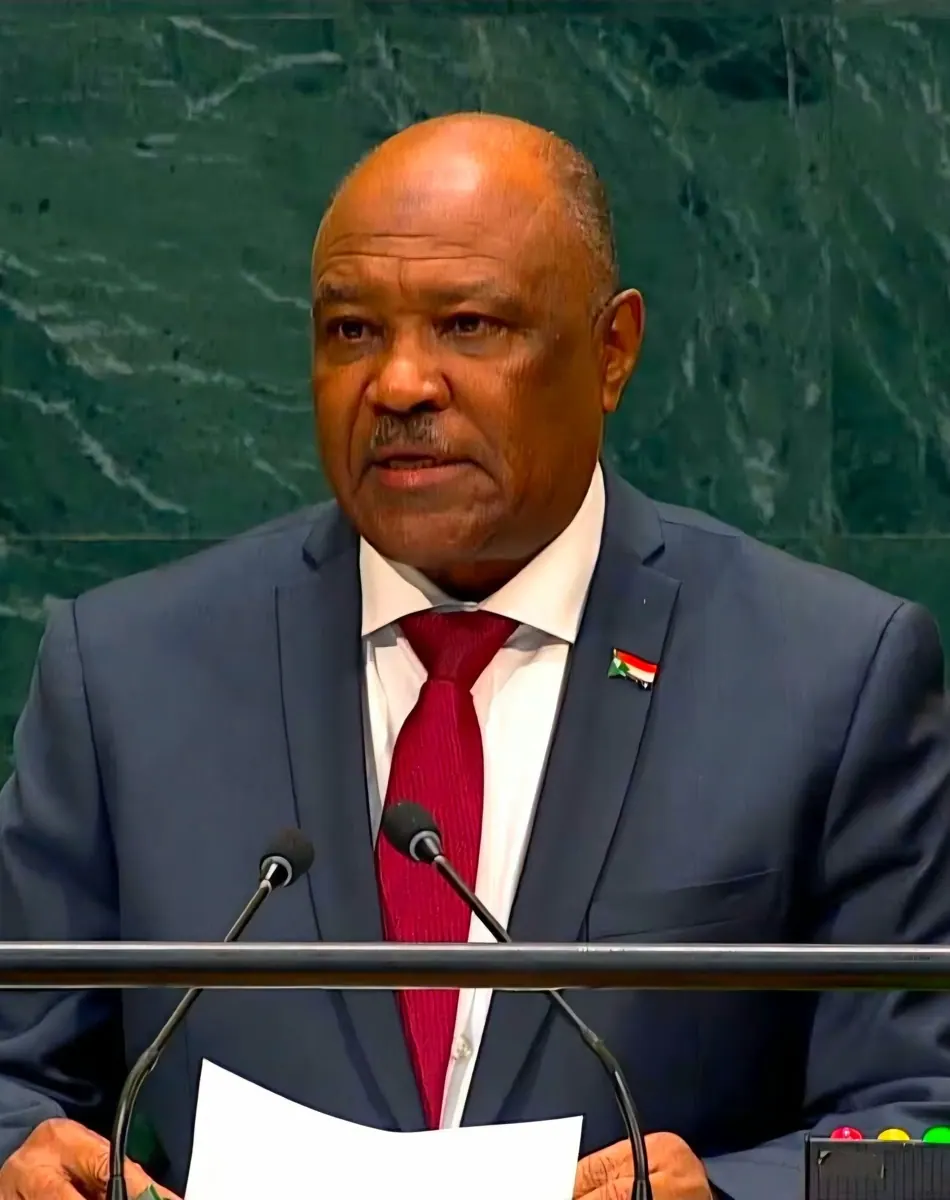
Sudanese Foreign Minister, Ambassador Mahi Eldin Salem, addressed the UN General Assembly on September 29, 2026, urging the international community to pursue legal avenues to hold perpetrators of crimes and violations in Darfur, Kordofan, and Blue Nile accountable. He accused some regional and external actors of backing these crimes, criticizing the UN Security Council for failing to condemn and name these backers, which he claimed enabled the cover-up of atrocities.
Ambassador Salem emphasized that ending the war requires pressure on regional backers and neighboring countries that provide arms, equipment, and supplies to the Rapid Support Forces (RSF) through their territories. He considered these countries complicit in opening fronts and repeated attacks by the RSF. Salem highlighted the importance of a comprehensive Sudanese-led dialogue, based on national ownership, to achieve peace and resolve the current crisis.
The UN General Assembly session witnessed clashes between the Sudanese, Emirati, and Chadian delegations. Sudanese Ambassador to the UN, Harith Idris, objected to the Emirati representative's description of the Sudanese government as the "Port Sudan authority." Idris accused the UAE of supporting the RSF and destabilizing Sudan by inciting sectarian strife and hatred, undermining Sudan's role in regional institutions, and attempting to disrupt its relations with neighbors.
Ambassador Idris also accused Chad of allowing its territory to be used as a conduit for arms, equipment, and mercenaries to support the RSF. In response, the Emirati representative stated that the "Port Sudan authority" is one of the parties to the Sudanese civil war and argued that the UAE does not need lectures from a representative of a "criminal regime" that has committed war crimes using internationally banned tools against its own people.
The Emirati delegate called for an immediate and unconditional humanitarian ceasefire leading to a permanent ceasefire and urged the expansion of the arms embargo to cover the entire Sudanese territory. He cited international reports alleging that the Sudanese Armed Forces used banned chemical weapons in the conflict, violating international law and the absolute ban on chemical weapons.
The Chadian representative described Sudan's accusations against his country as baseless, denying any involvement in the Sudanese conflict and affirming Chad's commitment to neutrality. He stated that Chad does not permit the use of its territory or infrastructure to serve the interests of any party in the Sudanese conflict.
The exchanges at the UN General Assembly reflect the complexities and challenges of addressing the Sudanese conflict, which has involved multiple regional and international actors. Sudan's push for accountability and an end to external interference is set against the backdrop of ongoing violence and humanitarian crises in Darfur and other affected areas.
Key points
- Sudan's Foreign Minister urges international community to hold perpetrators of Darfur crimes accountable
- Clashes erupt between Sudanese, Emirati, and Chadian delegations at UN General Assembly
- Sudanese ambassador accuses UAE and Chad of supporting RSF and destabilizing Sudan