The Pharmacy College at the University of Khartoum is facing significant challenges that are hindering its return to full in-person learning. According to a statement by the college's faculty, 82% of its members are currently residing outside of Sudan, with this number rising to 83% among fellowship and contract-based staff. This shortage is further complicated by the fact that only one professor out of six in a specific category is present in the country.
The situation has been exacerbated by the stoppage of salaries for fellowship and contract-based staff since June, impacting their participation in teaching, research, and committee work. The college's faculty members have expressed concerns about their economic and environmental conditions, with some having lost their homes or cars, and struggling with the high cost of living. The return of many staff members is contingent upon improvements in these areas.
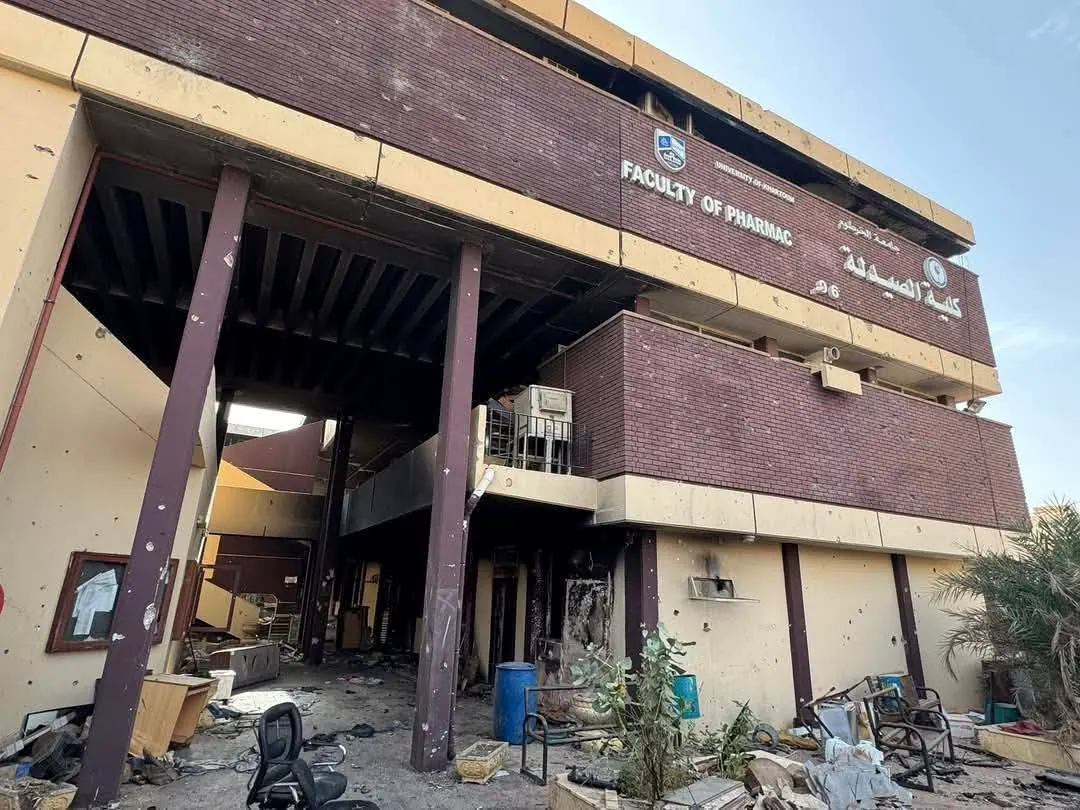
The college's infrastructure has also suffered greatly, particularly in its eastern wing, where significant damage was reported, especially on the third floor. A university engineering committee has recommended the demolition of this section to ensure safety and prevent further damage to the rest of the building. Additionally, fires have damaged parts of the building, including classrooms, offices, and laboratories.
The college's laboratories, including those for pharmaceuticals, pharmacology, and microbiology, have been completely destroyed, along with their equipment and furniture. Currently, only the western part of the college is operational, with limited classrooms and laboratories. The estimated cost for repairs and equipment replacement in this section is around $100,000, not including laboratory materials.
The college is also facing challenges related to basic services, such as electricity and sanitation facilities. Although solar energy has been installed in some administrative offices, the classrooms and laboratories still lack a reliable power source. Furthermore, only male students have access to functional restrooms, while female students face difficulties.
Despite these challenges, the Pharmacy College has managed to continue its academic activities since the start of the conflict in April 2023. Faculty members have been teaching through electronic platforms, preparing and correcting exams, and supervising graduation research. The college has also continued to hold examinations and graduation ceremonies, with the most recent graduation taking place in August 2025.
The college's efforts to adapt to the situation include coordinating clinical training in hospitals across different states in Sudan and in countries such as Egypt, Saudi Arabia, and the UAE. Additionally, the college has resumed issuing certificates and academic records to its graduates, facilitating their registration with medical councils abroad.
Key points
- The college's return to in-person learning is contingent upon improvements in safety, infrastructure, and the economic and environmental conditions for both students and faculty.