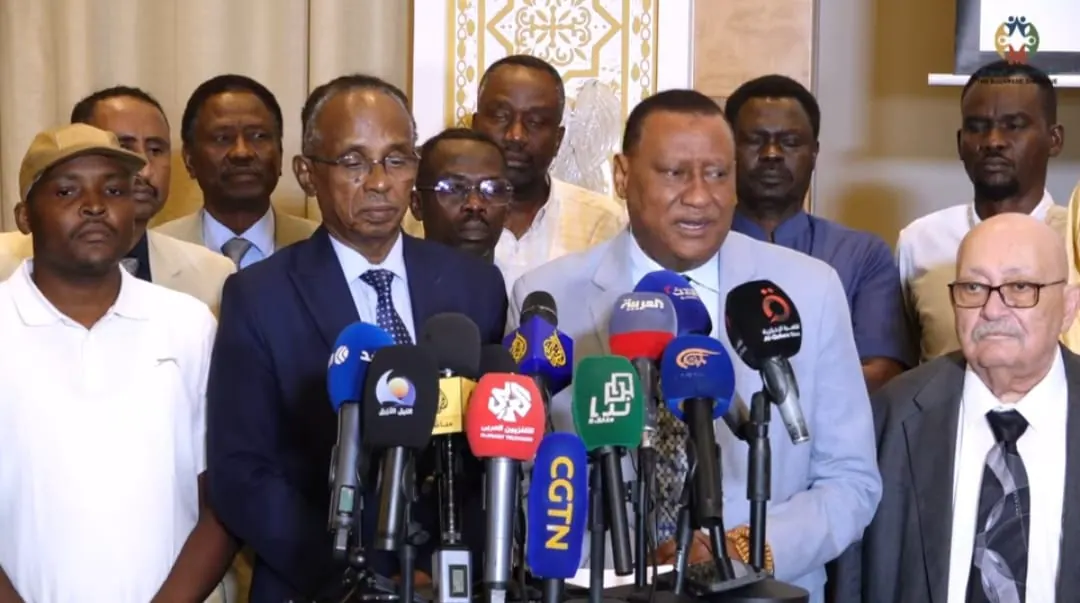
Sudan's national dialogue preparation committee, led by Engineer Othman Mirghani, has stated that the country's national dialogue has not yet begun. The committee is currently in the process of preparing the ground and arranging the requirements for its launch, including identifying the parties to the dialogue, its agenda, priorities, and how different parties will participate. This comes after a meeting between the committee and a delegation from the Freedom and Change - Democratic Bloc.
Mirghani described the meeting as "very fruitful," indicating that it involved discussions on various details related to preparing for the dialogue. The meeting also addressed questions and inquiries raised by the Democratic Bloc, with the committee providing answers to pave the way for continued communication and consultations in the coming period. He emphasized that the Democratic Bloc represents one of the pillars of the dialogue.
The committee's spokesperson stressed that the dialogue, when it starts, should be inclusive of all Sudanese people across different regions of the country. It should allow for the discussion of various issues and national agendas. Mirghani also clarified that the committee has not requested any external party to exert pressure on any Sudanese party. The committee's external contacts aim to build understanding and benefit from international experiences without affecting Sudan's decision-making or imposing an external agenda.
Omar Osman Abu Shuba, a leader in the Freedom and Change - Democratic Bloc, affirmed that the Sudanese national dialogue is, from the bloc's perspective, the way to find solutions to the crisis. He emphasized the need for the dialogue to be inclusive of all Sudanese people and different regions and sectors of society. The meeting between the bloc's delegation and the dialogue preparation committee was the latter's first with political forces.
Abu Shuba indicated that both parties agreed to continue meetings in the coming days to reach a clear vision for a genuine Sudanese national dialogue that includes everyone. Some issues still require further understanding, particularly regarding how to prepare for the dialogue, its priorities, and agenda. He stressed that the main position agreed upon is that dialogue is a means to produce solutions to the crisis and that achieving Sudanese consensus requires the participation of various components.
The leader of the Democratic Bloc called for the upcoming dialogue to be different in nature, goals, and parties, reflecting genuine inclusivity of Sudanese society components. This would allow for discussing basic issues and reaching sustainable solutions. He noted that Sudan has witnessed many dialogues and agreements since 1948, but they have not achieved their intended goals or addressed the roots of Sudanese crises.
The meetings between the national dialogue preparation committee and various political groups are part of the initial consultations aimed at preparing the ground for the dialogue and building understanding around its conditions, agenda, parties, and participation mechanisms. According to the committee, this phase does not represent the start of the dialogue itself but rather prepares to determine its features and requirements before transitioning to the comprehensive dialogue.
Key points
- The Sudanese national dialogue preparation committee is working to ensure an inclusive process.
- The dialogue aims to address the country's crisis through a national consensus.
- The process involves consultations with various political groups to determine the dialogue's agenda and participants.