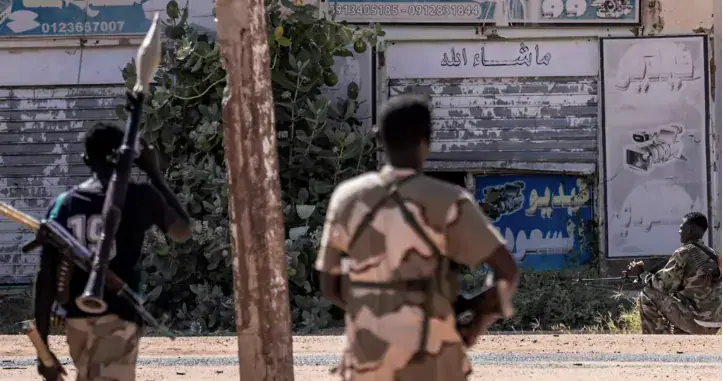
Sudan's Islamist armed brigades, specifically the al-Baraa ibn Malik Brigade, have declined a direct request from Saudi Arabia to deploy troops to Yemen. This refusal has significant implications for the ongoing conflict in Yemen and the relationships between Sudan, Saudi Arabia, and Iran. The al-Baraa ibn Malik Brigade is considered the military wing of Sudan's Muslim Brotherhood and has been designated a Foreign Terrorist Organization by the US Department of State.
The al-Baraa ibn Malik Brigade operates with a degree of autonomy, receiving orders and military support from the Sudanese army, but maintaining its own organizational and political structure. This autonomy allows the brigade to prioritize its own interests, particularly in Sudan, over external requests. The brigade's primary focus is on its existential battle against the Rapid Support Forces in Sudan, and deploying troops to Yemen would compromise its position.
A further complication in this situation is the brigade's relationship with Iran. The US Department of the Treasury revealed in September 2025 that the al-Baraa ibn Malik Brigade receives direct training and support from Iran's Islamic Revolutionary Guard Corps. This connection creates an awkward situation for Saudi Arabia, as it is asking a group backed by its arch-rival, Iran, to fight against another adversary in Yemen, the Houthis.
The refusal by the al-Baraa ibn Malik Brigade to deploy to Yemen has significant implications for Saudi Arabia's strategy in the region. Riyadh has been providing military, political, and financial support to the Sudanese army, and the Jeddah peace talks on Sudan are hosted in Saudi Arabia. However, the brigade's decision has exposed a crisis of trust between Saudi Arabia and its Sudanese allies.
The situation is further complicated by reports of human rights abuses committed by the al-Baraa ibn Malik Brigade. The Sudanese National Observatory for Human Rights documented cases of forced recruitment of children from schools in Khartoum by the brigade in July 2026. Additionally, Human Rights Watch reported that the brigade has been integrated into security cells, carrying out arrests and systematic torture targeting activists who do not subscribe to their ideology.
The actions of the al-Baraa ibn Malik Brigade have resulted in a complex landscape for Saudi Arabia. The kingdom is now faced with an ally that refuses to follow orders, a militia accused of committing war crimes, and an Iranian network expanding amid the war. This situation presents a significant challenge to Saudi Arabia's objectives in the region and highlights the fragility of alliances built around shared interests.
The rejection of Saudi Arabia's request by the al-Baraa ibn Malik Brigade represents a diplomatic setback for Riyadh. It demonstrates that Sudanese Islamists prioritize their own political and military calculations over Saudi Arabia's strategic interests. As the situation continues to unfold, it will be crucial to monitor the implications for the conflicts in Yemen and Sudan, as well as the relationships between Sudan, Saudi Arabia, and Iran.
Key points
- The al-Baraa ibn Malik Brigade's autonomy and priorities in Sudan led to the rejection of Saudi Arabia's request to deploy troops to Yemen.
- The brigade's relationship with Iran, receiving direct training and support from the Islamic Revolutionary Guard Corps, complicates Saudi Arabia's request and regional strategy.
- The situation has exposed a crisis of trust between Saudi Arabia and its Sudanese allies, with significant implications for the conflicts in Yemen and Sudan.