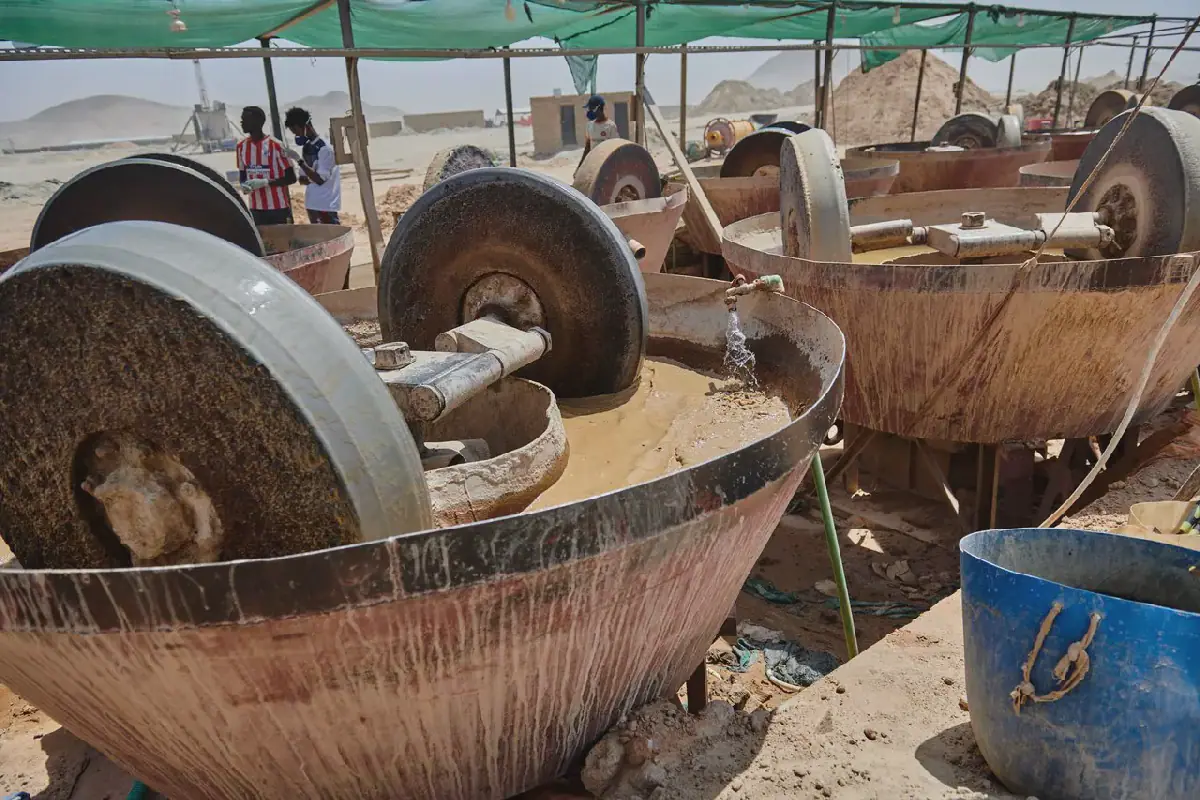
Sudan's gold exporters have accused powerful entities of exporting gold outside the country's legal institutions, with the gold produced annually, estimated to be around 70 tons worth over $8 billion, only contributing a fraction of that to the state's treasury. According to Abd al-Min'im Sadiq 'Alam, head of the gold exporters' union, the state's coffers only receive around $2 billion from gold exports.
The accusations come amid an ongoing dispute between Sudan's gold mining companies and the government over the mechanism for buying and pricing gold. The Union of Sudan's Gold Mining Companies recently threatened to halt gold production from October 1, citing concerns over the current pricing and purchasing mechanism used by the Central Bank of Sudan.
The union argues that the current system does not reflect the economic value of gold and the costs of production. In contrast, the government maintains that it has the right to regulate the gold sector and collect its legal revenues. The dispute highlights the challenges faced by Sudan in harnessing its gold wealth to address its economic crisis.
According to Sadiq 'Alam, the powerful entities exporting gold outside the law are the ones causing the state's losses. These entities use the Central Bank of Sudan, which they control, to buy gold at inflated prices, further devaluing the Sudanese pound. The illicit gold trade also fuels the black market for foreign currency, exacerbating the economic crisis.
The economic implications of the dispute are significant, with warnings that if the situation is not addressed, Sudan's economy will suffer greatly, and the impact will be felt by ordinary citizens. The country's economic woes are characterized by high inflation, a large trade deficit, and a shortage of foreign currency.
In response to demands from gold mining companies, the Central Bank of Sudan recently issued a circular allowing companies to sell their gold production to the bank or its authorized agents. The new measures also permit banks to complete export transactions using a prepayment system and allow companies to retain their foreign currency earnings for a specified period.
The developments underscore the complexities of Sudan's gold sector and the need for a more transparent and equitable system for buying and pricing gold. The outcome of the dispute will have significant implications for Sudan's economy and its ability to harness its gold wealth for the benefit of its citizens.
Key points
- Sudan's gold exporters accuse powerful entities of exporting gold outside the law.
- The country's gold production is estimated to be around 70 tons annually, worth over $8 billion.
- The dispute over gold pricing and purchasing mechanisms has significant implications for Sudan's economy.