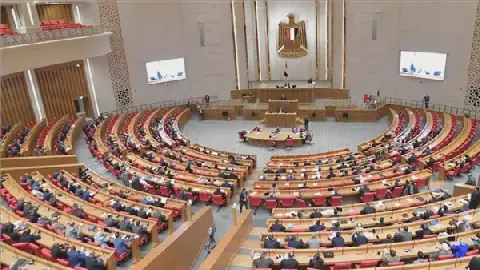
Sudan's engagement in the 81st session of the UN General Assembly has become a critical test of the country's political resilience. The ongoing conflict in the country has spilled over into the international arena, with Sudan's representation at the Assembly being closely watched. The delay in issuing a visa to President Abdel Fattah al-Burhan has raised concerns about the country's ability to participate fully in the Assembly. According to reports, the visa issue is linked to Sudan's stance on a proposed US-backed 90-day ceasefire.
The visa issue has become a political tool, with Sudan's sovereignty and right to participate in the Assembly being called into question. If the visa is issued, it could signal a separation between Sudan's internal conflict and its international obligations. However, if the visa is not issued, it could undermine the UN's ability to ensure the participation of its member states. The situation has also highlighted the strained relationship between Sudan and the US.
In a recent article published in Foreign Policy magazine, President al-Burhan called for a permanent end to the war, an end to external interference, and a link between peace and Sudan's political process. The article was seen as an attempt to present Sudan's narrative to a global audience and to garner international support. However, the international community's response will likely be shaped by its own interests and the evolving situation on the ground.
The UN Secretary-General, António Guterres, has also weighed in on the issue, calling for an end to external interference in Sudan's conflict. His comments are seen as an attempt to hold external actors accountable for their role in prolonging the conflict. Meanwhile, former Prime Minister Abdullah Hamdok and his delegation have been engaging in parallel international meetings, although they do not have official authorization to represent Sudan.
The presence of multiple Sudanese delegations at international forums has raised concerns about the potential for conflicting narratives and the representation of Sudan's interests. The situation has also highlighted the need for a unified Sudanese position on the conflict and its resolution. Sudan's Foreign Minister has stated that the country will engage with the General Assembly on several key issues, including a ceasefire, humanitarian aid, and the protection of civilians.
The complexities of Sudan's situation have been described as a "maze of possibilities," with the country's future hanging in the balance. The international community's response will likely have a significant impact on Sudan's trajectory, and the country's leaders will need to navigate these complexities carefully. The General Assembly session is not just a platform for Sudan to present its case; it is also an opportunity for the country to build alliances and protect its interests.
Ultimately, Sudan's participation in the General Assembly is a test of its ability to navigate the complexities of international diplomacy while asserting its sovereignty. The country's leaders will need to balance the need for international support with the imperative of protecting Sudan's interests and decision-making authority. The outcome of the General Assembly session will likely have significant implications for Sudan's future and its place in the international community.
Key points
- Sudan's participation in the 81st UN General Assembly session is critical to the country's international standing and its ability to navigate the complexities of the ongoing conflict.