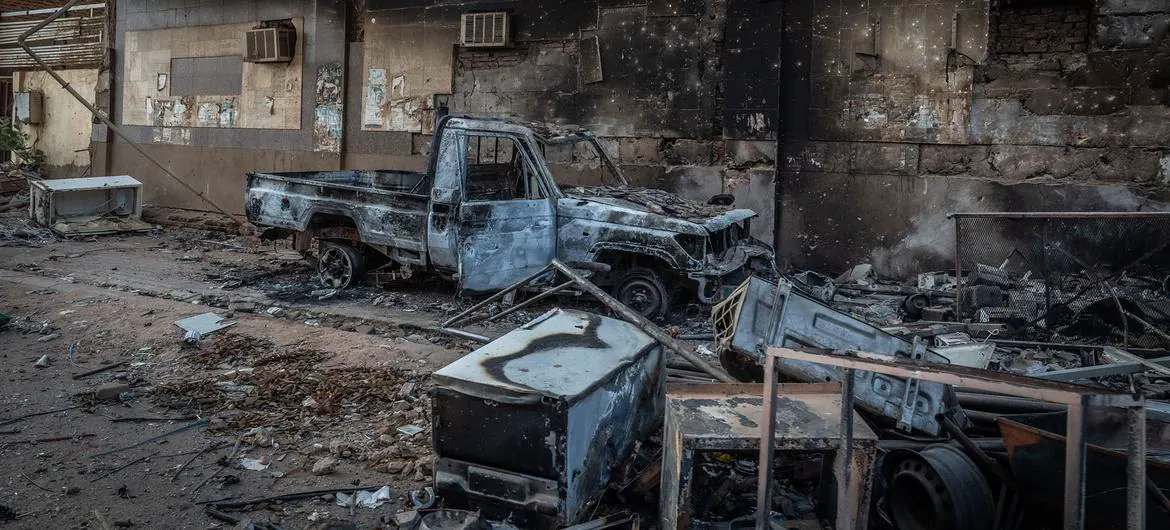
The Sudanese Doctors' Committee has warned of a catastrophic health situation in the country due to the ongoing conflict between the Sudanese army and Rapid Support Forces. The committee's spokesperson, Dr. Adiba Ibrahim, stated that the situation is dire, with a significant deterioration in environmental conditions and a rise in disease outbreaks. The conflict has resulted in the destruction of key healthcare facilities, including the "Marj" reference laboratory, the University of Khartoum laboratory, and the Al-Zahra Hospital laboratory.
Dr. Ibrahim explained that the environmental disaster is a result of the spread of corpses, overcrowding of citizens in conflict zones, and areas affected by the war, such as Khartoum, Omdurman, and Al-Jazira. The lack of attention to environmental sanitation has led to the spread of diseases and epidemics. The committee has presented a comprehensive report to the 63rd session of the Human Rights Council, highlighting the deterioration of the health situation in Sudan and the need for an immediate cessation of hostilities.
The report highlights the risks associated with reproductive health, including the suffering of pregnant women, breastfeeding mothers, and the inability to vaccinate children in displacement centers and refugee camps. The committee also pointed to the problem of sexual violence against young women and men, and the psychological trauma they face. Dr. Ibrahim emphasized that the victims of rape and sexual violence in Sudan face stigma from their families and society, which can lead to further psychological trauma and even suicide.
The committee's report also documents the violations against medical personnel, including arrests, assaults, and harassment. Many medical professionals have been killed or gone missing while performing their duties. Dr. Ibrahim stated that these violations have led to a shortage of medical staff in hospitals, which are struggling to cope with the large number of patients. The situation is further exacerbated by the lack of life-saving medicines and equipment.
Dr. Ibrahim described the situation as catastrophic, but emphasized that the committee is making efforts to improve the health situation. However, these efforts are insufficient to address the scale of the crisis. The committee is calling for an immediate and comprehensive cessation of hostilities, as well as the protection of medical personnel and facilities. They also urge the international community to provide humanitarian assistance to those affected by the conflict.
The Sudanese Doctors' Committee is participating in the 63rd session of the Human Rights Council to pressure the parties to the conflict to end the war and achieve peace in Sudan. Dr. Ibrahim stated that the committee's participation has been well-received by the international community, and that a radical solution to the crisis is needed. The committee is also calling for the support of the civilian and popular forces and the negotiation of a peaceful resolution to the conflict.
The conflict in Sudan has resulted in a significant humanitarian crisis, with widespread displacement, hunger, and disease outbreaks. The Sudanese Doctors' Committee is urging the international community to take immediate action to address the crisis. Dr. Ibrahim emphasized that the unity of the Sudanese people is essential to resolving the crisis and that all parties must work together to achieve a peaceful solution.
Key points
- The Sudanese Doctors' Committee warns of a health catastrophe in Sudan due to the ongoing conflict.
- The committee reports a significant deterioration in environmental conditions and a rise in disease outbreaks.
- The committee is calling for an immediate cessation of hostilities and the protection of medical personnel and facilities.