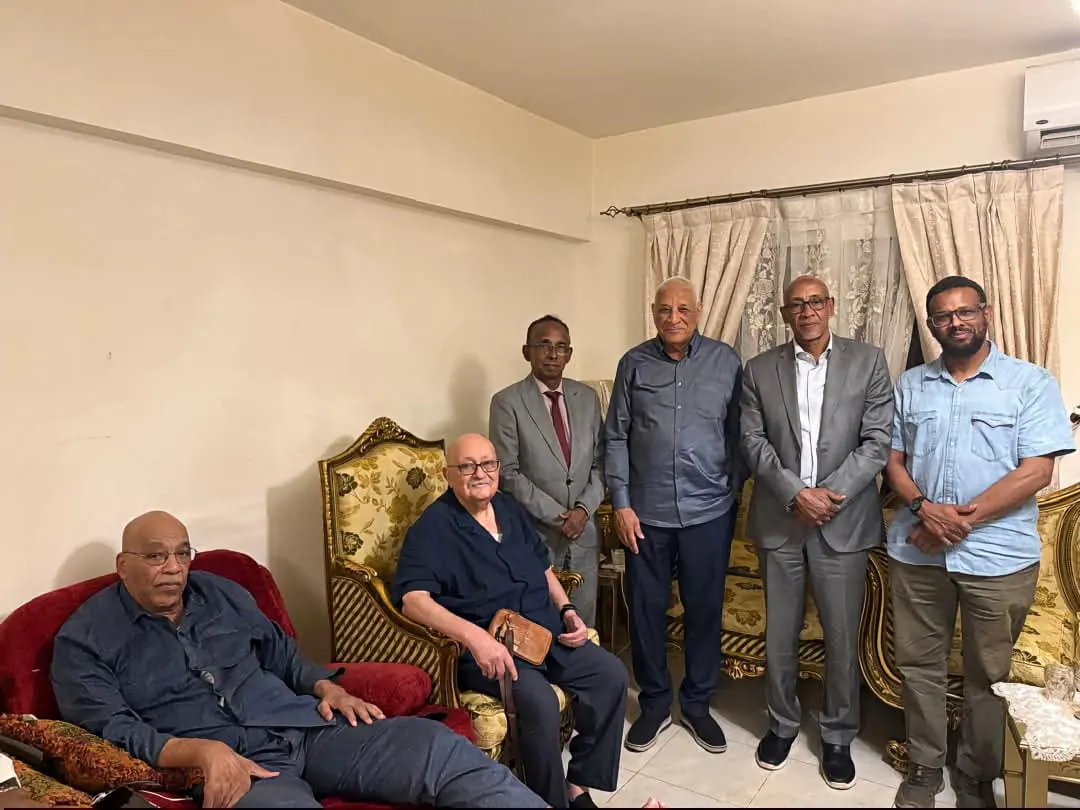
Sudan's dialogue committee, led by Prof. Qasim Badri, convened in Cairo on October 3, 2026, to discuss ways to address the country's ongoing crisis. According to Prof. Badri, the committee aims to create an environment conducive to dialogue and reconciliation. He emphasized that the Sudanese people have endured significant suffering and that it is time to find a solution through peaceful means.
The meeting was attended by members of the committee, including Engineer Hashem bin Auf, the former Minister of Infrastructure and Transportation in the transitional government of Abdalla Hamdok. The participation of various stakeholders, including bin Auf, reflects the committee's commitment to inclusivity and avoiding exclusion. The committee's goal is to bring together different groups to discuss the country's challenges and find a way forward.
Prof. Badri stressed that dialogue and political solutions are essential to resolving Sudan's crisis and ending the war. He noted that the Sudanese people have been patient for a long time, but it is now time to take concrete steps to address their concerns. The committee's efforts aim to create a platform for constructive dialogue, which will help to build trust and foster cooperation among different groups.
The dialogue committee is working to create an environment that is conducive to dialogue and reconciliation. The committee is engaging with various political and social groups to prepare the ground for a comprehensive dialogue process. This process will not be limited to specific groups or agendas, but will instead aim to be inclusive and representative of the Sudanese people.
The meeting in Cairo is part of the committee's efforts to engage with different stakeholders and gather input on the dialogue process. The committee is working to ensure that all voices are heard and that the concerns of different groups are taken into account. This approach aims to build trust and create a sense of ownership among the Sudanese people.
The European Union has expressed support for the dialogue process, with ambassadors announcing on October 1, 2026, that they will back the Sudanese-led dialogue initiative. This support reflects the international community's recognition of the need for a peaceful solution to Sudan's crisis. The committee's efforts have also been endorsed by various Sudanese groups, who see dialogue as a way to address the country's challenges.
The dialogue committee's work is seen as a crucial step towards resolving Sudan's crisis and promoting national reconciliation. The committee's commitment to inclusivity and dialogue reflects the Sudanese people's desire for a peaceful and stable future. As the committee continues its work, it is expected to face various challenges, but its efforts have the potential to make a positive impact on the country's future.
Key points
- The Sudanese dialogue committee, led by Prof. Qasim Badri, is working to create an environment conducive to dialogue and reconciliation.
- The committee's efforts aim to be inclusive and representative of the Sudanese people, with participation from various stakeholders.
- The international community, including the European Union, has expressed support for the dialogue process.