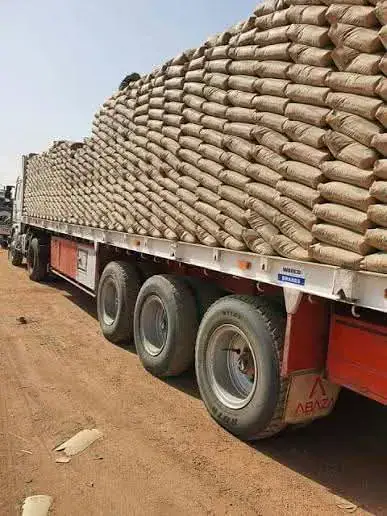
A significant backlog of cement shipments has accumulated at the Ousif crossing in Sudan, as large numbers of trucks carrying tons of cement from Egypt are being held up. This development has sparked concerns among suppliers, who claim that the delay is hindering the implementation of a decision to lift restrictions on 46 goods, including cement. The restrictions were lifted by General Abdel Fattah al-Burhan, head of the Transitional Sovereign Council and commander-in-chief of the armed forces.
Suppliers have expressed frustration over the reasons behind the delay in implementing the decision to lift restrictions on the listed goods. They point out that their shipments remain stranded at the crossing, awaiting the arrival of a specialized technical team to conduct necessary inspections. According to one supplier, who wished to remain anonymous, the delay is attributed to the lack of inspection procedures, citing the non-operation of the "Beldna" platform under the Ministry of Industry and Trade.
The "Beldna" platform, which is supposed to facilitate the inspection process, has been reportedly functioning normally, according to assurances from the Ministry. Suppliers had approached the Ministry regarding the issue and received confirmation that the platform was operational and not experiencing any technical difficulties. However, the continued delay has raised concerns about the impact on the supply of cement to the market.
The situation has prompted calls from suppliers for urgent intervention from relevant authorities to resolve the impasse and allow the shipments to proceed. They stress that the delay is not only causing financial losses but also threatening to disrupt the availability of cement in the market. The development has significant implications for the construction industry and the overall economy.
General al-Burhan's decision to lift restrictions on the 46 goods, including cement, was aimed at stimulating economic activity and addressing supply shortages. However, the current logjam at the Ousif crossing has raised questions about the effectiveness of the decision and the ability of authorities to implement it. The issue has also highlighted the need for improved coordination and communication between regulatory bodies and suppliers.
The backlog of shipments at the Ousif crossing has also sparked concerns about the potential impact on Sudan's economic recovery. The country has been facing significant economic challenges, including inflation and foreign exchange shortages. The delay in resolving the issue may exacerbate these challenges and undermine efforts to revive economic growth.
Efforts are underway to resolve the issue and allow the cement shipments to proceed. Suppliers are hopeful that the situation will be resolved soon, enabling them to deliver the much-needed cement to the market. The incident has underscored the importance of efficient logistics and regulatory frameworks in facilitating trade and economic activity.
Key points
- The delay in implementing the decision to lift restrictions on 46 goods, including cement, has significant implications for Sudan's economic recovery and the construction industry.