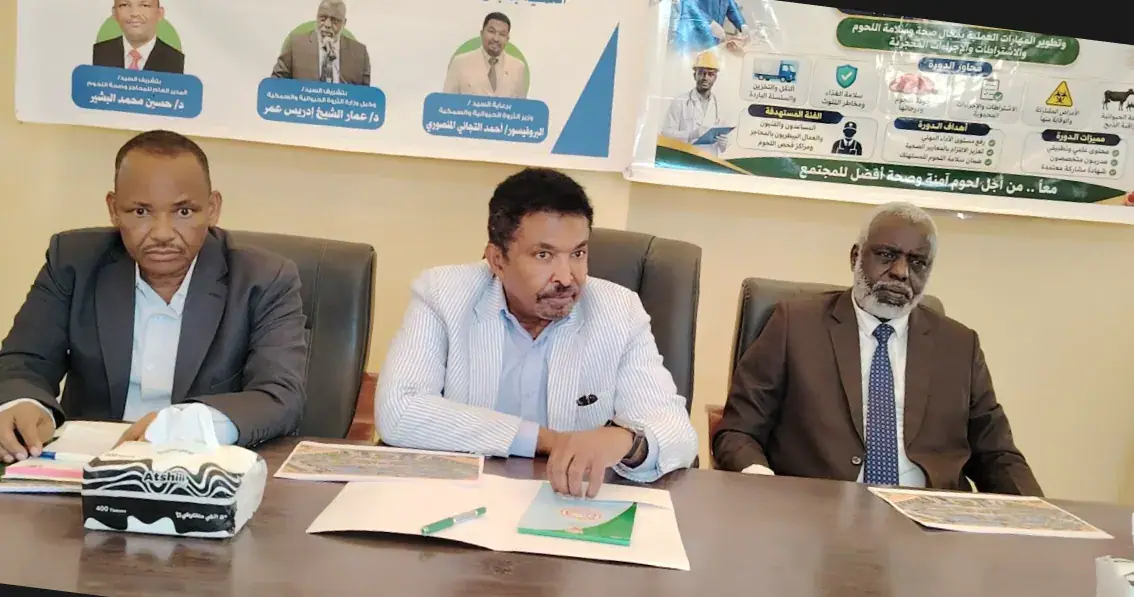
Sudan's Minister of Animal Wealth and Fisheries, Professor Ahmed Al-Tigani Al-Mansouri, has emphasized the importance of qualifying and upgrading the professional efficiency of workers in veterinary quarantines and meat inspection centers. This move aims to develop their capabilities in line with international standards in meat health and safety. The initiative was announced during the minister's address to a training session organized by the ministry.
The training program, held at the National Center for Meat Inspection and Classification, aims to promote professional capacities and improve performance in the field of meat safety and health. The event was attended by various stakeholders, including the Deputy Minister, Dr. Ammar Al-Sheikh Idris, who expressed confidence in the Sudanese people's ability to overcome current challenges. He highlighted the need to maximize the use of available resources to develop the country and achieve citizens' welfare.
The ministry is also working on establishing animal production cities, a move expected to increase production and productivity. This project aligns with the ministry's goals to develop the animal wealth sector and enhance its contribution to the national economy. The initiative is part of a broader effort to improve the sector's efficiency and promote exports.
Dr. Ammar Al-Sheikh Idris noted that Sudan has significant resources and capabilities that require proper management and investment to maximize benefits. He cited efforts to rehabilitate the National Center for Meat Inspection and Classification to enable it to perform its assigned tasks and enhance its role in sector development.
The Director-General of Quarantines and Meat Health, Dr. Hussein Muhammad Al-Bashir, called for enhanced coordination and integration between the public and private sectors. This collaboration aims to increase production, boost exports, and support food security. The training program is seen as a first step towards achieving these goals.
The National Center for Meat Inspection and Classification has significant potential to play a active role in training at the local and African levels. It can also provide various meat products to meet domestic consumption needs and export surplus products to foreign markets, thereby generating hard currency and enhancing national economy resources.
The training program concluded with a certificate distribution ceremony, where participants expressed their readiness to apply the acquired knowledge and expertise to improve their work and elevate the center's performance. This initiative supports the ministry's goals in meat health and safety, ultimately contributing to increased production and exports.
Key points
- The program aims to enhance the skills of veterinary quarantine workers and meat inspectors in line with international standards.
- The initiative supports the development of animal production cities to increase production and productivity.
- The program promotes coordination between the public and private sectors to boost exports and support food security.