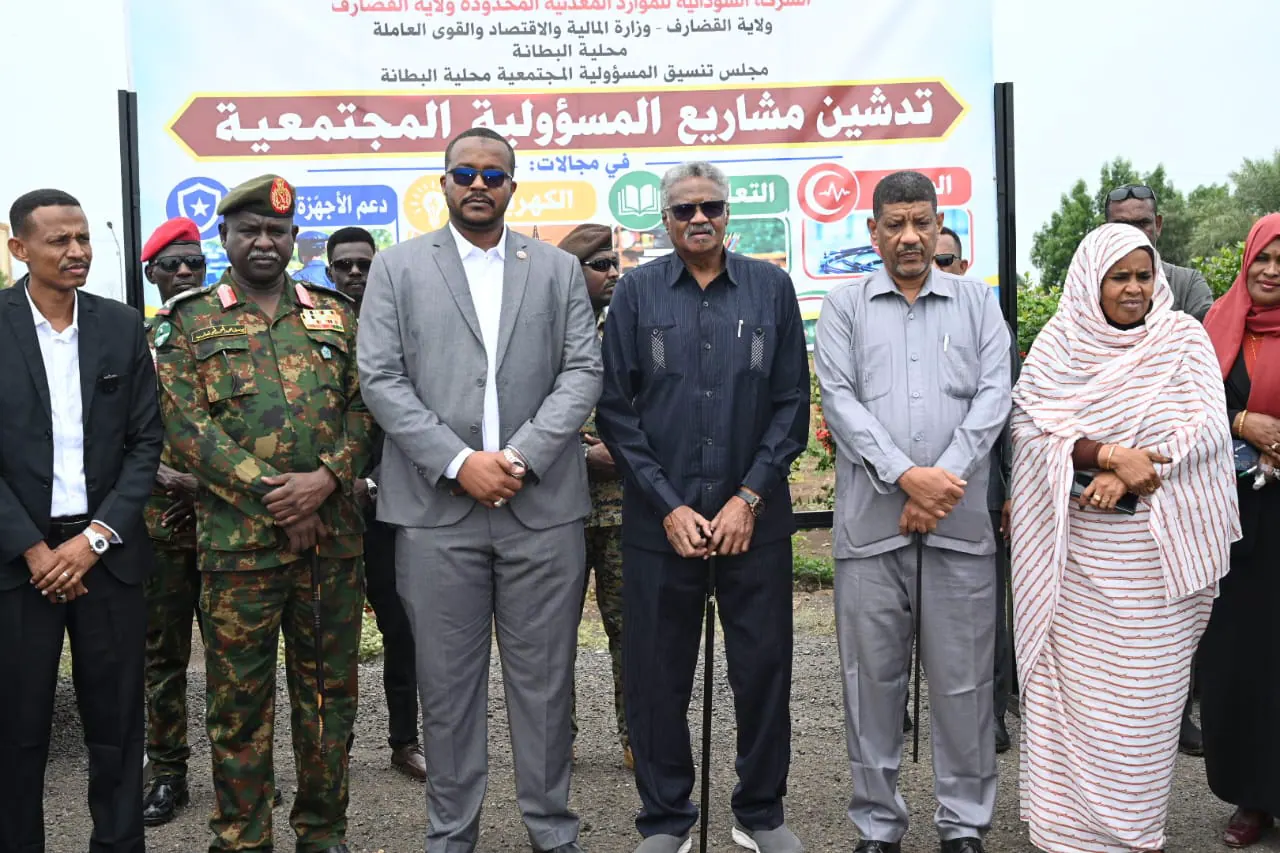
The Al-Batana region in Sudan's Gedaref state is on the cusp of a new era of development, thanks to a slew of projects implemented through social responsibility initiatives in the mining sector. According to Ahmed Babiker Al-Daw Shoula, Secretary-General of the Al-Batana Locality's Social Responsibility Council, the region has seen unprecedented development in various sectors, including healthcare, education, water, roads, and security. This progress is a result of collaboration between the social responsibility initiatives and the state government.
Shoula highlighted that the region has witnessed the implementation of seven major batches of development projects, with the seventh batch recently launched. These projects include equipment and machinery, such as cars to support the police, education, and waste management sectors, as well as motorcycles for the locality. He commended the efforts of the Sudanese Mineral Resources Company and the Gedaref state government in executing these projects, which aim to improve the lives of citizens in the region.
The development projects in Al-Batana have had a significant impact on the region's infrastructure and services. In the healthcare sector, 19 health centers and three rural hospitals have been rehabilitated, equipped with necessary devices and equipment, and provided with ambulance cars. Additionally, a unit for engineering machinery has been established to carry out excavation works. The region has also seen the implementation of 54 water projects, including maintenance, rehabilitation, and construction of new water sources.
Shoula also noted that the region has witnessed significant improvements in the education and transportation sectors. He highlighted the establishment of a unit for road machinery to carry out road works in the locality. Furthermore, the region has seen the introduction of a power transmission line to the Al-Sabbagh area, marking a significant milestone in the region's development. This achievement was made possible through a tripartite partnership between the state government, the locality, and the Social Responsibility Council.
The Wali (Governor) of Gedaref state, Major General Mohamed Ahmed Hassan, praised the role of the Social Responsibility Council in Al-Batana in directing resources towards projects that have a direct impact on citizens' lives. He commended the efforts of the Ministry of Minerals and the Sudanese Mineral Resources Company in mobilizing resources and managing them effectively to develop mining host communities. The Wali also expressed gratitude to the Al-Batana locality and the Social Responsibility Council for their contributions to addressing community challenges.
Omar Malek Abu Sen, Manager of the Sudanese Mineral Resources Company in Gedaref, stated that the launched projects aim to serve the health, education, and environmental sectors, as well as community security. He emphasized that these projects are a continuation of the company's efforts to implement social responsibility initiatives that have a tangible impact on citizens' lives. The company's projects focus on vital sectors that are directly related to citizens' well-being.
The development projects in Al-Batana are a testament to the positive impact of social responsibility initiatives in Sudan's mining sector. The region's transformation is a result of collaboration between the government, mining companies, and local communities. Key initiatives include the implementation of healthcare, education, and infrastructure projects, which have improved the lives of citizens in the region.
Key points
- The Al-Batana region has seen significant development through social responsibility projects funded by mining activities.
- The projects have had a positive impact on various sectors, including healthcare, education, and infrastructure.
- The development initiatives are a result of collaboration between the government, mining companies, and local communities.