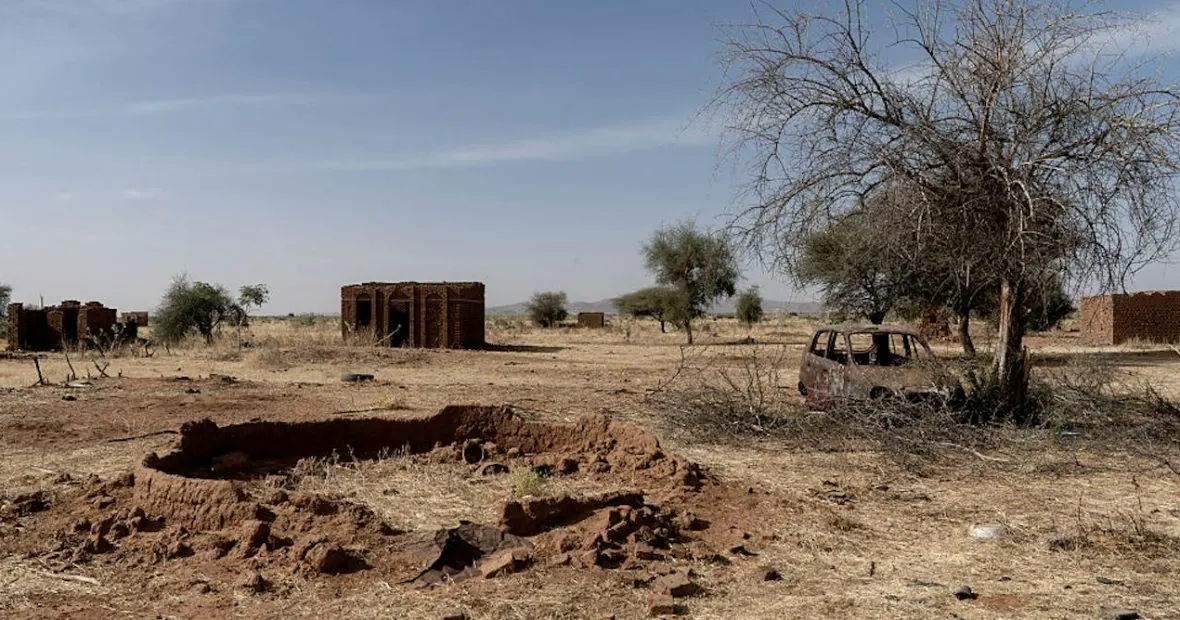
The ongoing civil war in Sudan has resulted in a significant number of fatalities, with various organizations providing different estimates. In 2025, the conflict intensified, particularly with the Rapid Support Forces' advancement in Darfur and North Kordofan, leading to increased civilian deaths and displacement. A UN fact-finding mission concluded that the Rapid Support Forces' actions in El-Fasher bore the hallmarks of genocide.
Different organizations have reported varying numbers of deaths in Sudan for 2025. ACLED, a global conflict monitoring organization, reported around 19,000 deaths, describing this as a conservative minimum count of deaths directly caused by political violence. In contrast, the Uppsala Conflict Data Program estimated that at least 60,000 people were killed, with over 10,000 fatalities in fighting between the army and armed groups.
The Uppsala Conflict Data Program's estimate of 60,000 killed in El-Fasher draws directly on Yale's Humanitarian Research Lab, which estimated that at least 60,000 people were killed during and after the paramilitary group's capture of El-Fasher between late October and the end of December 2025. These figures, however, only capture direct deaths from violence and do not account for those who may have died from disease and starvation.
The differences in estimates stem from how organizations select and handle sources. The Uppsala Conflict Data Program provides a "best" figure, a "high" estimate, and a "low" estimate to reflect the uncertainty around the death toll. In contrast, ACLED reports a single fatality number, taking the most conservative figure when sources disagree.
Researchers have developed a model to convert a single number into a range of plausible deaths, providing an uncertainty estimate. When applied to Sudan in 2025, the model indicates that the most likely death toll is close to 80,000 deaths, with a 90% probability that the true number falls between 73,000 and 90,000, and a small chance that the actual number is as high as 100,000.
The model's estimates are informed by the Uppsala Conflict Data Program's knowledge and should be read with caution. While the results provide a narrower range of uncertainty than assumed, they cannot be checked against the true number of deaths, which tends to remain unknown.
Understanding the variation in conflict death estimates is crucial, as it highlights the challenges of accurately counting fatalities in active conflict zones. Providing a range of plausible deaths instead of a single figure gives weight to the estimate and leaves little room to dismiss inconvenient numbers as unreliable.
Key points
- The estimated death toll in Sudan's 2025 conflict could be as high as 100,000.
- Different organizations have reported varying numbers of deaths, ranging from 19,000 to 60,000.
- A new model has been developed to provide a range of plausible deaths, indicating a 90% probability that the true number of fatalities falls between 73,000 and 90,000.