Sudan's government has responded to remarks by the US state department questioning its legitimacy, saying it upholds its national sovereignty and calling on Washington to engage positively with the African country. The US state department spokesperson, Tommy Pigott, said on Tuesday that neither the Sudanese armed forces nor the Rapid Support Forces (RSF) paramilitary, or their respective leaders, represent legitimate, constitutional governance for Sudan. This has prompted a strong reaction from Sudan's government.
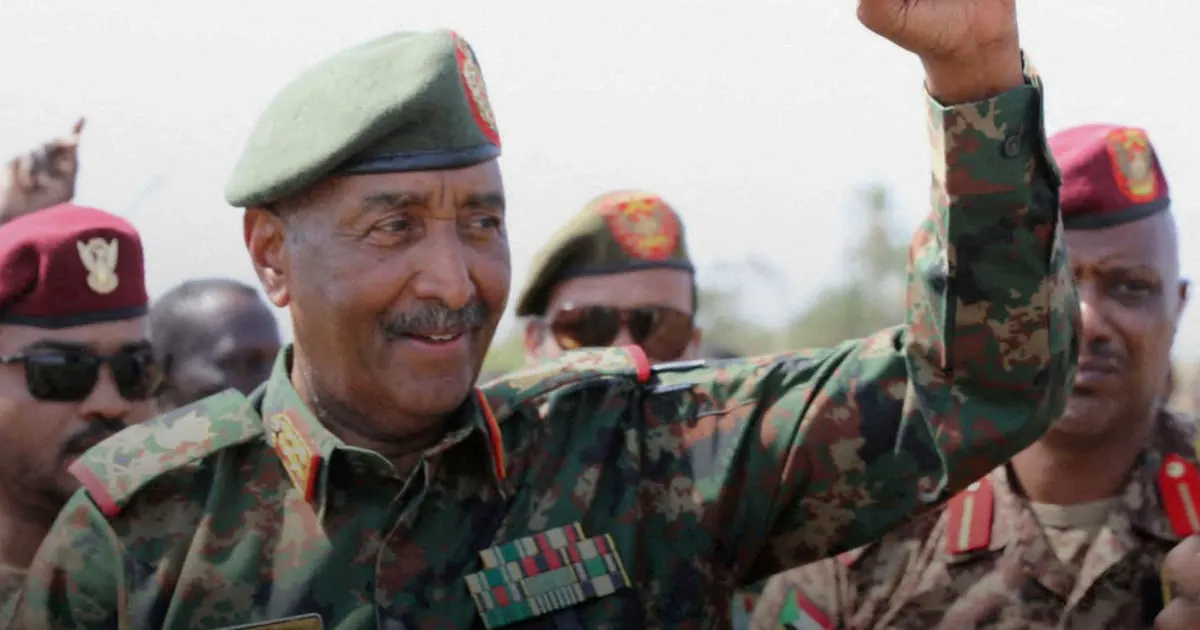
The US had previously withheld a visa for Sudanese army chief Abdel Fattah al-Burhan, who was scheduled to visit New York for the annual gathering of world leaders at the UN. According to sources, his attendance was made contingent on his agreeing to a 90-day ceasefire. This development comes amid Sudan's ongoing war, which began in April 2023, following a power struggle between the military and the RSF. The conflict has resulted in the displacement of over 1.4 million people.
The Sudanese ministry of foreign affairs and international co-operation strongly rejected the US state department's statement, emphasising that any peace initiative must respect Sudan's sovereignty, unity, territorial integrity, and legitimate national institutions. The ministry also highlighted the need to address the root causes of the war's continuation, including negative foreign interference. Sudan's government stresses that a successful peace initiative must be grounded in these principles.
The conflict in Sudan has created one of the world's worst humanitarian crises. A UN fact-finding mission recently reported that foreign weapons, military technology, fighters, and logistical networks are sustaining the conflict, allowing the warring parties to strike distant civilian areas with drones. This has exacerbated the situation, making it increasingly challenging to achieve a lasting peace.
US secretary of state Marco Rubio described attempts to mediate an end to the conflict in Sudan as frustrating. He told reporters in New York that despite agreements and commitments, the parties involved often back off, believing they can gain an advantage. Rubio also noted the role of external actors in prolonging the conflict.
The Sudanese government's response to the US state department's remarks underscores the complexities of the conflict and the challenges of achieving a lasting peace. Sudan's emphasis on its sovereignty and the need for respect from foreign powers highlights the delicate balance of international involvement in the conflict.
The situation in Sudan remains dire, with significant humanitarian and governance challenges. The international community, including the US, will need to engage constructively with Sudan's government to address these challenges and support a peaceful resolution to the conflict.
Key points
- Sudan's government rejects US remarks questioning its legitimacy
- The conflict in Sudan has displaced over 1.4 million people
- A UN fact-finding mission reports foreign interference sustaining the conflict