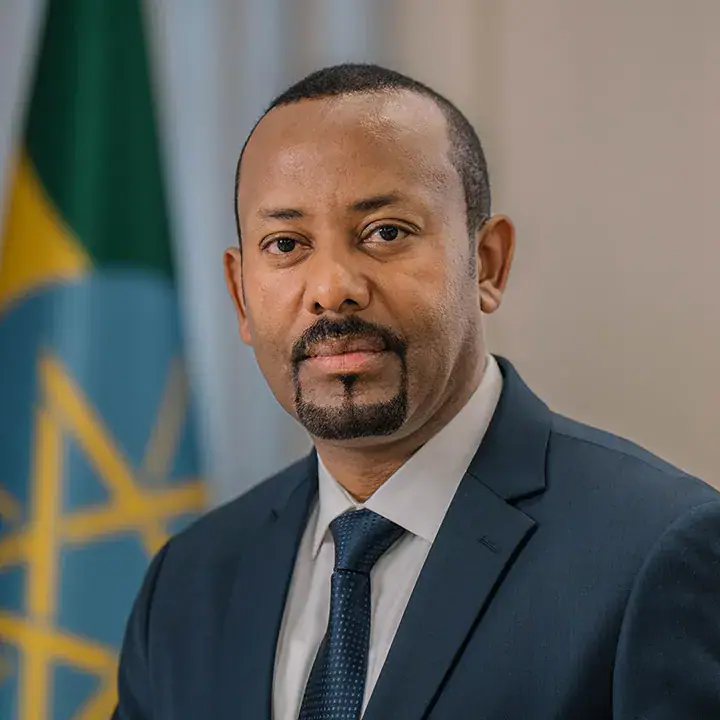
The Sudanese government has rejected Ethiopian Prime Minister Abiy Ahmed's initiative to host and facilitate an inclusive Sudanese dialogue aimed at ending the war. In a statement, the government accused Ethiopia of supporting the paramilitary Rapid Support Forces (RSF) and allowing drones to be launched from its territory to attack Sudan. This move comes despite welcoming responses from the Sudan Founding Alliance and the Civil Democratic Alliance of Revolutionary Forces (Sumoud).
Abiy Ahmed announced on Tuesday that Ethiopia was prepared to host talks involving Sudan's military, political and civilian forces to end the war and reach a comprehensive national consensus. He emphasized that Ethiopia would maintain an equal distance from all parties and use its diplomatic relations to create conditions for negotiations. The proposed dialogue would address an end to the fighting, an inclusive national process, and arrangements for the next phase.
The Sudan Founding Alliance (Tasees), which is aligned with the RSF, welcomed the initiative, describing it as an opportunity to address the roots of Sudan's crisis and establish a new national agreement. Tasees Energy and Oil Minister El Basha Tebeig accused Egypt of influencing the government's rejection, saying the decision reflected the dominance of regional interests over Sudan's national priorities.
Sumoud, another political alliance, also welcomed Abiy's statement, praising Ethiopia's interest in ending the war and calling for coordinated regional and international efforts towards a Sudanese-led peace process. However, Sumoud leader Shehab Ibrahim said the rejection was expected given disagreements over implementation mechanisms and guarantees on the ground.
The Sudanese government called for an independent investigation and urged the African Union and international partners to exclude Ethiopia from any arrangements to facilitate dialogue. They insisted that Sudanese parties must determine the venue, agenda, and facilitators by consensus. This rejection raises questions about the role of regional influences in Sudan's peace process.
Writer and political analyst Suhaib Hamid told Radio Dabanga that the Ethiopian initiative lacked sufficient regional and international consensus to succeed amid continuing conflict and competing interests in the Horn of Africa. He warned that continued political deadlock could fuel further escalation unless international efforts were coordinated around binding commitments and addressed the roots of Sudan's crisis.
The rejection of Ethiopia's initiative highlights the complexities of Sudan's peace process and the challenges of finding a neutral facilitator. The situation remains uncertain, with Sudan's parties yet to agree on a venue, agenda, and facilitators for dialogue. The international community will be watching closely for any developments that could impact the country's stability.
Key points
- Sudan's government rejects Ethiopia's offer to host peace talks due to concerns over neutrality.
- The rejection raises questions about regional influences in Sudan's peace process.
- The situation remains uncertain, with Sudan's parties yet to agree on a venue, agenda, and facilitators for dialogue.
Reporting sources
- Sudan rejects Ethiopia’s initiative to host peace talks · Radio Dabanga