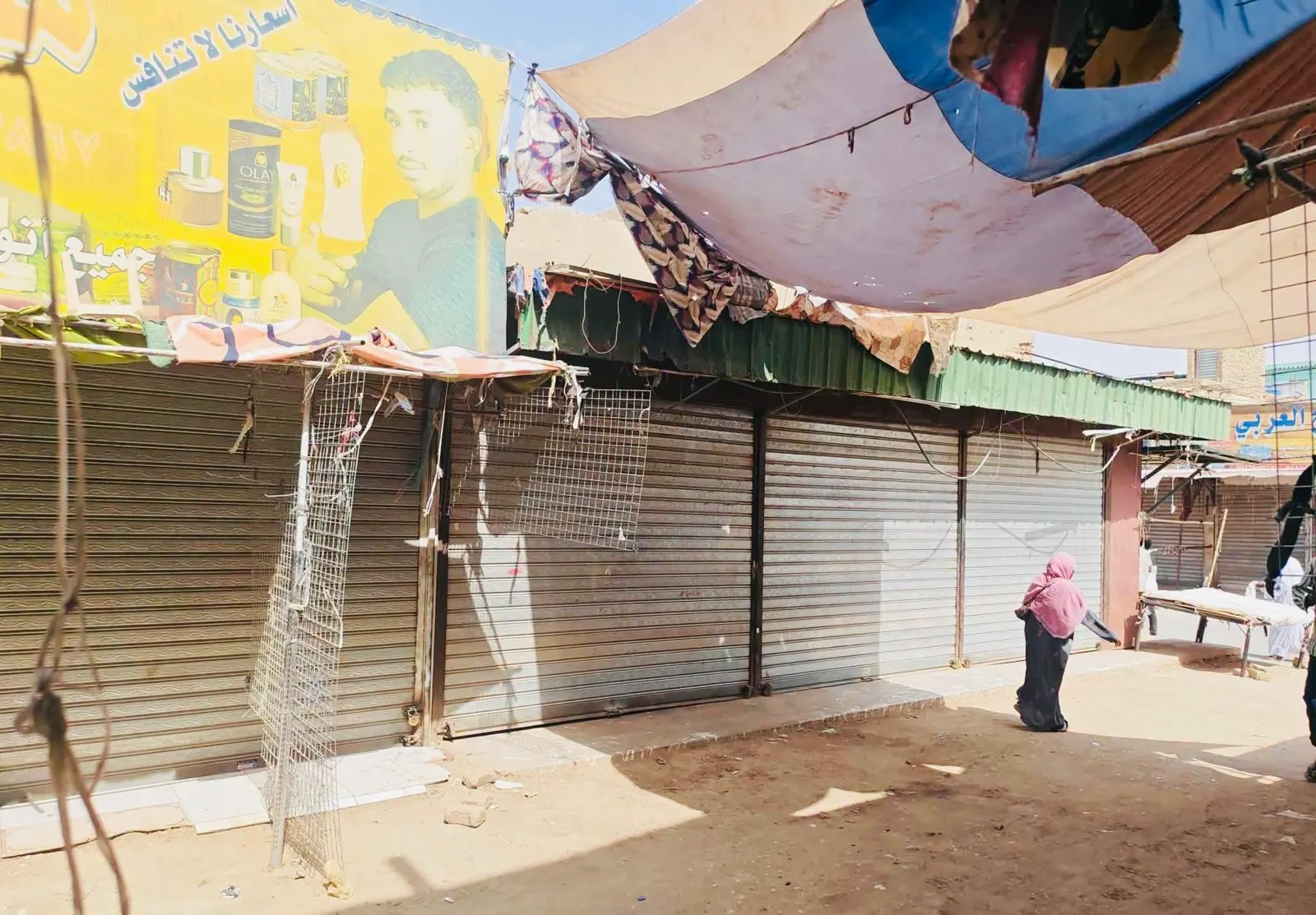
Over the past few weeks, markets in several Sudanese cities have witnessed a series of strikes, closures, and protests. The immediate causes of these actions varied, including taxes, fees, and market regulations, but they all shared a common thread of increasing economic pressures on traders and commercial sector workers. From Al-Duwim to Atbara, Kassala, and Shendi, these movements have taken place against a backdrop of rising operating costs and declining purchasing power.
In Al-Duwim, in the White Nile state, traders began one of the most notable movements with a comprehensive strike on August 4 and 5, protesting fees and taxes. A second round of strikes was planned for August 12 and 13, but a decision to freeze the local Chamber of Commerce was made just before the strike, leading to its cancellation. The Chamber's spokesperson, Hatim Alulob, stated that the freezing of the Chamber did not change the reasons behind the protests, which included high fees and taxes.
The protests then moved to Atbara in the River Nile state, where repeated closures took place over a short period. On August 24, a closure occurred due to taxes, fees, and contract renewals, followed by further protests on August 30. Less than a week later, traders went on a wide strike on September 6 and 7, protesting tax assessments, fees, and taxes. After the protests, the Atbara Chamber of Commerce held a meeting with traders, the director of the state tax department, and the director of economic affairs to discuss tax assessment and appeals.
In Kassala, the protests took a different path, focusing on gold market regulations and the fate of women's market stalls. In the gold market, owners closed their shops due to what they described as illegal practices by groups operating outside the law or impersonating gold traders. The Sheikh of the Kassala gold market, Aboud Ahmed Issa, stated that the problem began in 2019 and continued in subsequent years, with groups practicing fraud in the name of gold traders.
The protests in Kassala did not stop at the gold market. On September 13, women traders and workers in the women's market, known locally as the Seksak market, protested the removal of their stalls after the site was sold and arrangements were made to relocate them to another location. Sources stated that the women had not yet received the alternative site, raising fears of losing their source of income.
In Shendi, a wide strike took place on September 9 and 10, with traders protesting large increases in tax assessments, fees, and taxes. The strike ended with an agreement with tax authorities and government officials in the state. Traders stated that some tax demands reached one trillion pounds, while others reached 275 billion pounds, which they considered not to be in line with the size of their commercial activity or profits.
With repeated protests in these cities over a short period, questions have arisen about whether they represent separate movements or reflect broader pressures within the commercial sector related to declining purchasing power and rising activity costs. A member of the Sudanese Communist Party, Qarshi Owad, views the traders' protests as a new development, as traders were previously able to pass on some of the increased costs to consumers.
Key points
- Traders in Sudan protest high taxes, fees, and economic pressures.
- Repeated protests take place in several Sudanese cities, including Al-Duwim, Atbara, Kassala, and Shendi.
- The protests reflect broader economic challenges facing Sudan's commercial sector.