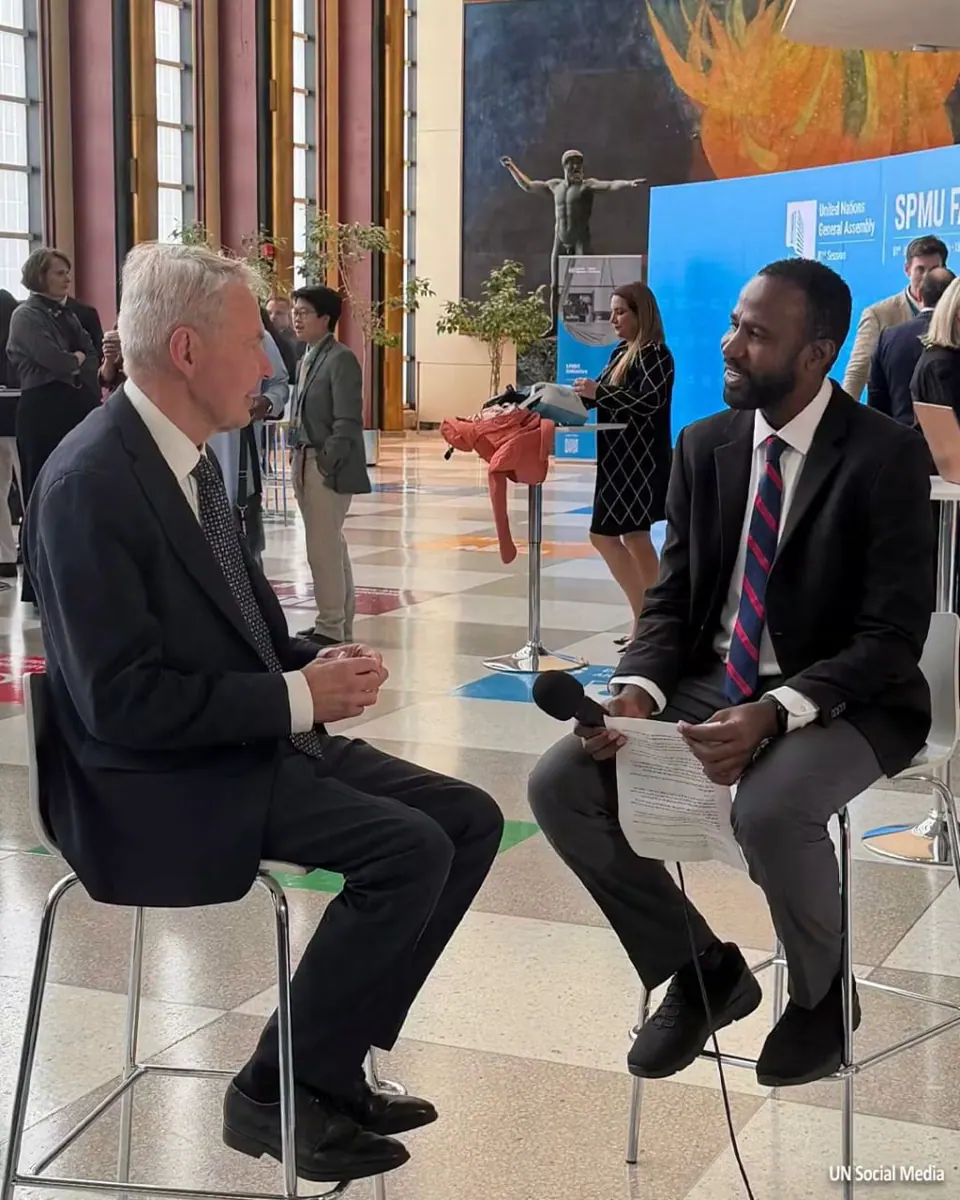
The conflict in Sudan has entered a critical phase, with diplomatic efforts intensifying to bring an end to the violence. According to Volker Perthes, the UN Secretary-General's Personal Envoy to Sudan, there are ongoing efforts to push for a peaceful resolution to the conflict. Perthes revealed that the high-level week of the UN General Assembly witnessed intense diplomatic activity on Sudan, including meetings of the Quad (the US, UAE, Saudi Arabia, and Egypt) and the Quint (the African Union, IGAD, Arab League, EU, and UN).
Perthes noted that while there are limited indicators of progress, the parties to the conflict have established mechanisms to discuss the situation of civilian detainees and explore possibilities for prisoner exchange and civilian releases. However, he emphasized that the complexities of the conflict go beyond the differences between the main parties, involving multiple military and political coalitions. This, he said, requires extensive diplomatic engagement with various influential actors in Sudan.
The humanitarian situation in Sudan continues to deteriorate, with concerns over the increasing use of drones against civilian targets and aid convoys. Perthes called for a halt to the flow of arms and drones into Sudan, citing the devastating impact on civilians. According to UN estimates, nearly 99% of unexploded ordnance in Khartoum remains to be removed, posing a significant risk to civilians even after the conflict subsides.
The UN Envoy stressed the importance of regional cooperation to prevent the conflict from spreading and affecting neighboring countries. He noted that the continued flow of refugees into neighboring countries is a pressing concern. Perthes also emphasized the need for an inclusive political process that involves women, youth, and civil society components.
In a message to the Sudanese people, Perthes stated that they are not alone, emphasizing that achieving peace requires not only an end to fighting but also addressing the deep-seated social impacts of the conflict. While the parties to the conflict have not yet reached a stage where they are ready to engage in direct talks, Perthes noted that they have accepted shuttle diplomacy led by the UN as a means of paving the way for eventual direct negotiations.
The conflict in Sudan has significant implications for regional stability, with the potential to spill over into neighboring countries. The international community has a critical role to play in supporting a peaceful resolution to the conflict. Perthes' remarks underscore the need for sustained diplomatic engagement and humanitarian assistance to mitigate the crisis.
The situation in Sudan remains volatile, with the humanitarian situation continuing to deteriorate. The UN and other international actors must continue to engage with the parties to the conflict to push for a peaceful resolution. The Sudanese people, meanwhile, await a lasting solution to the crisis that has ravaged their country.
Key points
- The UN is leading diplomatic efforts to push for a peaceful resolution to the Sudan conflict.
- The conflict has significant humanitarian implications, with concerns over the use of drones against civilian targets.
- The international community has a critical role to play in supporting a peaceful resolution to the conflict.