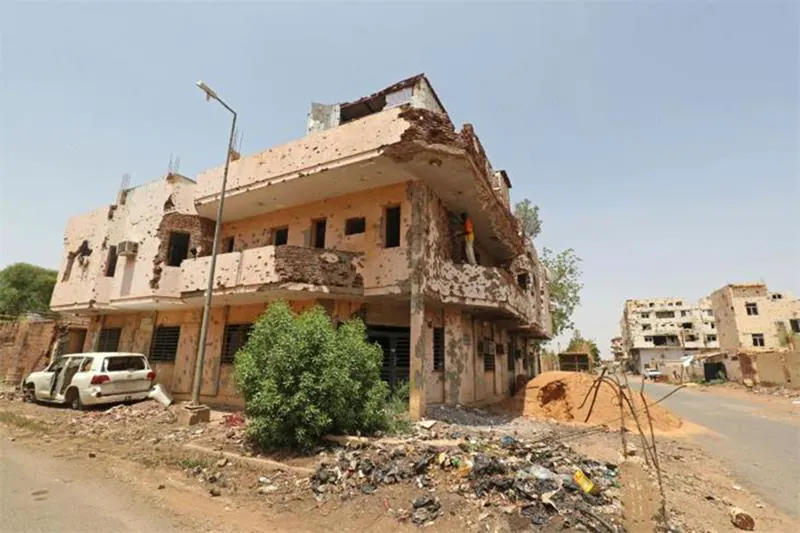
Khartoum, once a thriving African capital with 8 million inhabitants, lies in ruins. The city's residents have been struggling to cope with the aftermath of a war that broke out in 2023 between the Sudanese army and the Rapid Support Forces (RSF). Despite the government's efforts to encourage people to return, many are finding it difficult to adapt to the new reality. Emad Khaled, a 43-year-old businessman, is among the 2.7 million people who have returned to the city. He describes daily life as unbearable, with his children unable to attend school due to the city's devastation.
The conflict has left the city's infrastructure severely damaged. Unexploded bombs have been discovered in homes and streets, resulting in the deaths and injuries of dozens of children. According to the UN, only 1% of the city's area is considered safe. The city's water and electricity supply remain unreliable, with frequent cutoffs lasting several days. The economic situation is also dire, with the national economy having collapsed and the exchange rate reaching 8,000 Sudanese pounds per dollar, 16 times the pre-war rate.
Many residents who had returned to Khartoum are now reconsidering their decision. Thuraya Babiker, an 86-year-old retiree, is leaving the city for the United Arab Emirates due to the lack of medical care. Despite efforts by charities to rebuild hospitals, many essential services and treatments remain unavailable. Dr. Haifa Omar, a medical professional, admits that patients are often required to purchase their own medication, a burden for many.
The city's students have also been ordered to return, with authorities ending online teaching in July. However, many are facing significant challenges, including a lack of access to resources and infrastructure. An anonymous student reported being denied the opportunity to complete their thesis remotely, while another student is seeking a scholarship to restart their studies in Egypt.
Analysts believe that the government's push for people to return to Khartoum is driven by a desire to project a sense of normalcy. Kholood Khair, an analyst, notes that the government's efforts are aimed at restoring the "Sudanese social contract," with Khartoum historically being a relatively peaceful city. However, many residents are unconvinced, citing the city's dire conditions.
The city's economic woes are also having a ripple effect on the wider region. The conflict has disrupted trade and led to a significant decline in living standards. With the national economy in shambles, many are struggling to access basic necessities, including food and medicine.
As the situation in Khartoum continues to deteriorate, many are left wondering when the city will recover. With the government's efforts to encourage people to return, it remains to be seen whether the city will ever regain its former glory. For now, residents like Emad Khaled are left to pick up the pieces and try to rebuild their lives in a city that seems a long way from recovery.
Key points
- The situation in Khartoum remains dire, with residents facing significant challenges, including unexploded bombs, medicine shortages, and infrastructure woes.