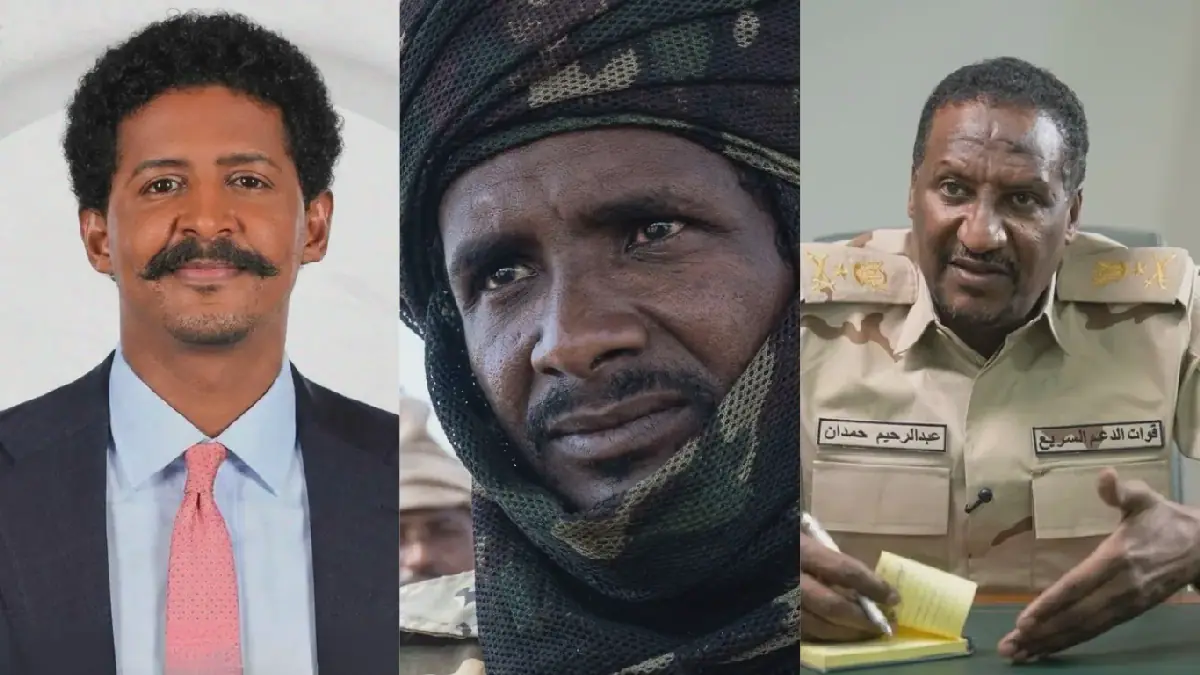
A Sudanese court has issued a historic verdict in a case involving 14 defendants, including Mohamed Hamdan, the leader of the Rapid Support Forces militia. The court found them guilty and sentenced them to death by hanging. The court also ordered the defendants to pay $39.6 billion in damages for their role in the conflict that began on April 15, 2023. The case was registered under the case number (غ إ/61/2026م) and the complaint number (9432/2024م).
The court's verdict was based on evidence and documented facts of the events that occurred after April 15, 2023. The court found that the conflict was not an ordinary conflict, but rather a "project to destroy the state." The court cited examples of the destruction caused by the militia, including the looting and burning of life-saving medicines, the destruction of kidney dialysis machines, and the conversion of hospital buildings into military barracks.
The court also found that the militia had besieged the city of Khartoum with 700,000 fighters and 100,000 combat vehicles, targeting the armed forces and infrastructure. The court stated that the militia had launched a "war against the people," destroying airports, power and water stations, and looting public and private property.
The National Investigation Committee, led by the Public Prosecutor, conducted extensive investigations and collected evidence. The committee began its procedures by contacting Interpol to seize 120 vehicles belonging to the National Medical Supplies Fund and freezing the bank accounts of the defendants. The defendants were also announced on radio and television, and the Immigration Department was notified to prevent them from traveling.
The court's verdict also included a recommendation to withdraw the nationalities and passports of the convicts. The court emphasized that this case was not just a matter of "stealing cars or looting stores," but rather a case of a "country that had its soul stolen." The court sent a message, stating that the convicts had caused harm to the country and its people, and that the death penalty was necessary to provide justice to the victims.
The conflict in Sudan has resulted in significant human suffering, with many children unable to access medical treatment. The court's verdict was intended to provide justice to the victims and to deter others from committing similar crimes. The case highlights the need for accountability and the rule of law in Sudan.
The verdict has significant implications for the country and its people. The court's decision to sentence the defendants to death and order them to pay $39.6 billion in damages sends a strong message that crimes against the state and its people will not be tolerated. The case also underscores the need for Sudan to address the root causes of the conflict and to work towards reconciliation and healing.
Key points
- The Sudanese court sentenced 14 defendants, including Mohamed Hamdan, to death by hanging and ordered them to pay $39.6 billion in damages.
- The court's verdict was based on evidence and documented facts of the events that occurred after April 15, 2023.
- The conflict in Sudan has resulted in significant human suffering, with many children unable to access medical treatment.