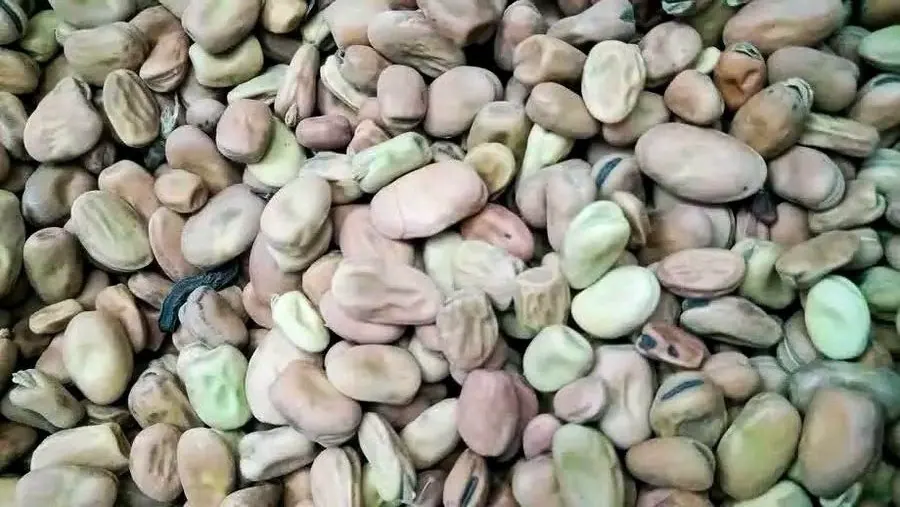
The Sudanese Ministry of Agriculture's decision to ban the import of Egyptian fava beans has caused a substantial rise in prices, with a 50kg bag of fava beans now costing between 1 million and 1.1 million Sudanese pounds. In contrast, a 50kg bag of locally produced "Slim" fava beans is selling for 1.5 million pounds, while a similar bag of fava beans imported from Ethiopia costs 1.42 million pounds.
The price of a plate of fava beans, a popular dish in Sudan, has also increased, ranging from 7,000 to 8,000 pounds in some areas, with some citizens warning that it could reach as high as 30,000 pounds. Sudanese citizens have expressed concerns about the impact of the ban on their daily lives, as fava beans are a staple food for many.
According to Dr. Hitham Fathy, an economic expert, Sudan is the largest producer of fava beans in the Arab world, producing 185,000 tons annually, according to the Food and Agriculture Organization (FAO). The majority of Sudan's fava bean production comes from the Nile River and Northern states, where the crop is typically planted during the six-month winter season and harvested in April.
Dr. Fathy explained that the current market supply is from the previous year's harvest, and the ban on imports, which has been extended for six months, has led to a shortage in supply, driving up prices. He noted that the decision to ban imports aims to reduce reliance on external imports, promote local production, and ensure food security.
However, Dr. Fathy also pointed out that the ban has led to a significant increase in prices, with the cost of a 50kg bag of fava beans rising from 300,000 pounds to 1.4 million pounds. He suggested that instead of relying solely on import bans, the government should focus on reducing agricultural production costs, improving storage, and developing marketing and export strategies.
Ahmed bin Omar, an economic analyst, argued that the ban on importing fava beans is part of a broader trend of restricting imports, which has had negative consequences. He emphasized that protecting local production should start with providing support to farmers, including financing, seeds, irrigation, and storage, rather than simply banning imports.
In response to the ban, Egyptian officials have clarified that the decision is not specific to Egyptian fava beans but applies to imports from all countries. They have also downplayed the potential impact on Egyptian exports, stating that the ban is part of Sudan's efforts to regulate its market and protect local production.
Key points
- The ban on importing fava beans has led to a significant increase in prices, affecting millions of Sudanese citizens who rely on the legume as a staple source of protein.
- Sudan is the largest producer of fava beans in the Arab world, producing 185,000 tons annually.
- The ban on imports aims to promote local production and ensure food security, but has had negative consequences, including a significant increase in prices.