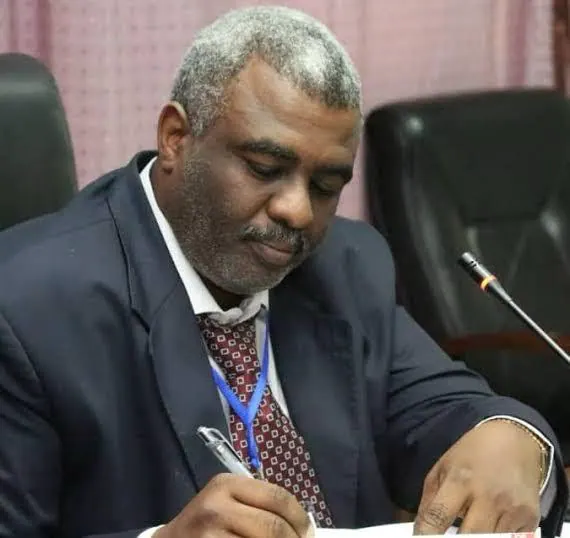
Sudan's Ambassador to the United Nations, Harith Idris, has strongly responded to remarks by the UAE and Chad in the General Assembly, citing international reports that detail external support for the Rapid Support Forces (RSF). The reports, including one by the Independent International Fact-Finding Mission, highlight networks that have recruited, trained, and equipped foreign fighters, as well as provided military technology to the RSF.
The reports, according to Ambassador Idris, confirm that the UAE is involved in supporting the RSF, despite its continued denials. This has transformed the issue from a mere political allegation to a documented legal and moral case that holds external supporters accountable before the international community. The Sudanese diplomat emphasized that his country's struggle is not just about internal conflict but also about protecting its sovereignty and resources from external interference.
The conflict in Sudan has been described as a proxy war, with various international actors vying for influence. The High Commissioner for Human Rights, Volker Turk, noted that the war is being fought by proxy, driven by greed for resources. Reducing the conflict to an internal dispute between two parties oversimplifies the situation and ignores the complex regional context. Sudan asserts that it will not be treated as a mere arena for the ambitions of others, nor will its resources be plundered by external actors.
In this context, Ambassador Idris invoked the historical figure of Klib ibn Rabi'ah, a symbol of resistance against those who would seek to encroach on one's land and dignity. Klib ibn Rabi'ah represents a deeper cultural and historical narrative that resonates with the Sudanese people's awareness of their long history and their determination to defend their sovereignty. This reference is not merely a historical allusion but a statement about Sudan's rich heritage and its people's collective memory.
Sudan's history stretches back to ancient civilizations, including Kerma, Kush, and Meroe, and encompasses various kingdoms and political entities such as the Funj and Darfur. This historical depth makes the Sudanese highly sensitive to any attempts to reduce their country to a mere scene of conflict or a playground for external powers. The mention of Klib ibn Rabi'ah serves as a reminder to those with ambitions in Sudan that the country has a profound memory and a strong sense of self.
The Independent International Fact-Finding Mission has reported that it has reasonable grounds to believe that various entities and networks operating across several countries have provided military and logistical support to the RSF. These findings open a broad political and legal avenue for Khartoum, not merely to level accusations but to convert them into documented cases and specific questions for the regional and international community. The focus now shifts from merely condemning external interference to deterring it and pursuing those networks involved in financing and arming the conflict.
Sudan today does not merely need to identify who funded and armed the RSF; the issue is now on the international agenda, with UN reports and mechanisms addressing external support and cross-border networks fueling the war. The priority is to transition from condemnation to deterrence, taking political and legal actions, and mobilizing the region and the international community to halt external interference. Sudan is not only defending its land, resources, and decision-making but also affirming that its sovereignty is not a bargaining chip and that its war will not become a gateway for dividing the country or plundering its resources.
Key points
- Sudan cites international reports to assert that external actors, including the UAE, are supporting the Rapid Support Forces.
- The conflict is described as a proxy war driven by greed for resources.
- Sudan emphasizes its sovereignty and seeks international support to deter external interference.