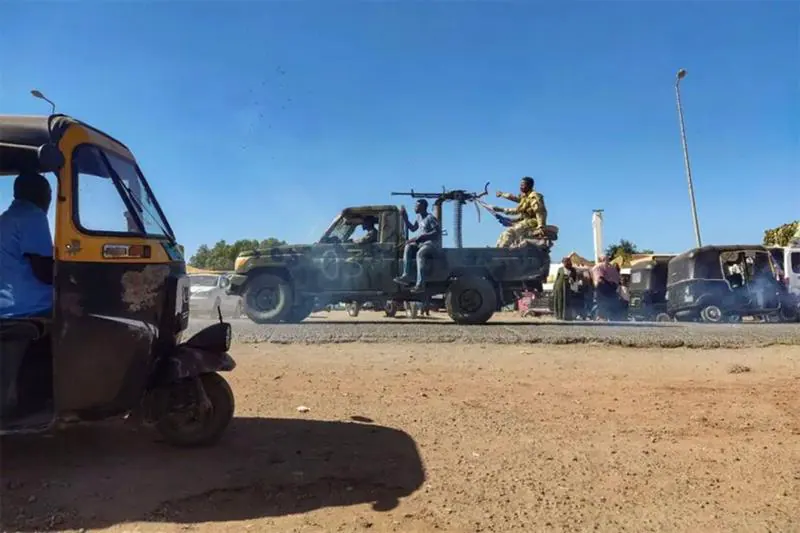
The Sudan army conducted airstrikes on Rapid Support Forces (RSF) positions in North Kordofan on Monday, September 21, 2026, and made advances on several fronts, according to reports from Al-Qahera News. This development comes as part of a series of military operations that have seen the army recapture strategic areas, including Al-Jamama and Tanah, in North Kordofan. These gains have reportedly led to a mass exodus of RSF fighters from Sodari, one of their last strongholds in the region.
In the past three days, the Sudan army has recaptured several key areas, including Al-Jamama, a commercial hub linking El-Obeid with Al-Debba in Northern State. The army also took control of the village of Tanah near Sodari and other areas in South Kordofan. These advances have been part of a broader campaign to sever RSF supply lines and push the militia's fighters toward Darfur. The military's actions have been described as a fourth consecutive day of gains across Kordofan.
The army's advances have not been without challenge, however. The RSF has disputed the army's account of recent battles, claiming a "large victory" against army and allied units near Abu Qaoud, west of El-Obeid, on Friday. Despite these claims, the army has reported making significant gains, including capturing Al-Farshaya on the road linking Dilling and El-Obeid, and Al-Mamsouka west of El-Obeid. These areas are crucial for supply lines and movement.
The conflict in Sudan has led to a severe humanitarian crisis, with tens of thousands killed and around 12 million displaced, according to UN estimates. Drone warfare has been particularly devastating, with 880 civilians killed between January and April alone, accounting for more than 80 percent of all conflict-related deaths recorded in that period. The situation in El-Obeid, which has faced repeated RSF drone and artillery attacks, remains dire, with residents living in fear of further violence.
The army's offensive builds on previous gains, including the recapture of Bara city and nearby areas in late July. The military also secured the Export Road linking Khartoum to El-Obeid after two days of fighting, further pressuring the RSF. These developments have been part of a broader strategy to weaken the RSF and push its fighters toward Darfur.
The conflict has also drawn in neighboring countries, with Sudan's army chief of staff accusing Ethiopia of exploiting the war to seize border farmland and allowing RSF drones to launch from its territory. Ethiopia has denied these allegations, adding a volatile new front to years of tension between Khartoum and Addis Ababa.
The situation on the ground remains fluid, with ongoing clashes and humanitarian concerns. Egypt, Sudan, and US officials have discussed ending the Sudanese war on the sidelines of the UN General Assembly. The international community continues to monitor the situation closely, with efforts to de-escalate the conflict and address the humanitarian crisis ongoing.
Key points
- The Sudan army's airstrikes on RSF positions in North Kordofan are part of a broader campaign to weaken the militia and sever its supply lines.
- The conflict has resulted in a severe humanitarian crisis, with tens of thousands killed and around 12 million displaced.
- The situation has drawn in neighboring countries, including Ethiopia, which Sudan's army chief of staff has accused of supporting the RSF.