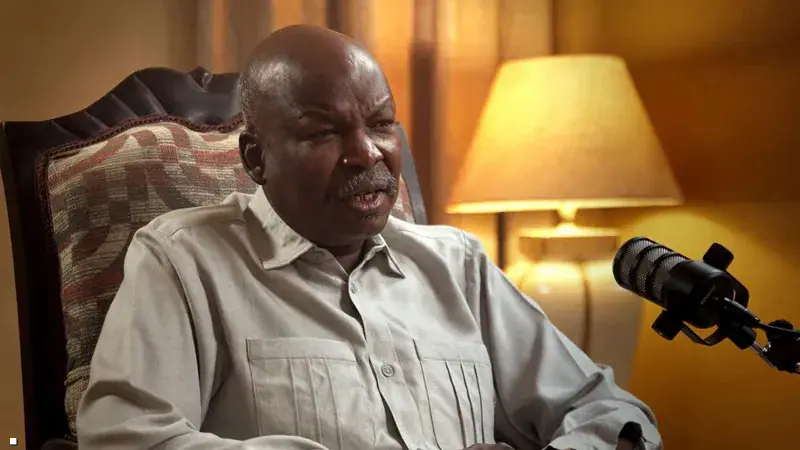
The recent media appearance of Ahmed Haroun, head of the National Congress Party and the political arm of Sudan's Islamic Movement, has sparked widespread debate in Sudan over his vision for the war that has been raging since mid-April 2023. Haroun had been detained in Kober prison in Khartoum along with ousted President Omar Hassan Ahmed Bashir and former Defense Minister Abdul Rahim Muhammad Hussein, all of whom are wanted by the International Criminal Court on charges of war crimes and crimes against humanity.
Haroun's appearance has fueled concerns over the Muslim Brotherhood's efforts to reposition itself in power after its ousting in 2019, leveraging public sentiment and the erosion of state institutions to gain control over military leadership. This move comes as the country faces a humanitarian crisis, with tens of thousands killed and 14 million displaced, according to the United Nations. The Financial Times reported that the army's recapture of Khartoum in early 2025 has strengthened the presence of ideological factions like the "Al-Baraa bin Malik" battalion.
Critics view Haroun's media appearance as a "political show" aimed at manipulating public opinion, with analyst Oawab Azzam Al-Bushi arguing that the Islamic current's media outlets welcomed Haroun's arrest without attacking Abdel Fattah al-Burhan, indicating a coordinated effort. Al-Bushi called on the military leadership to dismantle the Islamic Movement's militias, remove its elements from state institutions and security agencies, and hand over Haroun and Ali Karti, who are also wanted by the International Criminal Court.
The developments coincide with Abdel Fattah al-Burhan's insistence on a military solution in coordination with the Muslim Brotherhood, amid concerns over the intersection of Islamist influence and Iranian support, prompting the US to impose sanctions on Islamist entities and figures. The alliance between the Islamic Movement's cadres, led by Ali Karti, and al-Burhan has legitimized their presence through the "popular resistance" and involvement in military operations that have resulted in atrocities and widespread destruction in Darfur and Khartoum.
The current situation echoes the political history of the Islamist regime and its previous policies in Darfur, which led to the deaths of nearly 300,000 people and the displacement of millions, prompting international arrest warrants against Bashir and his associates, including Ahmed Haroun. The unfolding events highlight the challenges facing Sudan's transition and the need for a comprehensive solution to address the country's complex issues.
The international community remains concerned over the humanitarian situation in Sudan, with the UN reporting tens of thousands of deaths and 14 million displaced. The US has imposed sanctions on Islamist entities and figures, reflecting concerns over the growing influence of Islamist groups and their potential impact on regional stability.
As Sudan navigates its complex transition, the controversy surrounding Ahmed Haroun's arrest and the Muslim Brotherhood's influence serves as a reminder of the country's ongoing challenges. The international community continues to watch developments in Sudan closely, with many calling for a peaceful resolution to the conflict and a return to democratic governance.
Key points
- The Muslim Brotherhood's efforts to reposition itself in power after its ousting in 2019 have raised concerns over its influence on Sudan's transition.
- The humanitarian situation in Sudan remains dire, with tens of thousands killed and 14 million displaced, according to the United Nations.
- The international community has imposed sanctions on Islamist entities and figures, reflecting concerns over the growing influence of Islamist groups and their potential impact on regional stability.