Kenya, a nation with 43 officially recognized tribes, has a rich cultural heritage shaped by Bantu, Nilotic, and Cushitic migrations. The country's diverse groups have been united under a single national identity, symbolized by the national flag, with Swahili and English as national and official languages. However, historical migrations have resulted in hardship for various communities, leading to shifting settlements and cultural absorption. The Abasuba people, a Bantu-speaking population, originally migrated from Uganda to Lake Victoria locations in Nyanza region.
The Abasuba people were largely assimilated by the Luo throughout the 19th and 20th centuries, adopting Dholuo as their primary language. According to the United Nations, sub-tribal assimilation in Kenya is a human rights and cultural preservation challenge. The UN has urged nations to grant formal recognition, safeguard ancestral land tenure rights, and provide targeted support to prevent minority and hunter-gatherer sub-tribes from losing their identity. Despite international programs, some sub-tribes remain deeply assimilated, and younger generations can no longer speak their ancestral languages.
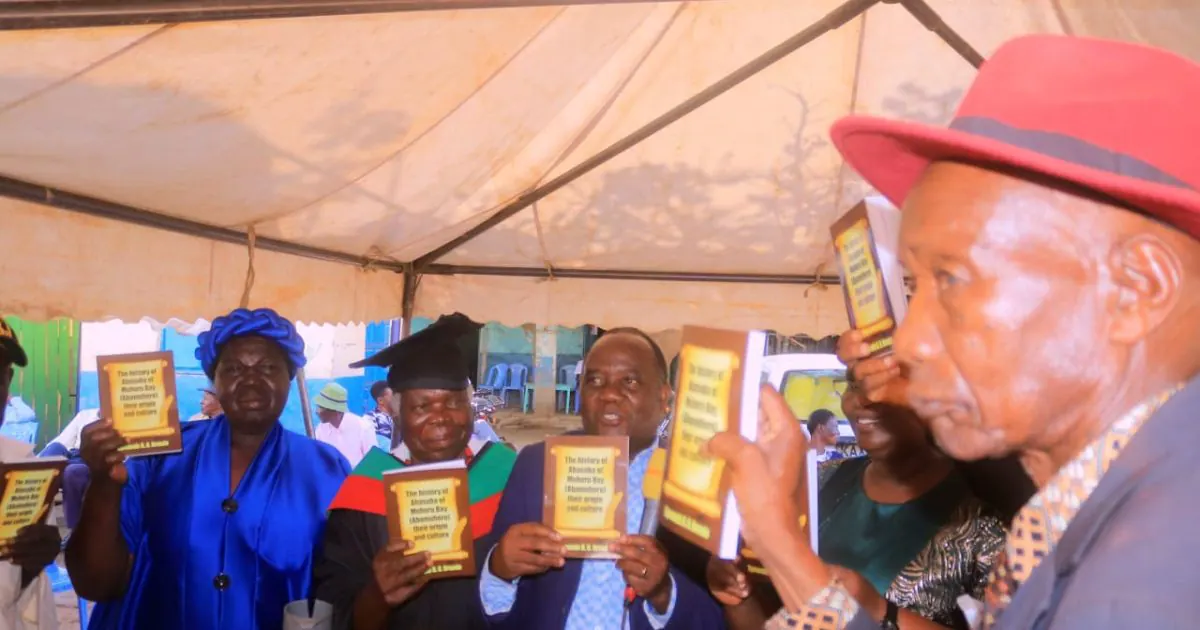
The Abamuhoro community, a sub-tribe of the Bantu Suba group, has embarked on a journey to reclaim their origins and trajectory. Led by Suba elder Ogada Orondo, the effort culminated in the authoring of a book titled "The History of Abasuba of Muhuru Bay (Abamuhoro)". Orondo, an 85-year-old retired Forest Officer, developed a passion to document his people's history and educate younger generations after realizing that much of the Abasuba history was undocumented and at risk of being lost.
Orondo spent 15 years compiling the manuscript, capturing oral testimonies from community elders and validating them through visits to historical sites. He taught himself computer skills and studied the methodological approaches of established historians to sharpen his authoring skills. Despite initial rejections from major publishers, Orondo personally funded the research and production costs and eventually launched the book in August 2026 in Muhuru Bay.
The book, which retails at between Sh500 to Sh1,000, is a self-satisfaction to Orondo, who prioritized educational impact over profit. He said his major motivation for writing the book was to pass a message to the Abamuhoro people to preserve their identity, culture, and traditions. Odunga Nyamusi, a Suba elder, praised Orondo for his dedication to preserving the culture, language, and traditions of the Suba community.
Nyamusi called upon the Abasuba tribe to unite to preserve their language and urged the national government to ensure equitable development funds to preserve the culture, traditions, and languages of minority groups. Prof. Rose Ogwang, the first Suba woman academician from the Abamuhoro clan, said the book would educate future generations and contribute to the cultural preservation of the nation's historic moments. The Migori county government has committed to supporting the book initiative by stocking it in bookshops and libraries.
The county government will soon launch a local library in Muhuru Bay town to promote readership of local books. Prof. Ogwang urged the Suba community to value their cultures by creating open spaces where children can be taught local languages, customs, and traditions. The community's distribution strategy includes promoting the book to younger generations, with a youth detailing Orondo's arduous journey and highlighting the community's efforts to preserve their heritage.
Key points
- The book "The History of Abasuba of Muhuru Bay (Abamuhoro)" documents the history and heritage of the Suba-Abamohoro community.
- The author, Ogada Orondo, spent 15 years compiling the manuscript, capturing oral testimonies from community elders and validating them through visits to historical sites.
- The book aims to educate future generations and contribute to the cultural preservation of the nation's historic moments.