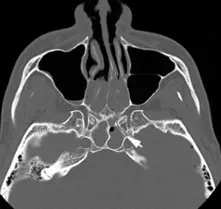
Anterior skull base fractures are a significant concern in sub-Saharan Africa, particularly among young victims of road traffic accidents. A study conducted at Yopougon University Hospital in Abidjan aimed to describe the management of frontobasal fractures and hospital outcomes. The research, which included 122 patients, found that the mean age of patients was 35.6 years, with 89.3% being male. The dominant mechanism of injury was motorized two-wheeler accidents, accounting for 62.3% of cases.
The study revealed that 64.8% of patients had a probable or definite cerebrospinal fluid (CSF) leak, and 68.0% had pneumocephalus. All patients received pneumococcal vaccination. Surgery was performed on 116 patients (95.1%), using the transcranial approach with galeal flap repair. The mean hospital stay was 9.7 days. The primary outcome, a composite of in-hospital complications, occurred in 17.2% of patients. In-hospital mortality was 2.5%, and a favorable outcome (modified Rankin Scale 0-2) was observed in 78.7% of patients at discharge.
The study highlights the severity of anterior skull base fractures, which can lead to osteomeningeal breach, CSF leak, pneumocephalus, and meningitis. The researchers emphasize the importance of prompt and effective management to prevent complications. The use of transcranial repair with galeal flap was associated with low in-hospital morbidity and mortality. However, the study notes that the lack of structured long-term follow-up is a significant limitation.
The study's findings are consistent with previous research on anterior skull base fractures. A study published in RadioGraphics found that CT scans are essential for classifying and managing skull base fractures. Another study in the Journal of Neurol Surg B Skull Base emphasized the importance of managing anterior skull base cerebrospinal fluid leaks. The Abidjan study contributes to the growing body of research on anterior skull base fractures, particularly in the context of sub-Saharan Africa.
The researchers suggest that the high incidence of anterior skull base fractures in Abidjan may be attributed to the prevalence of road traffic accidents, particularly involving motorized two-wheelers. They emphasize the need for preventive measures, such as improved road safety and helmet use. The study also highlights the importance of prompt and effective management of anterior skull base fractures to prevent complications and improve outcomes.
The study's results have implications for clinical practice and policy. The use of transcranial repair with galeal flap may be considered a viable treatment option for anterior skull base fractures. The researchers also emphasize the need for structured long-term follow-up to monitor patients' outcomes and prevent late complications. The study's findings may inform the development of guidelines and protocols for managing anterior skull base fractures in sub-Saharan Africa.
The study was published in the journal Health Sciences and Diseases, a peer-reviewed journal that focuses on health sciences and disease management. The researchers acknowledge the limitations of their study, including the lack of long-term follow-up. They suggest that future studies should investigate the long-term outcomes of patients with anterior skull base fractures and explore strategies for improving follow-up and preventing late complications.
Key points
- The study highlights the importance of prompt and effective management of anterior skull base fractures to prevent complications and improve outcomes.
- The use of transcranial repair with galeal flap was associated with low in-hospital morbidity and mortality.
- The study emphasizes the need for preventive measures, such as improved road safety and helmet use, to reduce the incidence of anterior skull base fractures.