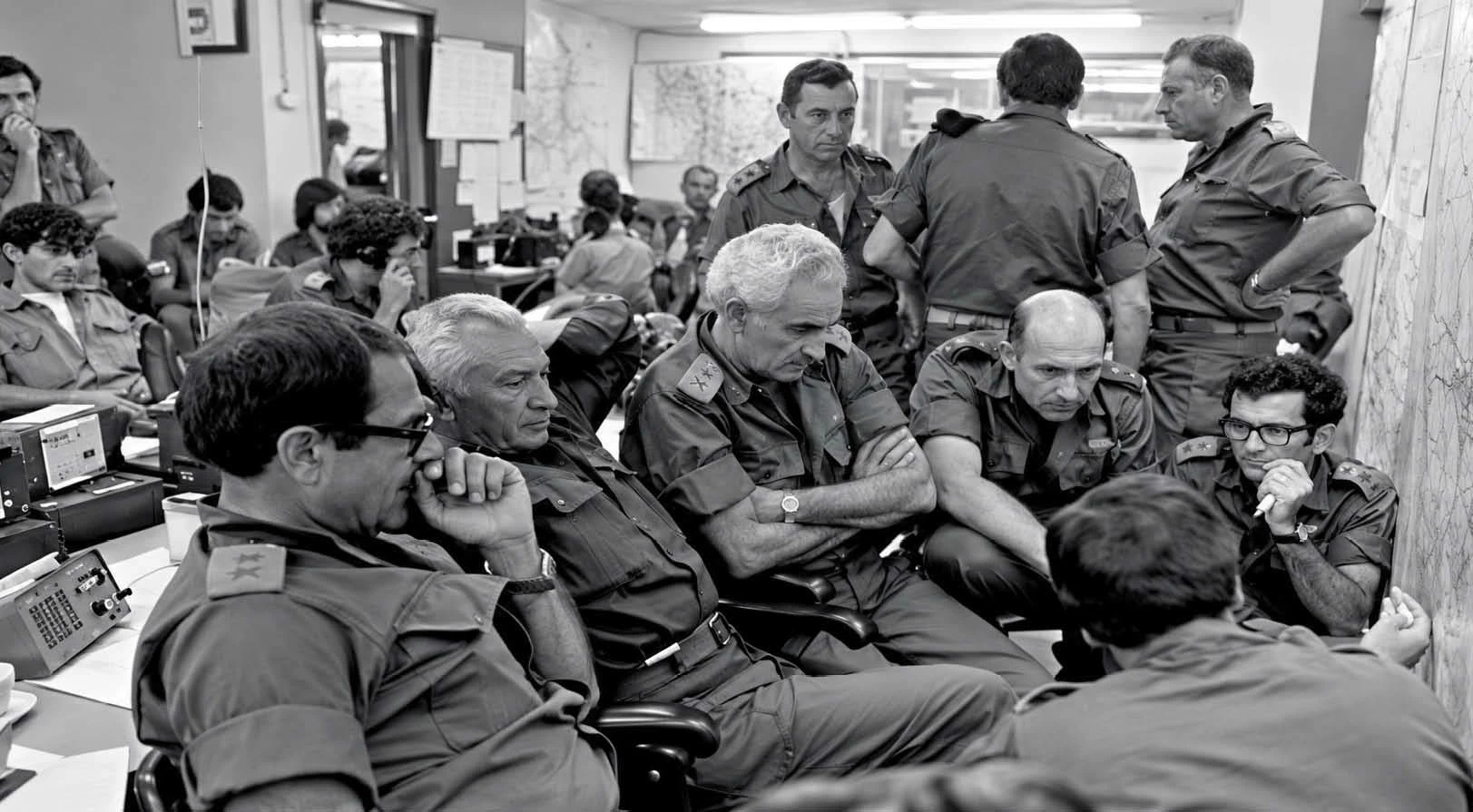
The 1973 October War was more than a military confrontation; it was a comprehensive test of Israel's military system, which had solidified after the 1967 June War. Israel entered the war with several assumptions, including the idea that deterrence would prevent Arab states from going to war and that its qualitative superiority would ensure a swift victory if hostilities broke out. However, the war revealed that possessing military power did not necessarily translate to effective combat capability under conditions of surprise and multi-front warfare.
Prior to the 1973 war, Israel's military strategy was based on the concept of deterrence, which not only aimed to prevent war but also sought to convince opponents that any new confrontation would result in a clear military defeat. The occupation of the Sinai, Golan Heights, and the West Bank provided Israel with strategic depth, which was believed to offer additional time for warning and mobilization. This strategic depth was seen as a critical component of Israel's warning and mobilization system.
However, this strategic assumption overlooked the reality that Egyptian and Syrian forces were already positioned near the new front lines and did not need to cover the same distances as before 1967 to engage in combat. As a result, the strategic depth, which was considered a source of reassurance, became an element that only provided value if coupled with accurate threat assessment and early mobilization decisions.
Israel's military strategy also relied heavily on a relatively limited regular army supported by a large reserve force that could be called upon as needed. The success of this strategy depended on a series of coordinated elements, including early warning, rapid mobilization of reserves, and the swift transition from defense to counterattack. The air force played a central role in this strategy, aiming to achieve rapid operational superiority, support ground forces, and contribute to transferring the war to enemy territory.
The 1973 war, however, demonstrated that air superiority was not an absolute fact independent of the operational environment. Egypt's development of a dense network of surface-to-air missiles, along with the widespread use of anti-tank weapons, showed that it could temporarily neutralize Israel's points of strength. The war highlighted that qualitative superiority was not solely determined by the type of military systems but also by the ability to operate them effectively against countermeasures designed to restrict their use.
The October War led to a significant strategic shock for Israel, as it exposed weaknesses in the country's military preparedness and assumptions. The Egyptian-Syrian attack on October 6, 1973, struck at the most sensitive part of Israel's military system: early warning. The problem was not the complete absence of information but how it was interpreted. Israel's military and intelligence establishments had a preconceived notion that Egypt would not start a war before acquiring certain capabilities to counter Israeli air superiority and that Syria would not engage in a large-scale war alone.
In response to the war, Israel undertook a comprehensive review of its military policy, structure, readiness, and intelligence, as well as its command and control mechanisms. This review was conducted through both official and unofficial channels, including the Agranat Commission, which was established to investigate the circumstances leading up to the war and Israel's preparedness. The commission's findings emphasized that the problem was not just one of individual responsibility but a broader issue of how Israel's military power could be effectively translated into cohesive performance under pressure.
Key points
- The 1973 October War led to a significant shift in Israel's strategic thinking, moving away from reliance on qualitative military superiority and strategic depth towards a more nuanced understanding of military power and its limitations.