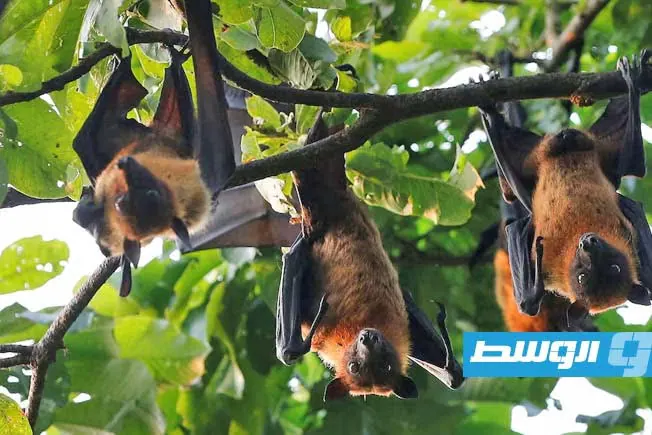
A groundbreaking study on the evolution of bats has shed new light on the mysterious history of these flying mammals. The research, described as the largest of its kind, suggests that bats originated in Europe approximately 65 million years ago, following the mass extinction event that wiped out the dinosaurs. This finding challenges previous assumptions that bats evolved in North America, Asia, or Africa.
The study, published in the journal Nature, involved collecting the largest set of high-quality bat genomes to date, covering 103 species representing all 21 recognized bat families. Researchers combined this genomic data with an analysis of 44 bat fossils to decipher the evolutionary history of these mammals and construct a bat family tree. According to the study, the ability of bats to use echolocation, a biological sonar system, developed early in their evolution, similar to their ability to fly.
The research team, including scientists from the University of St. Andrews and University College Dublin, found that bats quickly spread from Europe to Africa after their emergence. The continent of Antarctica remains the only landmass where bats have never inhabited. Today, bats make up more than a fifth of the world's mammal species, with over 1,400 species identified. The study's findings provide a foundation for future research into the genetic basis of bats' remarkable longevity and disease resistance.
One of the key aspects of bat biology is their unique wing structure, which is composed of a membrane supported by long fingers. This distinct characteristic sets them apart from birds and the now-extinct pterosaurs, the only other flying vertebrates. The exact shape of early bat ancestors remains a mystery, but they may have resembled tree shrews with growing longer fingers. The transition from ground-dwelling mammals to flying creatures is considered one of the most significant evolutionary innovations.
The study also highlights the incredible diversity of bats, ranging in size, shape, and behavior. The largest bat species, the golden-crowned flying fox, has a wingspan of 1.7 meters, while the smallest, the bumblebee bat, has a wingspan of just 13 cm. Bats occupy various ecological niches, feeding on insects, fruits, nectar, fish, and even blood. Their adaptability and unique characteristics have enabled them to thrive in a wide range of environments.
The research has implications for understanding the evolution of flight and echolocation in bats. Scientists still debate which of these traits developed first, as the earliest known bat fossils already exhibit both abilities. Further discoveries of transitional fossils are needed to resolve this question. The study's findings also provide a foundation for future research into the genetic basis of bats' remarkable longevity and disease resistance.
The study's authors believe that their work will contribute to a better understanding of the biology and evolution of bats. By exploring the genetic basis of bats' unique characteristics, researchers hope to gain insights into the development of new treatments for human diseases. The study's findings have the potential to inspire innovative solutions in fields such as medicine and conservation.
Key points
- Bats originated in Europe around 65 million years ago.
- The ability of bats to use echolocation developed early in their evolution.
- The study provides a foundation for future research into the genetic basis of bats' remarkable longevity and disease resistance.