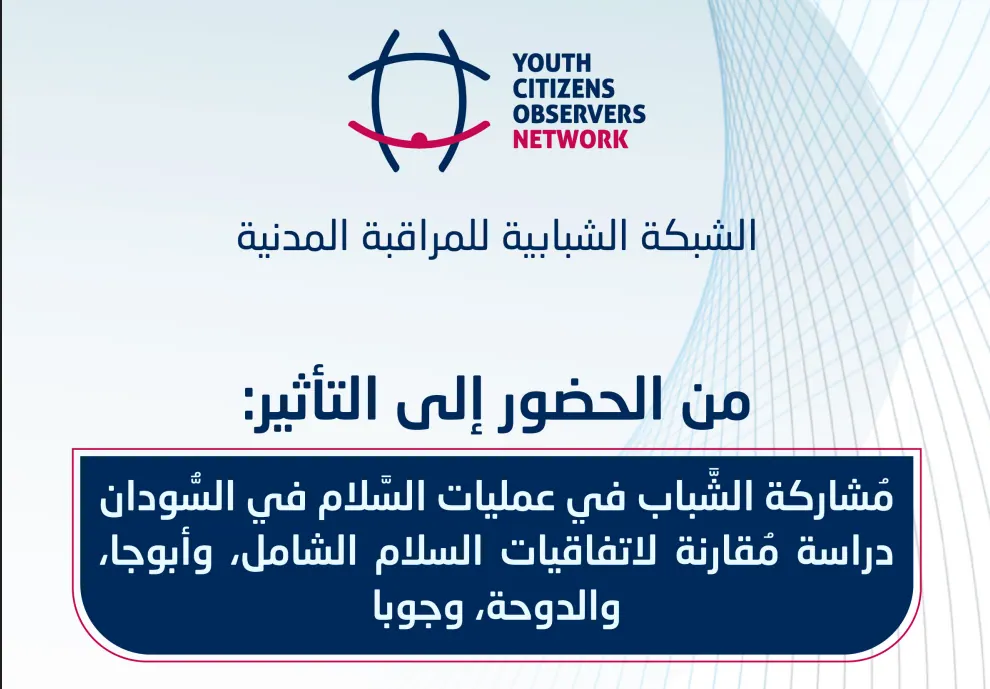
A recent study has shed light on the role of young people in Sudan's peace processes over the past two decades. The research, conducted by the Youth Network for Civil Monitoring, examined four major peace agreements: the 2005 Comprehensive Peace Agreement, the 2006 Abuja Peace Agreement for Darfur, the 2011 Doha Document for Peace in Darfur, and the 2020 Juba Peace Agreement. The study aimed to assess the extent to which these agreements provided opportunities for young people to participate and influence decision-making.
The study found that young people's participation in peace processes was often limited to symbolic or consultative roles. While they were present in various forums, including conferences, negotiations, and delegations, their involvement did not necessarily translate into meaningful influence on decision-making. The research highlighted that the presence of young people in peace processes does not automatically equate to their participation in decision-making, unless they have the capacity to shape agendas, negotiations, and outcomes.
The 2005 Comprehensive Peace Agreement did not provide for independent youth representation in the peace process or in implementing institutions. Instead, it relied on general political and civic participation channels, such as elections, political parties, and freedom of expression. Although this created opportunities for young people to engage, it did not establish a direct youth presence in decision-making bodies. The study noted a gap between the agreement's text and its implementation, with limited awareness of its provisions and continued restrictions on civic and political space.
In contrast, the 2006 Abuja Peace Agreement for Darfur recognized the importance of youth participation, establishing a consultative mechanism, the Darfurian-Darfurian Dialogue and Consultation. This mechanism allowed young people to discuss peace, reconciliation, and land issues, and provide recommendations to local and national authorities. However, the study emphasized that this participation was largely consultative, without granting participants direct decision-making power.
The 2011 Doha Document for Peace in Darfur expanded the scope of consultations, involving various stakeholders, including refugees and diaspora communities. The document's implementation involved 77 awareness-raising and outreach consultations, as well as 68 local-level consultations. While this demonstrated a significant organizational effort to engage young people, the study questioned whether this participation was truly independent or influential in shaping final decisions.
The 2020 Juba Peace Agreement marked a significant development in youth participation, with explicit recognition of young people's roles in the December 2018 revolution and provisions for their involvement in governance and state institutions. The agreement included specific arrangements for youth participation in some areas, particularly in eastern Sudan. However, the study noted that the agreement's implementation had been slow, and the extent to which youth recommendations had been incorporated into decision-making remained unclear.
The study's findings highlight the need for more meaningful youth engagement in Sudanese peace processes. While young people have been present in various peace forums, their influence on decision-making remains limited. The study's authors emphasize the importance of creating spaces for young people to participate effectively and influence decision-making, rather than simply being present in peace processes.
Key points
- The study found that youth participation in Sudanese peace processes has been largely symbolic, with limited influence on decision-making.
- The 2020 Juba Peace Agreement marked a significant development in youth participation, with explicit recognition of young people's roles in the December 2018 revolution.
- The study emphasizes the need for more meaningful youth engagement in Sudanese peace processes, beyond mere presence or consultation.