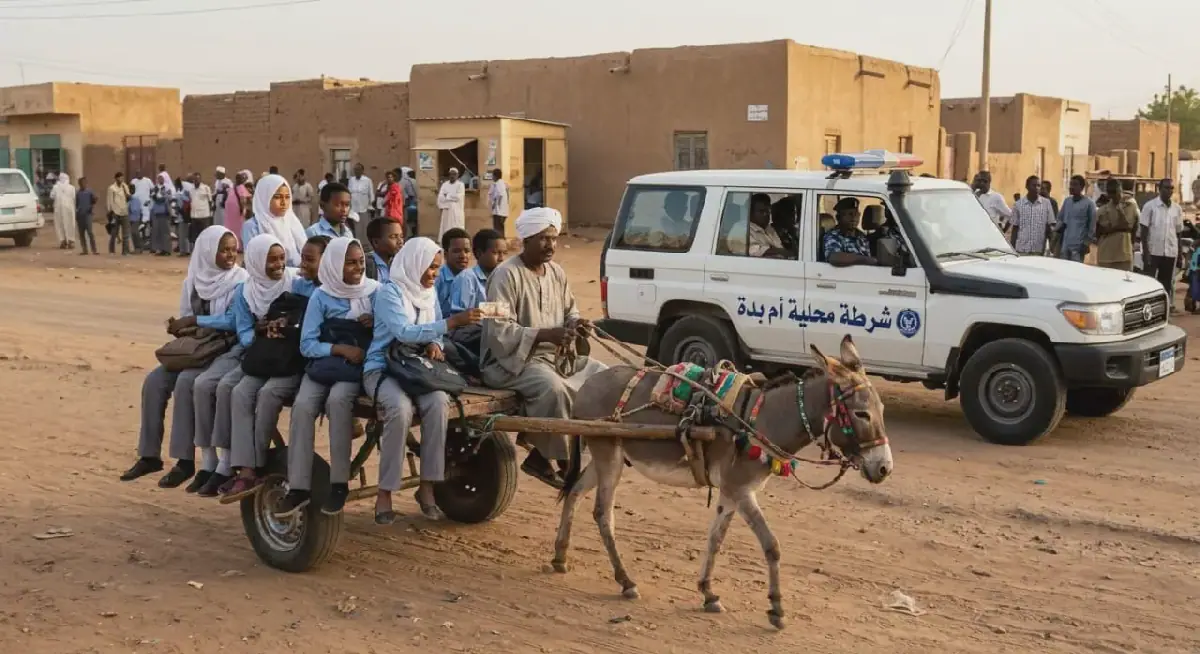
In a bid to overcome the daily transportation challenges, students in Am Bada, Sudan, have resorted to using donkey-drawn carts, locally known as "karu al-hamair," to travel to and from school. The carts, which charge a fare of 2000 Sudanese pounds per rider, have become a popular mode of transportation for students. This development comes as the area faces a severe shortage of public transportation, making it difficult for students to commute to school.
The use of donkey-drawn carts as a mode of transportation is a reflection of the dire situation in Am Bada, where residents are struggling to find reliable and affordable transportation. According to reports, over four carts are operating in the area, providing a vital service to students who would otherwise be unable to attend school. The owners of the carts have set a fixed fare of 2000 Sudanese pounds per rider, which is a relatively affordable option for many students.
In an effort to alleviate the transportation crisis, police vehicles have been deployed in the area to help transport residents. The police move is aimed at reducing the burden on residents and providing them with a safe and reliable mode of transportation. The deployment of police vehicles is a temporary measure, but it has brought some relief to residents who were struggling to get around.
The transportation crisis in Am Bada is a persistent problem that has been affecting residents for some time. The lack of public transportation has made it difficult for people to commute to work, school, and other essential services. The use of donkey-drawn carts and police vehicles is a stopgap measure, but a more sustainable solution is needed to address the root causes of the problem.
The situation in Am Bada highlights the need for a comprehensive plan to address the transportation needs of the community. The local authorities need to work with residents, transportation providers, and other stakeholders to develop a reliable and affordable transportation system. This will require investment in infrastructure, public transportation, and other initiatives that can help alleviate the transportation crisis.
The students who are using the donkey-drawn carts are among the most affected by the transportation crisis. They are forced to rely on unconventional modes of transportation, which can be time-consuming and uncomfortable. However, they are determined to continue their education, despite the challenges they face. The use of donkey-drawn carts has become a necessary evil for many students in Am Bada.
The transportation crisis in Am Bada is a complex problem that requires a multifaceted solution. The local authorities, residents, and other stakeholders need to work together to develop a comprehensive plan that addresses the root causes of the problem. This will require a sustained effort and commitment to finding a solution that works for everyone.
Key points
- Students in Am Bada, Sudan, are using donkey-drawn carts to commute to school due to a severe shortage of public transportation.
- The local police have deployed vehicles to help transport residents and alleviate the transportation crisis.
- A comprehensive plan is needed to address the root causes of the transportation crisis and provide a reliable and affordable transportation system for residents.