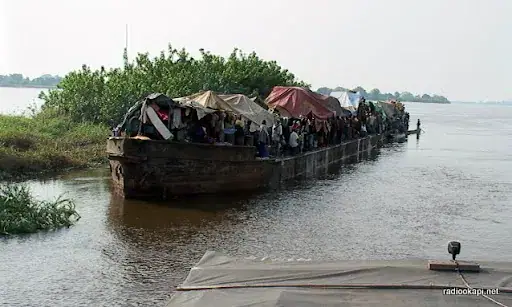
The prices of several essential products have increased significantly in the markets of Isangi territory, Tshopo province, since Sunday evening. This development is attributed to the disruption of river traffic, which is a result of a strike by riverboat owners. They are protesting against a government measure that bans the navigation of wooden boats on the Congo River. The strike has started to affect the purchasing power of the inhabitants of Isangi territory.
The price hike is evident in various products, with the liter of gasoline increasing from 5,000 to 7,000 Congolese francs. Similarly, the price of a cup of beans has risen from 2,500 to 3,000 Congolese francs, while a bar of soap now costs 2,000 Congolese francs, up from 1,500. These changes have been confirmed by residents of Isangi and the local New Congolese Civil Society (NSCC). The situation is causing concern among the population and economic operators.
The strike by riverboat owners started on Monday, with some owners of wooden boats refusing to set sail in several areas. They are demanding that the government reconsider its decision to ban wooden boats and provide an alternative solution. The government had given boat owners a three-month ultimatum to transform their boats into metal ones. The NSCC president, Adonis Mobey, attributes the price increase to the difficulties faced by economic operators in accessing Kisangani, their main supply hub.
Adonis Mobey emphasizes that the government should have provided support to economic operators by providing them with efficient and suitable means of transportation, such as metal boats. The lack of alternatives has led to the current crisis, affecting the livelihoods of the inhabitants. The NSCC is calling for the acceleration of the construction of the Yengele-Yaikela road, which could facilitate exchanges between agricultural production areas and consumption centers.
The society civil organization also requests the rehabilitation and maintenance of roads connecting Isangi to the interior of the territory, where farmers are located. This would facilitate the evacuation of agricultural products and improve the overall situation. Meanwhile, two boats were able to depart from Isangi on Tuesday afternoon, bound for Kisangani, following discussions with local authorities.
This partial resumption of traffic may help alleviate the difficulties in supply, but the situation remains concerning for the inhabitants and economic operators. The strike and the resulting price hike have significant implications for the local economy and the well-being of the population. The government and stakeholders must work together to find a solution to the crisis.
The situation in Isangi territory highlights the challenges faced by communities in the Democratic Republic of Congo due to inadequate infrastructure and transportation systems. The government's decision to ban wooden boats has created a crisis, and it is essential to find alternative solutions that balance safety concerns with the needs of the population and economic operators.
Key points
- The strike by riverboat owners has caused a significant increase in prices of essential goods in Isangi territory.
- The government had given boat owners a three-month ultimatum to transform their boats into metal ones, leading to the current crisis.
- The New Congolese Civil Society is calling for the acceleration of the construction of the Yengele-Yaikela road to facilitate exchanges between agricultural production areas and consumption centers.