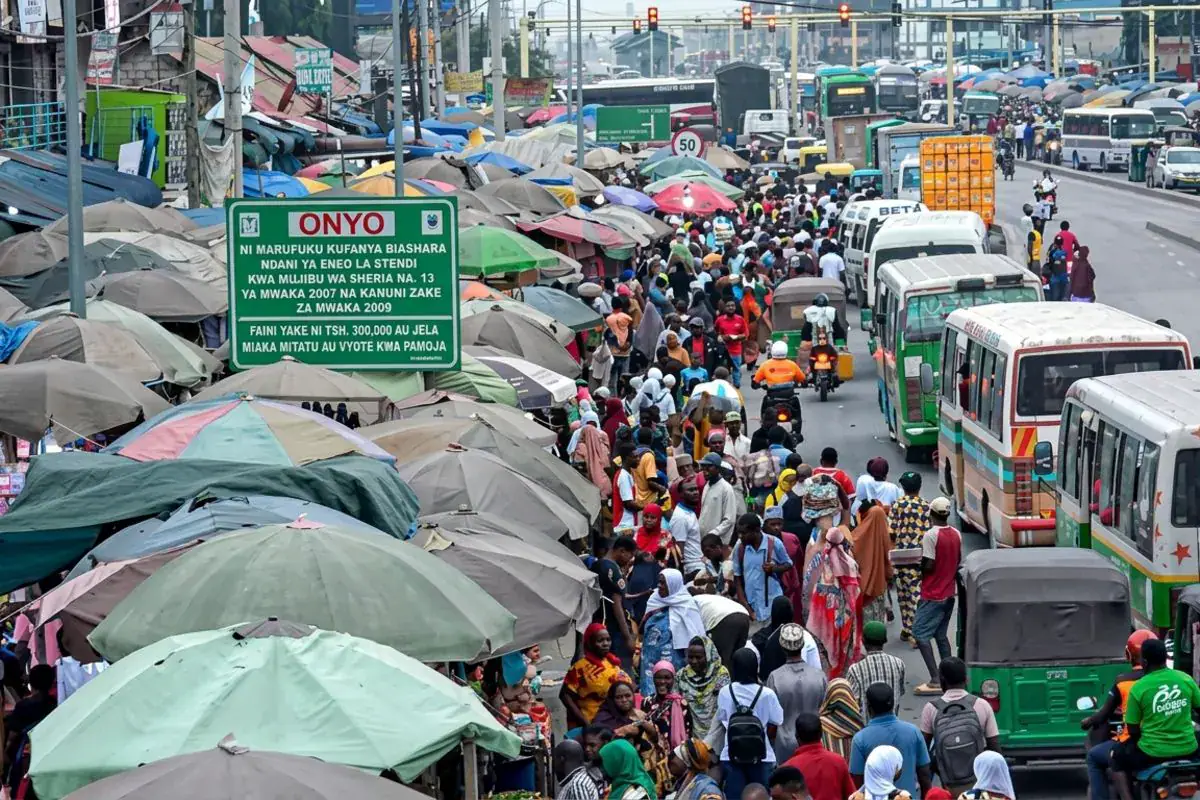
Street vendors in Dar es Salaam have defied a deadline set by city authorities to vacate unauthorized trading areas, with many continuing to operate in prohibited locations, particularly after dark. The vendors were given until September 29, 2026, to leave voluntarily, but goods are still displayed along roadsides, in dry roadside drainage channels, outside shops, and on pedestrian walkways. This has drawn complaints about worsening congestion and the safety of other road users.
The crackdown on street vendors follows a directive issued on September 2, 2026, by President Samia Suluhu Hassan, who instructed regional commissioners to oversee street trading and ensure that vendors were moved to designated areas. District commissioners for Ubungo, Ilala, and Temeke separately ordered traders to vacate unauthorized sites and relocate. Removal operations began on September 20, 2026, in several municipalities, but vendors have returned, arguing that these locations attract large numbers of customers and offer a dependable income.
Vendors like Ms. Suzana Michael, a clothing trader in Manzese with six years of experience, say they have been removed several times and have always come back, chiefly because that is where the customers are. Mr. Juma Ernest, who sells octopus and grilled meat, moved to Buguruni after being removed from Mbagala. He says, "We are constantly being chased away, but once things settle down, we return. We carry out our businesses in constant fear, and it is not a good situation."
Road users, however, say that trading on roadsides, especially at night, compromises safety and the proper use of the road. A daladala driver on the Kawe–Mbezi route says vendors have narrowed the carriageway and put other road users at risk. Mr. Steve Salumu, a heavy-goods vehicle driver, recalls an accident that followed a driver swerving to avoid pedestrians standing in the road.
The Road Safety Ambassadors Organisation of Tanzania (RSA) says encroachment on road reserves disrupts traffic flow and endangers pedestrians. RSA Director of Planning and Administration Augustino Mkumbo says, "When roads are built, several metres are deliberately set aside. One purpose is to give drivers and other road users a clear view of approaching traffic. Encroachment reduces visibility."
Temeke Municipal Council has paired the removal of vendors with the formalization of small-scale businesses. The council's Assistant Marketing Manager, Mr. Isdory Ngusha, says officials are continuing to identify and organize small traders as they are moved off roadsides. At Zakhem, traders have been reorganized, and individual tables reduced in size to make room for more businesses.
The formalization exercise in Temeke has so far allocated formal trading spaces to 2,264 traders in Kurasini Mjimpya and Mbagala Rangi Tatu streets. Each trader pays a monthly table fee of Sh30,000 plus a daily levy of Sh500, which the council expects to yield Sh1.2 billion a year from these traders alone. Some traders, like Ms. Nusra Khatibu, welcome the change, saying they now pay lower levies directly to the municipal council rather than through middlemen.
Key points
- Vendors cite customer attraction and dependable income as reasons for returning to prohibited areas.
- Road users express concerns over compromised safety and proper road use due to street vending.
- Temeke Municipal Council's formalization efforts aim to provide safe and formal trading spaces for small-scale businesses.