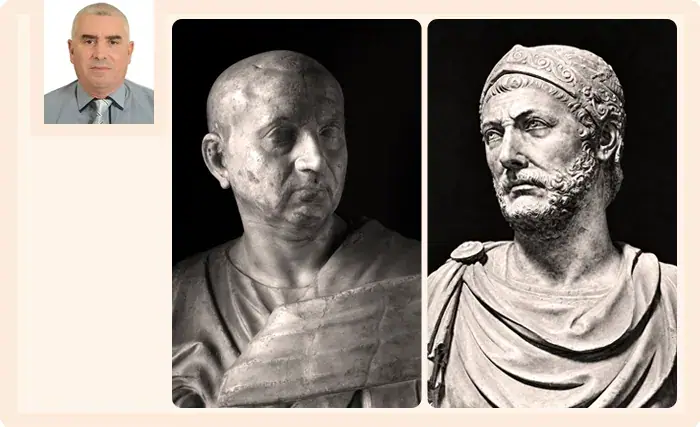
The Second Punic War, which lasted from 218 to 201 BCE, was a pivotal conflict between ancient Rome and Carthage. One of the most notable battles of this war was the invasion of Italy by Hannibal Barca, a Carthaginian general, in 218 BCE. Hannibal's military campaign was marked by a series of strategic victories, including the battles of Lake Trasimene and Cannae. His tactics have been studied by military historians and strategists for centuries.
Hannibal's invasion of Italy was a bold and unprecedented move. He led a large army, estimated to be between 38,000 to 46,000 infantry, 7,000 to 9,000 cavalry, and 30 elephants, across the Alps and into Italy. This journey was no easy feat, as his army had to navigate treacherous mountain terrain and harsh weather conditions. The exact route taken by Hannibal is still debated among historians, but most agree that he crossed the Alps via the Col de la Traversette.
Hannibal's decision to invade Italy via a land route was likely driven by his desire to catch the Roman army off guard. The Roman general Scipio Africanus had been preparing to defend Italy against a potential Carthaginian invasion, but Hannibal's unexpected move caught him off guard. Hannibal's strategy was to exploit the weaknesses of the Roman army and create a decisive victory. He achieved this through his use of unconventional tactics, including the use of war elephants and clever deployment of his troops.
One of the key factors in Hannibal's success was his ability to motivate his troops. He was able to transform his army into a cohesive unit, driven by a shared goal of defeating the Romans. This was particularly important given that his army was composed of troops from different regions and cultures. Hannibal's leadership and strategic thinking allowed him to overcome the significant challenges he faced during his campaign.
Hannibal's military strategy was centered around the concept of "effet majeur," or the creation of a decisive and irreversible impact on the enemy. He achieved this through a combination of surprise, speed, and clever tactics. Hannibal's use of spies and scouts allowed him to gather intelligence on the Roman army and plan his attacks accordingly. His victories at Lake Trasimene and Cannae were a testament to his military genius.
Despite his successes, Hannibal's campaign ultimately ended in defeat. The Roman general Scipio Africanus, who had been defeated by Hannibal earlier in the war, regrouped and launched a counterattack that ultimately drove Hannibal out of Italy. Hannibal's legacy as a military strategist has endured, however, and his campaigns continue to be studied by military historians and strategists around the world.
The strategic showdown between Hannibal Barca and Scipio Africanus was a defining moment in ancient history. Their battles and campaigns continue to be studied by military historians and strategists, offering valuable insights into the art of war and the importance of strategic thinking. The legacy of Hannibal and Scipio Africanus serves as a reminder of the enduring importance of military strategy and leadership in shaping the course of history.
Key points
- Hannibal's use of unconventional tactics and clever deployment of his troops allowed him to achieve a series of strategic victories against the Roman army.