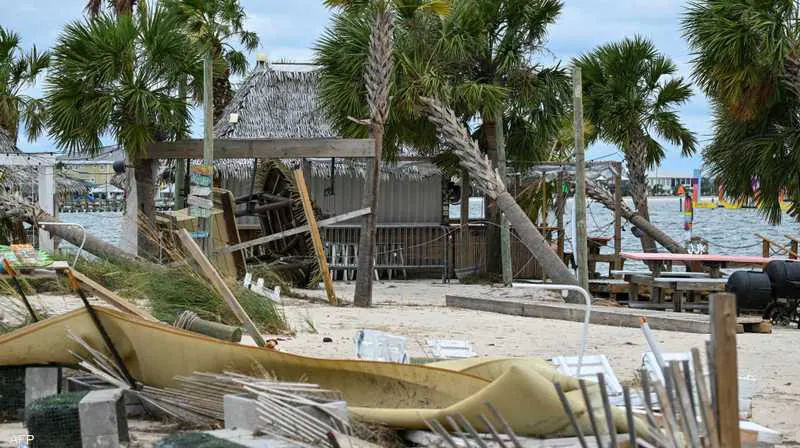
A powerful storm swept across the southern United States, leaving a trail of destruction and chaos in its wake. The storm, known as Isaias, made landfall in Florida on Saturday, bringing with it strong winds, heavy rainfall, and widespread power outages. According to local authorities, at least three people were killed as a result of the storm, with two fatalities reported in Alabama and one in Florida. The storm caused significant damage, including downed trees, destroyed buildings, and disrupted power lines.
The storm's impact was felt across several states, with Florida being the hardest hit. As of Saturday morning, over 800,000 homes and businesses were without power, with 440,000 of those outages occurring in Florida alone. Alabama was also severely affected, with over 265,000 households and businesses experiencing power outages. The storm's strong winds, which reached speeds of up to 165 kilometers per hour, caused widespread destruction, including uprooted trees, damaged buildings, and downed power lines.
As the storm moved inland, it began to weaken, transforming from a hurricane to a tropical storm and eventually to a post-tropical storm. The National Hurricane Center reported that Isaias had weakened rapidly over Alabama and was expected to continue moving northward, bringing heavy rainfall and strong winds to the region. The storm's aftermath left many residents without power, with crews working to restore electricity to affected areas.
The storm prompted several states to declare a state of emergency, with Florida and Alabama ordering evacuations in affected areas. The President of the United States, Donald Trump, also canceled a planned visit to Alabama, where he was scheduled to attend a football game. The storm's impact was not limited to the immediate damage it caused, with many residents left to deal with the aftermath of the storm.
Isaias was the first storm of the Atlantic hurricane season, which began on June 1. The storm's late arrival was attributed to the El Niño climate phenomenon, which tends to suppress hurricane formation in the Atlantic. The storm's impact on the oil and gas industry was also significant, with several production platforms and rigs evacuated and production halted.
The storm's effects were felt beyond the immediate damage, with many residents left to deal with the aftermath. The American Red Cross and other relief organizations were deployed to affected areas to provide assistance to those in need. The storm served as a reminder of the importance of preparedness and emergency planning, particularly in regions prone to severe weather events.
As the storm continues to move northward, residents in affected areas are bracing for the potential aftermath. Crews are working to restore power, and relief organizations are providing assistance to those in need. The full extent of the damage caused by Isaias is still being assessed, but it is clear that the storm had a significant impact on the region.
Key points
- At least three people killed as a result of the storm
- Hundreds of thousands of households and businesses without power
- Storm caused significant damage, including downed trees, destroyed buildings, and disrupted power lines