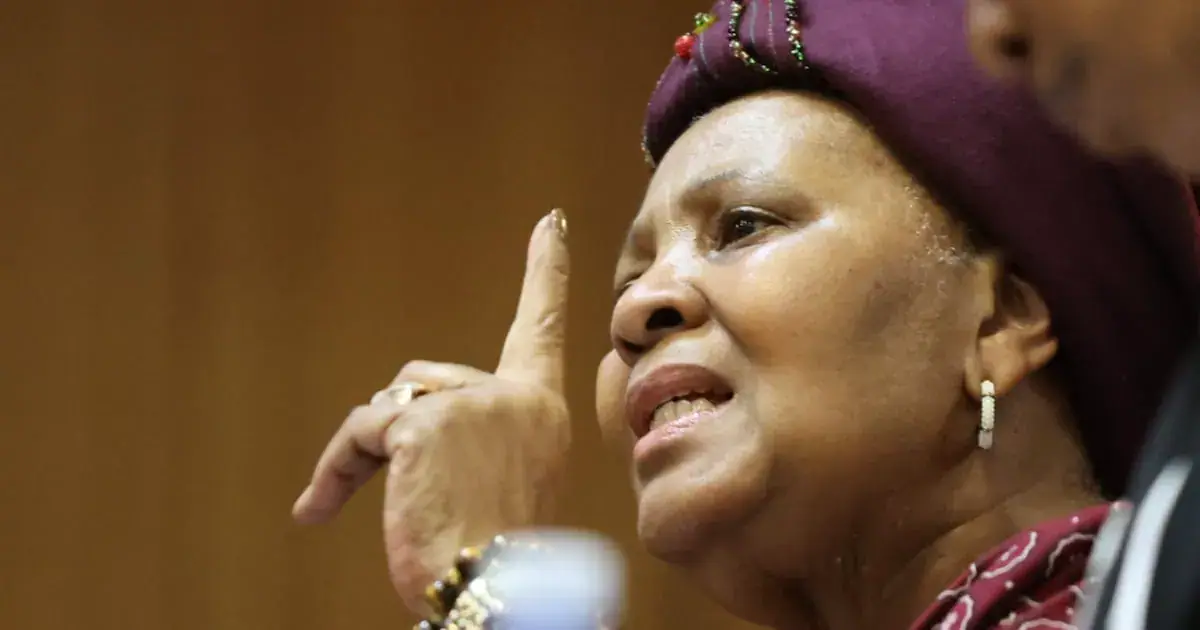
The state has argued in the corruption trial of former defence minister Nosiviwe Mapisa-Nqakula that she should be convicted on all charges, maintaining that it has proved its case beyond a reasonable doubt. Mapisa-Nqakula faces 12 counts of corruption and one count of money laundering linked to her tenure as defence minister between 2016 and 2019. She is accused of soliciting R4.5m in bribes, R2.1m of which was allegedly paid in cash by South African National Defence Force logistics contractor Nombasa Ntsondwa-Ndhlovu.
State prosecutor Emile van der Merwe presented closing arguments in the Pretoria high court, citing several admissions made by Mapisa-Nqakula, including that she was not allowed to receive gratification, had no lawful reason to receive any from Ntsondwa-Ndhlovu, failed to declare certain gifts and accepted a wig. Van der Merwe also pointed to WhatsApp messages previously submitted to the court showing that Mapisa-Nqakula requested impepho and discussed dream interpretations and her indumba with Ntsondwa-Ndhlovu.
Van der Merwe argued that the state’s witnesses were credible and stood their ground, including Ntsondwa-Ndhlovu, Bantu Holomisa, Ntsondwa-Ndhlovu’s family members, South African Reserve Bank investigator Ebenhaezer Minnie and National Prosecuting Authority Investigating Directorate chief financial investigator Wynand Wessels. He noted that Ntsondwa-Ndhlovu’s testimony was corroborated by several witnesses and WhatsApp messages.
The state argued that Mapisa-Nqakula intentionally requested cash payments to avoid leaving a paper trail. Van der Merwe contended that the money requested by Mapisa-Nqakula constituted gratification, in exchange for which she ensured Ntsondwa-Ndhlovu received defence contracts. The accused’s actions are undoubtedly intentional and clearly unlawful, Van der Merwe said.
The defence argued that Ntsondwa-Ndhlovu never testified that the money was paid to induce Mapisa-Nqakula to act, or refrain from acting, in a particular way. Defence advocate Siyabulela Mapoma said the charges, insofar as they are based on Ntsondwa-Ndhlovu’s evidence, have no leg to stand on. Mapoma contended that the finding of a prima facie case does not translate into a finding of proof beyond a reasonable doubt.
The defence also noted that certain alleged cash withdrawal records cited by Ntsondwa-Ndhlovu were never proved before the court, and challenged the credibility of the WhatsApp chats. Mapoma dismissed the claim that everyday words were used as codes for cash payments as a “total fabrication”. The authenticity of the messages cannot be confirmed, Mapoma argued.
The state alleges that Mapisa-Nqakula used the gratification to pay for home renovations at her house in Bruma, which were settled in cash totalling between R1.7m and R1.8m. Mapisa-Nqakula has denied all charges, arguing that she funded the renovations using her own resources. The court will consider the arguments presented by both the state and the defence before making a decision.
Key points
- The state has argued that Mapisa-Nqakula intentionally requested cash payments to avoid leaving a paper trail.
- The defence has argued that the state’s claims regarding the home renovations lacked a proper evidential basis.
- The court will consider the arguments presented by both the state and the defence before making a decision.