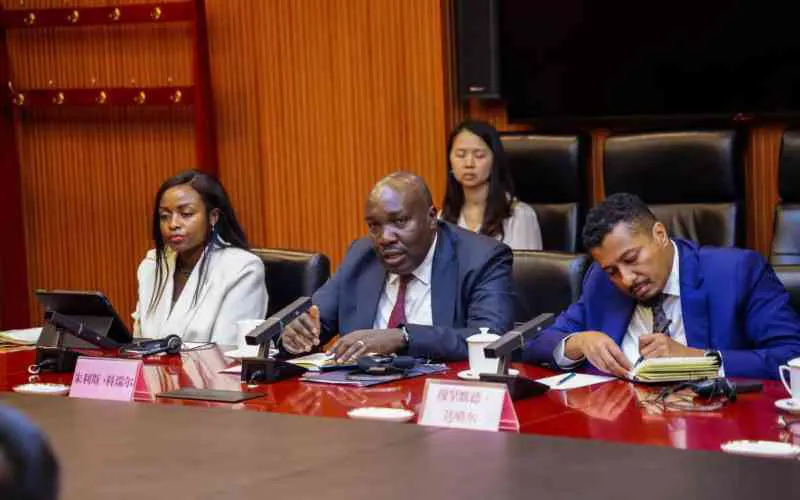
The government of Kenya is reviving plans to construct the Bosto Dam in Konoin Subcounty, Bomet County, at a cost of Sh21 billion. Water Principal Secretary Julius Korir stated that the dam is crucial in addressing the perennial water shortage in Bomet County. Korir recently held high-level discussions with representatives of China Exim Bank and the China International Development Cooperation Agency (CIDCA) in China. The talks focused on priority projects in Kenya's development pipeline, particularly the Bosto Dam Water Supply Project.
The Bosto Dam project was first proposed in 2015 to improve water supply, boost food production, and spur economic growth in Bomet and parts of Kericho counties. The project aims to supply water to over 75 percent of Bomet County and parts of Bureti in Kericho County. With a reservoir capacity of 18.8 million cubic meters, the project is designed to serve an estimated population of 709,000 people within a coverage area of 1,052 square kilometers. The proposed scheme involves a gravity-fed system to reduce construction costs and make operation and maintenance more sustainable.
The project includes a 40-meter-high dam, a water treatment plant with a capacity of up to 56,000 cubic meters per day, and a 200-kilometer transmission network, including storage reservoirs. Korir stated that it was agreed that project preparatory activities will be fast-tracked to ensure the project is ready for financing on concessional terms. The meetings also reviewed other areas of Kenya-China cooperation, including the extension of the Standard Gauge Railway (SGR), the Technical and Vocational Education and Training (TVET) program, and the Nairobi Intelligent Transport System.
Korir was accompanied by Principal Secretaries from the National Treasury and the Ministry of Roads and Transport, as well as Kenya's Ambassador to China, Willy Bett. The PS emphasized that these engagements reaffirm the commitment of Kenya and China to advancing strategic infrastructure and development programs that support economic growth, expand access to essential services, and create opportunities for Kenyans. President William Ruto has previously pledged to complete stalled projects, listing Bosto Dam among the 100 priority dams identified by his administration.
In July 2024, during a tour of the South Rift, Ruto said the government had secured funding for the project from China. He stated that Sh15 billion had been secured from the Chinese government for the project and that he would return to sign the agreement. Ruto later traveled to China in September 2024 to attend the ninth Forum on China-Africa Cooperation (FOCAC) Summit. The project had previously faced setbacks after the Kenya Forest Service and the National Environment Management Authority (NEMA) raised concerns over aspects of its implementation.
NEMA later cleared the project for construction, but years of delays have left the project unfinished, raising concerns among residents over the implementation of major public infrastructure projects and the use of public funds. The latest discussions with Chinese financing institutions signal renewed efforts by the government to move the project towards financing and eventual construction. The project is expected to improve water supply, boost food production, and spur economic growth in Bomet and parts of Kericho counties.
The stalled project had raised hopes among over 70,000 residents of Konoin, Sotik, and Bureti sub-counties who had endured perennial water shortages. With the government's renewed efforts to revive the project, residents are hopeful that the dam will be completed and provide a lasting solution to their water woes. The project's revival is also expected to have a positive impact on the local economy and improve the overall quality of life for residents in the area.
Key points
- The Kenyan government plans to revive the stalled Sh21 billion Bosto Dam project in Bomet County.
- The project aims to supply water to over 75 percent of Bomet County and parts of Bureti in Kericho County.
- The government has secured Sh15 billion in funding from China for the project.