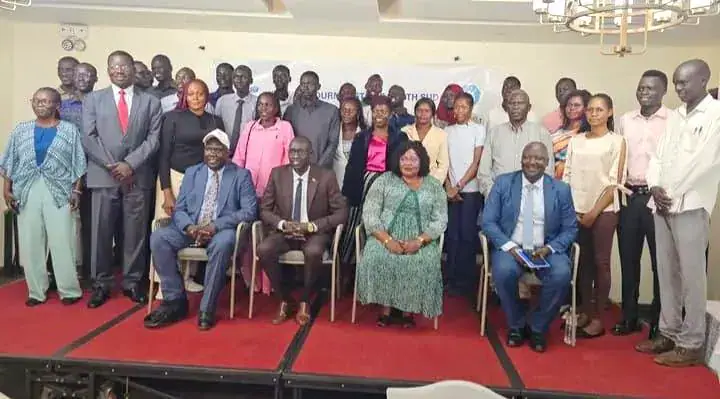
The National Elections Commission (NEC) and other stakeholders have urged journalists in South Sudan to uphold ethical standards and reject misinformation ahead of the anticipated December 2026 elections. NEC Chairperson Gabriel Bol Deng made the call during the opening of a two-day capacity-building workshop organised by the Union of Journalists of South Sudan (UJOSS), in partnership with the commission. The workshop aims to strengthen professional understanding of electoral laws, ethical guidelines, and balanced reporting practices.
Bol emphasised that journalists have a significant responsibility to provide accurate, balanced, and independent information, particularly during electoral periods when public demand for reliable information increases. He stressed the importance of using local languages to make election-related information accessible to communities across South Sudan. This, he believes, will enable citizens to understand electoral processes and make informed decisions based on credible information.
UJOSS President Oyet Patrick Charles called on journalists to recognise the professional responsibilities associated with election coverage. He emphasised the importance of consulting credible sources, verifying information, and maintaining professional standards when reporting on electoral developments. Patrick commended the NEC for its continued support towards media development and its partnership with the journalists’ union.
Ajou Luol Akuei, Managing Director of the Media Authority, highlighted the importance of responsible journalism and compliance with professional standards. He stressed the need for journalists to exercise caution when reporting on sensitive political and electoral issues. The Media Authority’s regulatory role places professional conduct, responsible communication, and adherence to established media standards at the centre of discussions about election coverage.
The workshop brought together more than 50 journalists and media practitioners from different media organisations. Participants are expected to benefit from discussions aimed at improving their ability to cover electoral activities without promoting misinformation, hate speech, or inflammatory narratives. The training also seeks to encourage inclusive reporting that recognises the information needs of different communities, including audiences who rely on local languages.
Election reporting requires journalists to distinguish between verified information, public opinion, and unconfirmed claims. This distinction is particularly important when covering political activities and statements from different stakeholders. Through accurate reporting and responsible information sharing, media practitioners can help citizens understand electoral developments without being exposed to misleading or unverified information.
The two-day engagement reflects ongoing efforts by UJOSS and the NEC to strengthen cooperation between the media and electoral institutions. As South Sudan approaches the anticipated December 2026 elections, journalists are expected to play an important role in informing the electorate, promoting transparency, and facilitating public understanding of the electoral process. Stakeholders maintain that journalists must uphold accuracy, impartiality, and ethical responsibility throughout the electoral period to ensure that public communication remains informative and constructive.
Key points
- Journalists in South Sudan are urged to uphold ethical standards and reject misinformation ahead of the anticipated December 2026 elections.
- The National Elections Commission and stakeholders are working together to strengthen cooperation between the media and electoral institutions.
- Journalists are expected to play a crucial role in informing the electorate and promoting transparency during the electoral period.