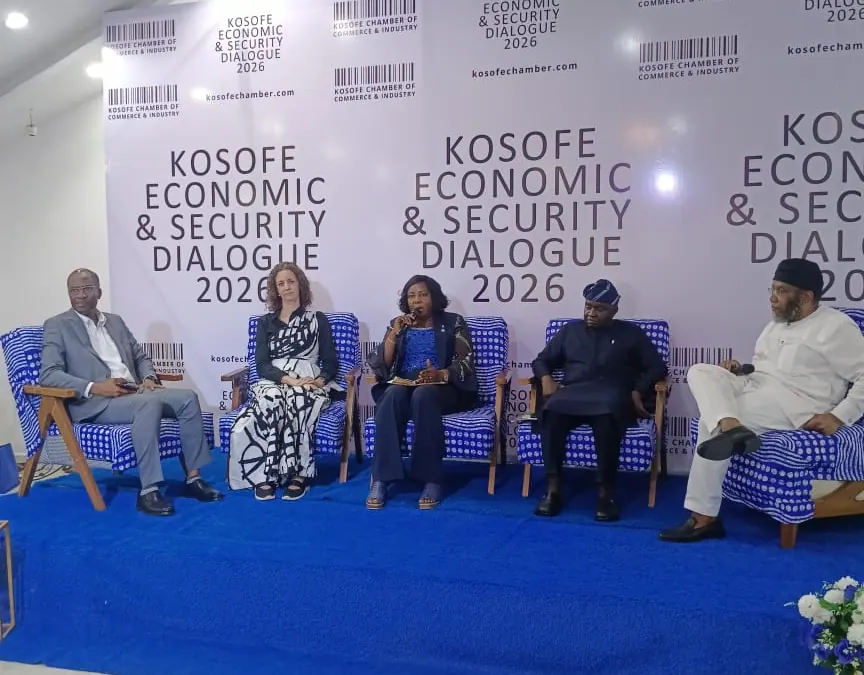
Stakeholders at the 3rd Kosofe Economic & Security Dialogue have emphasized the need for stronger grassroots action to boost the Lagos economy. They argue that weak engagement between businesses and government, as well as inadequate grassroots representation, are undermining the ability of local economies to attract investment and fully benefit from economic growth. The dialogue, organized by the Kosofe Chamber of Commerce and Industry in Lagos, brought together experts and stakeholders to discuss the challenges facing local economies.
The keynote address, delivered by Abiodun Adedipe, founder and chief consultant of B. Adedipe Associates Limited, highlighted the mutually dependent relationship between sustained economic growth and security. Adedipe warned that insecurity could disrupt production, discourage investment, and worsen inflation, while weak economic activity could deepen insecurity. He cited the experience of a driver from a farming family in Borno State, who stopped participating in farming due to insecurity, resulting in a significant loss of production.
Adedipe further explained that disruptions caused by insecurity could have wider economic consequences, including affecting food supply and contributing to inflation. He emphasized that addressing the problem required responsible leadership at different levels of society, not only political leadership. The participants also called for a stronger chamber-of-commerce movement at the community level to ensure that the concerns of small businesses reach policymakers.
Gabriel Idahosa, former president of the Lagos Chamber of Commerce and Industry, stressed the need for community-level chambers of commerce in Lagos to reflect the size of its economy and give local businesses a collective voice. He cited Germany as an example of a country where community-level chambers actively engage government on local economic issues. Idahosa argued that a central chamber could not effectively capture the specific challenges facing businesses in every community.
Muda Yusuf, chief executive officer of the Centre for the Promotion of Private Enterprise, urged businesses to continuously engage local government officials, state lawmakers, members of the House of Representatives, and senators, rather than limiting political engagement to election periods. He argued that democracy should provide value to businesses and citizens beyond elections and that continuous engagement would help ensure that elected representatives remained responsive to the concerns of their constituents.
Joe Femi-Dagunro, founder and president of the Kosofe Chamber, highlighted the need for greater collaboration among businesses, communities, and government to improve security and create an environment where investors and residents could operate with confidence. He cited the loss of several industries that previously provided employment and economic activity in the area, including Bata and Lennox, and emphasized the chamber's efforts to encourage new investment and revive economic activity.
The stakeholders concluded that stronger grassroots institutions, responsible leadership, and sustained engagement between businesses and government would be necessary to translate Lagos' economic potential into improved living standards and more resilient local economies. They emphasized the importance of community-level chambers in providing small businesses with a platform for continuous engagement with government and ensuring that businesses had access to reliable information needed to make decisions.
Key points
- Stakeholders call for stronger grassroots institutions to boost Lagos economy
- Insecurity and weak economic activity are mutually undercutting, experts warn
- Community-level chambers of commerce are necessary to give local businesses a collective voice