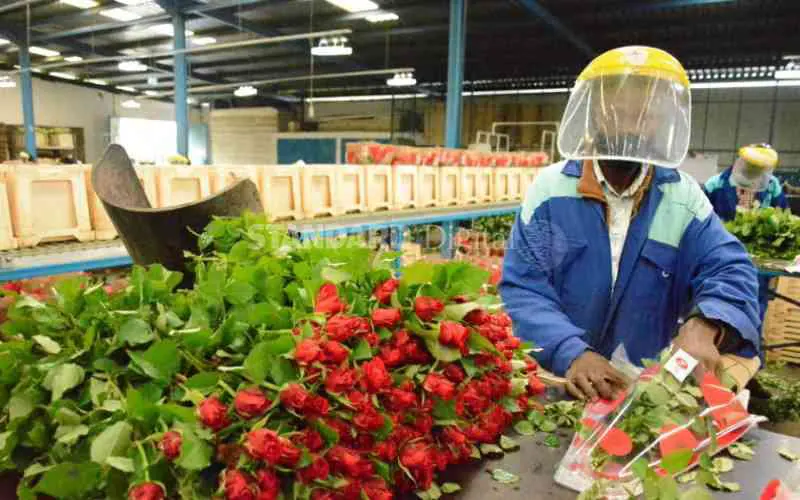
The Kenya Flower Council (KFC) has identified several challenges facing the floriculture sector, including market disruptions, regulatory changes, and phytosanitary standards. According to the Council CEO Clement Tulezi, the industry has established an extraordinary position in international markets, supplying around 40 per cent of cut flowers entering the European market. This has been achieved through hard work, dedication, and adherence to local and international standards.
Despite the industry's success, it faces several challenges, including rising production costs and an increasing number of taxes. The industry generates approximately KSh110B annually and directly employs about 200,000 people, mostly women. When including families, suppliers, transporters, freight companies, input providers, and communities surrounding farms, millions of livelihoods are connected to this industry. The council notes that the government should treat horticultural logistics as strategic national economic infrastructure.
The industry has faced various shocks, including droughts, floods, exchange-rate volatility, rising input and energy costs, market disruptions, and regulatory changes. During the COVID-19 pandemic, markets closed, and flights disappeared, leaving flowers ready for export with nowhere to go. However, the industry adapted and survived. The council now calls for the government to improve airport efficiency, lower freight costs, ensure cold-chain integrity, and streamline customs and phytosanitary processes.
The KFC board Chairman, Chris Kulei, notes that freight and compliance costs have increased, but this has not deterred farmers from expanding. Despite the challenges, farmers have invested in clean energy, better water management, and higher standards. The sector recently lost millions due to a three-day strike by aviation workers, which paralyzed operations at JKIA and adversely affected exports and passenger flights.
The strike resulted in over 1,000 tonnes of cargo worth millions of shillings being caught up and still to be cleared due to a massive backlog. Following the strike, the Council is now calling for the urgent establishment of a National Aviation Contingency Protocol for Perishable Exports. This protocol will ensure that, even in cases of labour or operational disputes, there are defined contingency arrangements to export critical perishable goods.
The protocol will help prevent losses and ensure that the industry can continue to operate smoothly. The council emphasizes the need for the government to support the industry by improving infrastructure and streamlining processes. This will enable the industry to remain competitive and continue to contribute significantly to the country's economy.
The flower industry is a significant contributor to Kenya's economy, and stakeholders are seeking government intervention to shield it from shocks. The industry's success has been achieved through hard work and adherence to standards, but it faces several challenges that require government support. The establishment of a National Aviation Contingency Protocol for Perishable Exports is crucial to preventing future losses.
Key points
- The Kenya Flower Council is seeking government intervention to address challenges facing the floriculture sector.
- The industry contributes significantly to Kenya's economy, generating approximately KSh110B annually and employing about 200,000 people.
- The council is calling for the establishment of a National Aviation Contingency Protocol for Perishable Exports to prevent losses during labour or operational disputes.