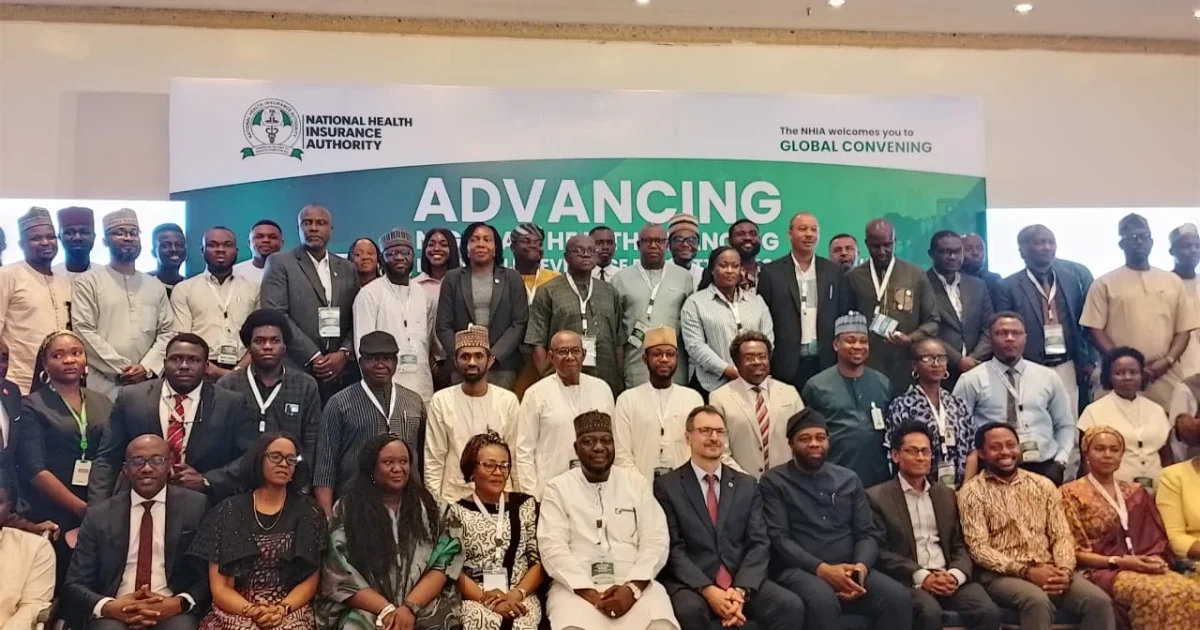
The National Health Insurance Authority of Nigeria has emphasized the need for a locally led health financing research agenda to guide reforms, expand health insurance coverage, and improve financial protection for Nigerians. This call was made by the Director-General of the NHIA, Dr. Kelechi Ohiri, at the inaugural Nigeria Health Financing Research and Learning Forum in Abuja. The forum's theme was "Evidence and Learning for Nigeria's Health Financing Future: Building a Locally Led Research and Learning Ecosystem."
Dr. Ohiri stressed that Nigeria needs to take greater ownership of the research that informs its health financing policies and reforms. He argued that reliance on episodic studies has limited the country's ability to build a sustained evidence base. According to him, research sovereignty does not mean cutting Nigeria off from international partners but ensuring that the country determines its priorities and uses research directly to improve implementation.
The NHIA has identified key areas of focus for its health financing research agenda, including mandatory health insurance coverage, equity, quality of care, and sustainability. Dr. Ohiri also announced plans for a national health financing observatory, a national research agenda for health financing, 15 research action plans, and regional collaboration frameworks. These initiatives aim to support reforms aimed at expanding coverage, improving quality of care, and strengthening financial protection.
The country's health insurance system remains fragmented, with 37 government health insurance schemes and over 95 private health insurance companies. This fragmentation has raised concerns about sustainability. The NHIA is working with national research institutions, universities, and other stakeholders to establish a stronger health financing research ecosystem. Dr. Ohiri identified 15 studies linked to the NHIA's strategic priorities.
International partnerships remain important but should focus on strengthening domestic capacity and supporting priorities identified by Nigeria. The World Health Organisation Representative in Nigeria, Dr. Pavel Ursu, commended the establishment of the forum, saying it creates an opportunity for Nigeria to translate global commitments on health financing and universal health coverage into concrete country-level action.
Other stakeholders, including the Nigerian Institute of Social and Economic Research and development partners, emphasized the need for locally generated evidence to guide health financing reforms. They stressed that research should become part of a continuous national learning system involving policymakers, researchers, implementers, communities, and practitioners. This approach will help ensure that health financing decisions reflect the realities of Nigerians.
The stakeholders agreed that evidence must serve reform and that research should help transform health financing into an economic infrastructure capable of protecting Nigerian households. They also noted that factors such as culture, religion, geography, income, education, gender, and social networks influence how people seek healthcare and should be considered in health financing decisions.
Key points
- The National Health Insurance Authority of Nigeria calls for locally led health financing research to guide reforms.
- The country's health insurance system remains fragmented, with 37 government health insurance schemes and over 95 private health insurance companies.
- Research sovereignty does not mean cutting Nigeria off from international partners but ensuring that the country determines its priorities.