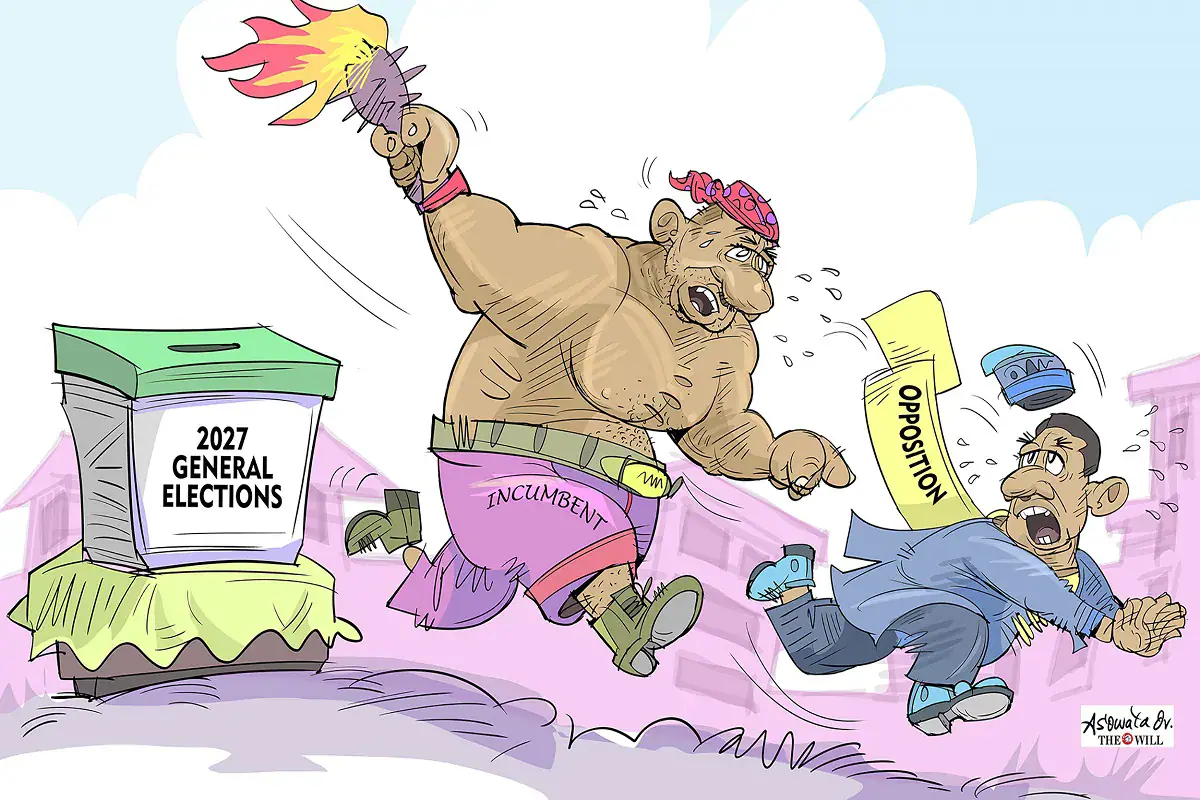
As Nigeria prepares for the 2027 general election, concerns are growing over the increasing violence targeting politicians from various parties. Recent incidents, including an attack on supporters of the Nigeria Democratic Congress (NDC) during a one-million-man march in Asaba, Delta State, have left several people injured and campaign vehicles vandalized. The NDC candidate for Delta North Senatorial District, Victor Ochei, accused the All Progressives Congress (APC) of sponsoring the attack and called on Governor Sheriff Oborevwori to intervene.
The attack on the NDC supporters is not an isolated incident, as politicians from both the governing and opposition parties have been experiencing violence during their campaigns. Comrade Flavour Emerue, Delta State Coordinator of the OK Movement, stated that the organisers had notified the police and met with the Commissioner of Police ahead of the march, but police personnel allegedly disappeared during the attack. This has raised concerns about the role of security agencies in preventing such incidents.
Stakeholders have expressed concerns about the impact of violence on the democratic process in Nigeria. Mrs Ene Obi, ex-Country Director of ActionAid Nigeria and Convener of the Nigeria Civil Society Situation Room, stated that the principles of fairness and equality in the political space appear to be foreclosed by the governing elite. She emphasized that the current situation, where a governor can promise to deliver two million votes for the President despite scoring less than three hundred thousand votes, is untenable.
Professor Udenta Udenta, founding National Secretary of the Alliance for Democracy, suggested that the winner-takes-all mentality, which pushes losers into political orphanage, is a major factor breeding violence and intimidation. He proposed the creation of a Sovereign Commission to address exclusivity and form a government of national unity, which all subscribing parties can join. He also suggested legislation for proportional representation for parties according to the percentage scored in an election.
Senator Babafemi Ojudu, a former Special Adviser to President Muhammadu Buhari, Office of the Vice President, Yemi Osinbajo, expressed concerns about the erosion of public confidence in institutions that should help settle differences peacefully. He referenced historical antecedents, including the disputed Western Region election of 1965 and the June 12, 1993, election, which showed how vulnerable a civilian government becomes when citizens lose faith in the means of correcting its abuses.
The recent Federal High Court judgment in Abuja, which set aside the David Mark-led leadership of the African Democratic Congress and voided the presidential nomination of former Vice President Atiku Abubakar, has also raised concerns about the stability of the democratic process. The judgment has been seen as a significant development in the lead-up to the 2027 elections.
As the 2027 elections approach, stakeholders are calling for a peaceful and fair process. The Nigeria Civil Society Situation Room has repeatedly condemned political violence and called for the mobilization of citizens to support democracy. The international community is also watching closely, as Nigeria's democratic stability has implications for the region.
Key points
- Stakeholders condemn recent violent attacks on politicians, demand peaceful 2027 elections
- Violence is seen as a threat to Nigeria's democratic stability and process
- Proposed solutions include the creation of a Sovereign Commission and proportional representation legislation