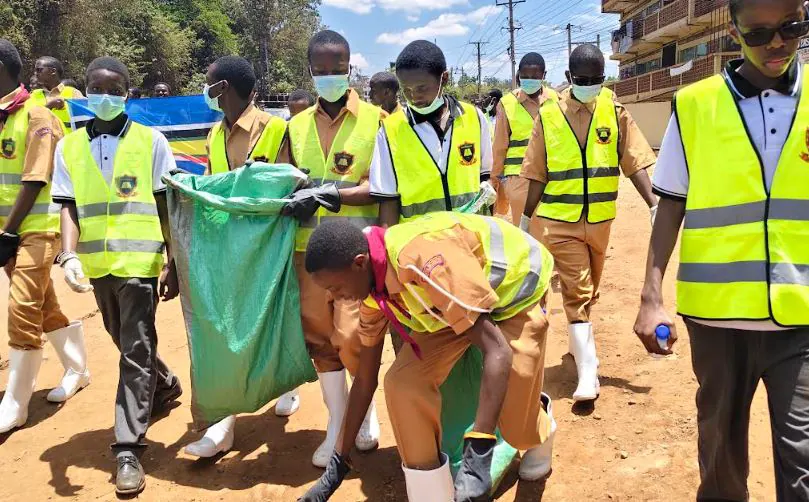
Poor disposal of plastic waste is increasingly threatening drainage systems, water sources, and the environment in Murang’a County, Kenya. Stakeholders have warned that plastic bottles, bags, and other non-biodegradable materials are finding their way into drainage channels and rivers, raising the risk of flooding and water contamination, especially during the rainy season. This has prompted calls for stronger measures to promote responsible waste management.
During a clean-up exercise organized by Pioneer School in Murang’a town, stakeholders urged residents, businesses, and institutions to adopt proper waste segregation and disposal practices to keep the environment clean. Pioneer School scouts leader and teacher Muriithi Kamau emphasized the need for both levels of government to strengthen measures aimed at controlling plastic waste, noting that the use of plastic carrier bags appeared to be gradually returning despite a previous national ban.
Kamau also highlighted the importance of promoting reusable alternatives, particularly water bottles, to reduce dependence on single-use plastic containers. He noted that schools have a crucial role to play in cultivating responsible environmental practices among young people by teaching them how to reduce, reuse, and properly dispose of waste. This, he believes, will help instill responsible waste management habits among young people.
Murang’a County Executive Committee Member for Environment Mary Magochi reported that the county government has developed a solid waste management policy and established designated waste disposal areas. The county is now focusing on waste separation at the source to ensure recyclable materials such as plastics are not mixed with organic waste. This approach aims to make collection, recycling, and safe disposal easier.
Magochi revealed that Murang’a collects about 300 tonnes of waste daily, with approximately 20 per cent of this waste being plastic. The county is partnering with various organizations to recycle plastic waste, and organic waste is already being processed into organic fertilizer. This provides an opportunity to reduce the amount of waste taken to disposal sites while supporting agricultural activities.
Joe Caleb of Murang’a Water and Sanitation Company (Muwasco) warned that poor waste disposal poses a direct threat to water sources, as the company relies on rivers and other natural sources to supply residents with water. He urged residents to protect rivers and other water catchment areas from plastic and other solid waste, citing the serious consequences of water contamination for public health and the cost of water treatment.
Effective plastic waste management, stakeholders agree, requires a coordinated approach involving households, schools, businesses, county authorities, waste handlers, and community organizations. They encourage residents to reduce the use of single-use plastics, carry reusable shopping and water containers, separate waste at the source, and ensure recyclable materials are delivered to authorized collection and recycling points.
Key points
- The county government has developed a solid waste management policy and established designated waste disposal areas.
- Murang’a collects about 300 tonnes of waste daily, with approximately 20 per cent of this waste being plastic.
- Stakeholders are calling for a coordinated approach involving households, schools, businesses, and county authorities to address the plastic waste management problem.